



Search Results for: flexible

One in three high-earning and influential part time workers are men

One in three high-earning and influential part time workers are men 0

Flexible working power listThree in four workers in Britain do not believe it is possible to have a successful part time career, yet new statistics by flexibility experts Timewise shows that there are now an estimated 680,000 workers who are working formally part time in the higher income bracket (earning a minimum of £40,000 full time equivalent). And of these, 230,000 are men and 450,000 are women. The figures were unveiled as part of the publication of the fourth Power Part Time List – in association with Management Today, which lists the UK’s top 50 men and women who work in senior, business-critical roles, all on less than full time hours. This includes a record number of men – 11 out of 50, including the highest number of male nominees since the list’s launch in 2012; including part-timers from businesses such as – Dixons Carphone plc, leading advertising agency AMV BBDO, famed architecture practice EPR Architects, the Bank of England and EY.


(more…)

Office politics, heavy workloads and poor managers create anxious workers

Office politics, heavy workloads and poor managers create anxious workers 0

Office politicsA third (33 percent) of UK workers cite office politics as a major contributing factor to feelings of unhappiness in the workplace. According to new research from recruiter Adecco over half (57 percent) of workers name a heavy workload as the cause of stress and anxiety, whilst 33 percent cite a lack of managerial support. The research revealed that negative feelings are having a significant impact on people’s working lives with nearly a third (29 percent) of UK workers spending every Sunday dreading the coming working week. A third (33 percent) of workers described their workplace as unhappy and a worrying 28 percent of workers admit that they fear going into work so much that they have called in sick. An additional third (36 percent) would now consider leaving their employer due to such severe anxiety and more worryingly, one in ten (9%) have already taken that step due to such overwhelming feelings of unhappiness.

(more…)

Research reveals the main reasons why people still go to work when ill

Research reveals the main reasons why people still go to work when ill 0

High job demands, stress and job insecurity are among the main reasons why people go to work when they are ill and should probably stay home, according to new research from the University of East Anglia. The study sets out to improve understanding of the key causes of employees going to work when sick, which is known as one of the main forms of presenteeism, and to help make managers more aware of the existence of the phenomenon, what triggers the behaviour and what can be done to improve employees’ health and productivity. A key finding of the study, published yesterday in the Journal of Occupational Health Psychology, is that presenteeism not only stems from ill health and stress, but from raised motivation, for example high job satisfaction and a strong sense of commitment to the organisation. This may motivate people to ‘go the extra-mile’, causing them to work more intensively, even when sick.

(more…)

Commercial property owners not keeping up with changing needs of tenants

Commercial property owners not keeping up with changing needs of tenants 0

NewcastleA new study from Northumbria University, sponsored by serviced office provider Citibase, claims that the owners of commercial property in the UK stand to lose out on £4.8 billion over the next decade because they are failing to adapt to the changing needs of tenants for more agile spaces. The study claims that property owners in 27 towns and cities in England, Wales and Scotland are already missing out on £325 million annually and paying out another £170 million on holding cost and there are stark differences between the prime and secondary office sectors. The report, Taking Stock: Secondary opportunities and the agile future, claims that out of all total empty stock calculated, only 10 percent of vacant office space is prime, the other 90 percent is secondary. The secondary sector currently has an estimated 26.4m sq ft of office space vacant compared to just 3m sq ft of empty stock in the prime market.

(more…)

Firms use workplace improvements to invest in their human capital

Firms use workplace improvements to invest in their human capital 0

peopleA survey by CoreNet Global and Cushman & Wakefield claims that 88 percent of EMEA corporate real estate professionals are actively investing in workplace improvements, and 95 percent are addressing workplace technology as part of those upgrades. The results emphasise the importance of human capital, suggesting that factors such as office environment, flexible working and company culture continue to be seen as critical to attracting and retaining talent. The global Talent Agenda Survey, completed by 250 respondents, addresses how occupiers are managing their talent pool against an ever-changing and unpredictable business environment. The survey focused on categories such as the cost of human capital and its value; the key challenges relating to talent access, assembly and retention and the critical role that real estate plays in workplace innovation, efficiency and talent retention.

(more…)

Insight briefing + Changing face of office design + Global cities

Insight briefing + Changing face of office design + Global cities 0

Insight_twitter_logo_2This week’s newsletter features our first Insight Briefing, produced in partnership with Connection, which looks at agile working in the public sector. Adrian Campbell says office design needs the direct contribution of its most important influencer, the end user; and Mark Eltringham welcomes a new report that debunks the belief that ‘sitting is the new smoking’. Demand for flexible co-working space looks set to soar; investment in commercial property is at its highest level worldwide since 2008, and businesses continue to find the creation of a productive workplace challenging. Sydney leads the world in Activity Based Working according to the Global Cities report; and working parents in the US are reluctant to let employers know how stressed they really are. Visit our new events page, subscribe for free quarterly issues of Work&Place and weekly news here. And follow us on Twitter and join our LinkedIn Group to discuss these and other stories.

Small business demand for coworking space ‘set to soar’ in the UK

Small business demand for coworking space ‘set to soar’ in the UK 0

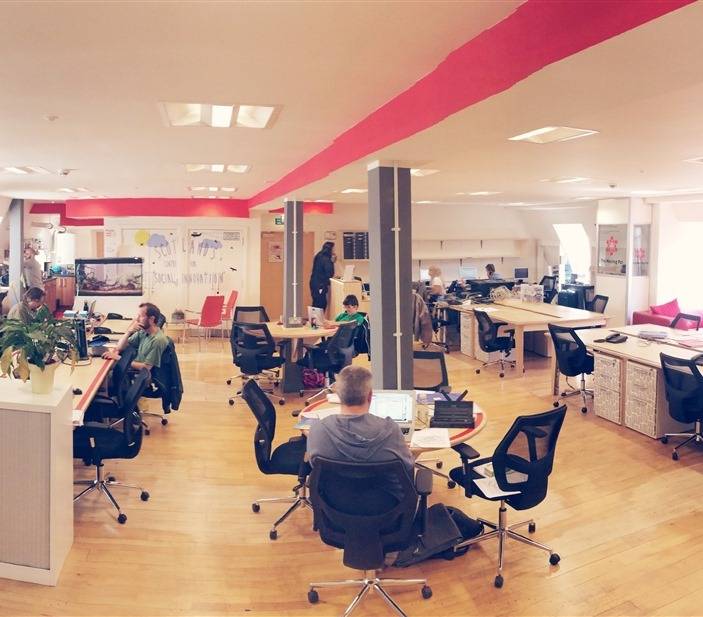
Edinburgh coworkingNew research from the UK solicitors network QualitySolicitors claims that demand for flexible coworking space is set to soar, with 71 percent of SMEs predicting this to be a priority for them in the short and medium term. According to the study of 250 small business decision makers, over two fifths (42 percent) believe that having a flexible and adaptable space where they can grow is ‘more important’, almost a fifth (18 percent) say it’s important to be able to interact and collaborate on ideas with other businesses in their premises and a further 39 percent are looking for a workspace with networking opportunities. It’s not just the space that needs to be flexible however; over half (54 percent) claim they want flexible, short term lets when negotiating their lease and 53 percent would demand a break clause to prevent them from being tied down if the space is no longer practical for their business.

(more…)

UK’s best workplace? + Apple’s new office + Design and happiness

UK’s best workplace? + Apple’s new office + Design and happiness 0

Insight_twitter_logo_2In this week’s issue; Mark Eltringham says Jeremy Hunt’s views on the UK’s need to work longer hours does not make practical sense and explains why workplace design isn’t the only way to engage people. The Civic Centre & One Stop Shop in Keynsham, near Bath wins ‘Best of the Best workplace in the country’ in the BCO awards; Apple plans to add another tech palace alongside its Norman Foster designed campus in California; and a new survey finds that companies are rethinking the tools they use to keep employees loyal. Employers admit to an ad hoc approach to flexible working practices; millennials prefer value accelerated career paths and diversity over job security; and we preview a new Technology and Trends event. Visit our new events page, subscribe for free quarterly issues of Work&Place and weekly news here. And follow us on Twitter and join our LinkedIn Group to discuss these and other stories.

Civic centre named best workplace in the UK by the BCO

Civic centre named best workplace in the UK by the BCO 0

Building: Keynsham Council Offices Location: Keynsham Architect: AHR

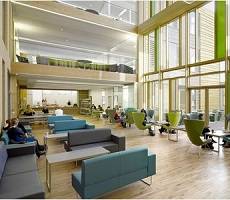
Keynsham Civic Centre & One Stop Shop in Keynsham, near Bath, has been named the Best of the Best workplace in the country at the British Council for Offices’ (BCO) annual Awards. The office was recognised as the Best Corporate Workplace in the UK, topping a list of six other award winners recognised for excellence in office space. The building provides an environmentally sustainable, low maintenance and flexible workspace, whilst acting as a catalyst for the regeneration of the town. As a workplace for the local council, the judges praised the building’s impressive use of natural light to create an ‘uplifting workspace’ as well as the design of the office floors which lend themselves toward flexibility and encourage collaborative working. The team behind the building was also commended for conducting a thorough and impressive stakeholder engagement process, from the inception of the project through to completion.

(more…)

Why Jeremy Hunt is wrong about the need to work long hours

Why Jeremy Hunt is wrong about the need to work long hours 0

Long-hoursThis week the UK’s Health Secretary found himself at the centre of a storm because of some comments he’d made suggesting that eroding one of the UK’s welfare platforms would encourage people to work as hard as the ‘Chinese and Americans’. Most of the backlash against these comments was political, so make your own mind up on that score, but they don’t stack up from a practical point of view either. The British already work some of the longest hours in Europe so encouraging people to work more will do little or nothing to resolve the productivity puzzle, as a 2014 report from the Bank of England confirms. Of course, we should all have worked out by now that long hours and productivity are not the same thing. It’s been a longstanding issue in the UK where people manage to combine some of the longest working hours in Europe with levels of productivity that fall habitually behind those of our partners on the mainland.

(more…)

Millennial workers value variety over job security and tenure

Millennial workers value variety over job security and tenure 0

Millennial 'job hopping'Employers may continuously be looking at ways to engage staff to ensure they still loyal to the organisation, but according to new research it seems they needn’t bother. Over one third (37 percent) of US workers — regardless of their satisfaction level — are seriously considering leaving their organizations, up from 33 percent of the workforce who were considering leaving in 2011. According to Mercer’s latest Inside Employees’ Mind research, which surveyed 3,000 people representing a complete cross-section of the US workforce, nearly one out of two employees who said they are very satisfied with their organizations and their jobs (45 percent and 42 percent, respectively) are still looking to leave. And perhaps unsurprisingly, it’s the Millennial workers who seem to value accelerated career paths and diversity (in the workplace and the work itself) over job security and tenure.

(more…)

Collaborative work goes hand in hand with better talent retention

Collaborative work goes hand in hand with better talent retention 0

Companies are rethinking the tools they use to keep employees engaged and loyal – especially at a time when flexibility and choice are increasingly important to an workforce that craves mobility and choice. A newly released survey from Jive Software claims that as the workforce continues to evolve and new future of work trends emerge, seven out of ten (72 percent) employees want to use more technology in the workplace that enables them to work from anywhere. Furthermore, the same percentage state that the freedom to try tools make them more effective in their job, with 43 percent finding it a powerful loyalty driver. According to the study of 1,000 US based employees, firms are also catching on to future of work trends and the impact that technology can have for employee retention. Eighty-four percent of employers want to implement technology that enable workplace flexibility.

(more…)