Search Results for: future of work

Amsterdam’s Workspace Design Show Unveils Sensory-Driven Feature Spaces

Amsterdam’s Workspace Design Show Unveils Sensory-Driven Feature Spaces

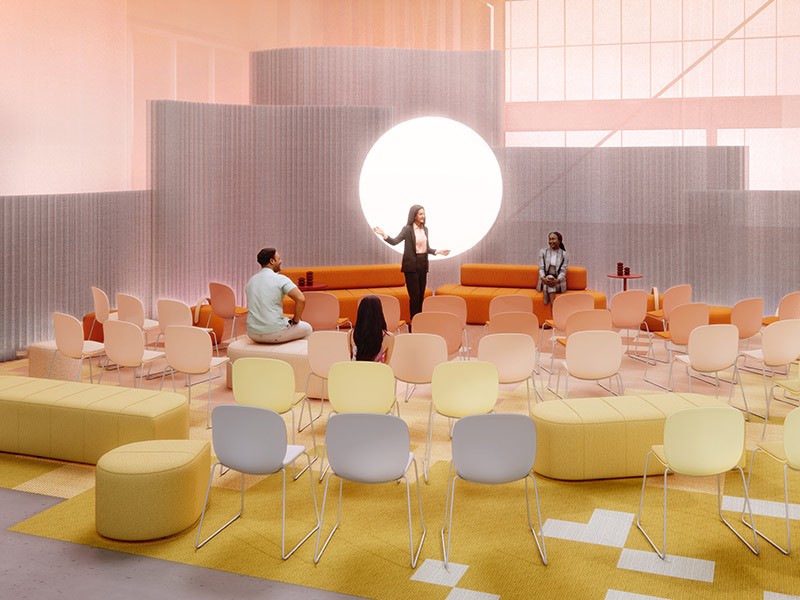
The Workspace Design Show showcases the latest transformative workplace interiors products, from furniture, seating, lighting, acoustics, surfaces, biophilia, tech and moreThis November, Workspace Design Show (Wednesday 5th to Thursday 6th November 2025, RAI Amsterdam) doesn’t just ask what the workplace should be; it lets you feel the answer. Five of the Netherlands’ most creative design studios have turned conversation into atmosphere, theory into tactility, and workplace talk into spaces you can smell, hear, shift and claim as your own. (more…)

How modern FNP programs prepare nurses for a changing workplace

How modern FNP programs prepare nurses for a changing workplace

The healthcare landscape is evolving faster than ever before. From the rise of telehealth to new models of patient-centered care, nurses today face a dynamic workplace that demands not only clinical expertise but adaptability, leadership and a commitment to lifelong learning. Family Nurse Practitioner (FNP) programs are stepping up to meet this challenge and equipping nurses with the skills and knowledge necessary to thrive in a changing environment.

Modern FNP programs recognize that healthcare is no longer confined to traditional hospital settings. Graduates may find themselves working in clinics, community health centers, telemedicine platforms or even corporate wellness programs. To prepare for these diverse roles, FNP programs emphasize flexible learning pathways that combine online coursework, simulations and in-person clinical experiences. This hybrid approach mirrors the evolving nature of the healthcare workplace itself where technology and adaptability are essential for success.

For example, a nurse pursuing an FNP program may complete a significant portion of theoretical learning online, allowing them to balance work, family or other commitments while still gaining essential knowledge. Clinical rotations in multiple healthcare settings ensure exposure to a wide variety of patient populations and workplace environments. This combination prepares graduates to adapt quickly and perform effectively no matter where they practice.

Bridging clinical expertise and leadership skills

Healthcare organizations today require practitioners who can make independent decisions, lead teams and coordinate care across multiple settings. Modern FNP programs integrate leadership training, evidence-based practice and interprofessional collaboration into their curriculum. Nurses graduating from these programs are not only clinically competent but also prepared to take on managerial roles, lead quality improvement initiatives and contribute to organizational strategy.

Leadership training often includes exercises in conflict resolution, team communication and project management. Students may participate in simulated scenarios where they lead a patient care team, making decisions under pressure while coordinating with physicians, nurses and support staff. These experiences build confidence and practical skills, ensuring graduates can navigate the complexities of modern healthcare workplaces.

Emphasizing technology and innovation

Digital transformation is changing healthcare delivery. Electronic health records, remote patient monitoring and telehealth platforms are now standard tools in many practices. FNP programs are adapting by incorporating training in healthcare technology, data analysis and telehealth. By familiarizing students with the tools they will use in practice, these programs ensure that graduates are ready to thrive in technologically sophisticated workplaces.

For instance, students may practice conducting virtual consultations or learn to interpret patient data from remote monitoring devices. They also gain skills in digital documentation, privacy compliance and cybersecurity, which are increasingly important when it comes to protecting sensitive patient information. By integrating technology into the curriculum, FNP programs produce graduates who are capable of improving efficiency and patient outcomes through innovation.

Prioritizing well-being and workplace resilience

The pandemic highlighted the critical importance of well-being in the healthcare workforce. Nurses are at risk of burnout due to long hours, high stress and the emotional demands of patient care. Modern FNP programs increasingly focus on self-care, stress management and professional resilience. By fostering emotional intelligence and coping strategies, these programs help nurses sustain long and demanding careers.

Courses may include mindfulness techniques, time management strategies and guidance on maintaining work-life balance. Mentorship programs provide additional support, helping students navigate the challenges of both education and professional practice. Graduates who have been trained to prioritize well-being are better equipped to manage stress, contribute positively to their teams and maintain high-quality patient care over time.

Preparing for the future of healthcare

Modern FNP programs aren’t just about clinical skills. They are about preparing nurses for a rapidly changing workplace that values flexibility, leadership and technological competence. Graduates are ready to meet the challenges of healthcare environments that range from traditional hospitals to community clinics, telehealth platforms and corporate wellness programs. They are equipped to support patient-centered care while also advancing organizational goals and improving workplace resilience.

Healthcare organizations benefit from hiring nurses trained in these comprehensive programs. FNP graduates bring advanced clinical knowledge, strong leadership capabilities and the ability to adapt to new technologies. They are prepared to implement evidence-based practices, mentor junior staff and contribute to innovations in patient care delivery. In short, FNP programs are shaping a workforce that is ready for the demands of modern healthcare.

Building a resilient healthcare workforce

The role of the Family Nurse Practitioner is now more important than ever before. Modern FNP programs prepare nurses to meet the needs of a complex and changing healthcare workplace by combining clinical expertise, leadership training, technological skills and well-being strategies. Graduates leave these programs ready to deliver high-quality care, lead teams and adapt to new challenges. For nurses pursuing advanced education and healthcare organizations seeking a resilient workforce, FNP programs provide the tools and training necessary to succeed in today’s evolving healthcare environment.

Workplace design that supports health, learning and growth

Workplace design that supports health, learning and growth

In 2025, workplace design looks to prioritise employee health, learning, and growth.In 2025, workplace design looks to prioritise employee health, learning, and growth. This article will investigate how contemporary environments enhance wellness, handle technology, and adapt to the fluctuation of work. You will learn the techniques businesses use to amplify productivity and participation. The approaches and fundamentals that construct dynamic work environments are the focus of this article. (more…)

A break in the workspace-time continuum

A break in the workspace-time continuum

The fracturing of time and place underlies every one of the great workplace issues of our time. Everything that springs from this – the where, when, how, what and why of work – is defined by the shattering of any fixed idea we may once have had of a time and a place to work. Because the challenge to these traditional ideas is now so inextricably linked in our minds with new technology, we might often  forget that people have been asking questions about how we can get the most out of each day for thousands of years. Tempus fugit after all, and as a consequence we’ve always known that how we spend our days is how we spend our lives. (more…)

The real reason why your workplace strategy isn’t working

The real reason why your workplace strategy isn’t working

In a world where how we work keeps evolving, it’s worth stepping back to ask: What are you about as an organisation? Not your product. Not your structure. Your purpose. Your direction. Your why. What are you ultimately trying to achieve as an organisation and why? What’s the bigger outcome you’re working toward? How do you want your people, your customers, your industry to be different because you exist? These aren’t just philosophical questions. They’re practical ones because your answers shape everything including your strategy, your team structures and your culture.  It also shapes a seemingly straightforward question on your workplace strategy. (more…)

Adoption of workplace AI is inconsistent and riddled with contradictions

Adoption of workplace AI is inconsistent and riddled with contradictions

New research claims to reveal the significant divides in how organisations are adopting artificial intelligence, with some reporting positive outcomes and others citing fear, risk and job losses.New research claims to reveal the significant divides in how organisations are adopting artificial intelligence, with some reporting positive outcomes and others citing fear, risk and job losses. The study, carried out by The Adaptavist Group as part of its latest Digital Etiquette: Unlocking the AI Gates report, surveyed 900 professionals responsible for introducing and onboarding workplace AI in the UK, US, Canada and Germany. It found a sharp split between the 42 percent of respondents who believe their company’s AI claims are over-inflated and the 36 percent who do not. (more…)

AI is actually adding to people’s workloads, increasing burnout fears

AI is actually adding to people’s workloads, increasing burnout fears

The survey from Resource Guru suggests that one in five UK agency workers believe AI has increased the amount of work they do, fuelling concerns about burnout in an industry already known for long hours and client pressureAgency staff say artificial intelligence is adding to their workloads rather than reducing them, according to a new poll. The survey from Resource Guru suggests that one in five UK agency workers believe AI has increased the amount of work they do, fuelling concerns about burnout in an industry already known for long hours and client pressure. The report challenges the common assumption that AI automatically speeds up delivery and cuts costs. Instead, respondents highlighted new layers of hidden work, including drafting detailed prompts and templates to generate usable material, fixing errors in AI outputs, and managing compliance and client expectations. Much of this extra work is unrecognised, with clients often assuming AI should make services faster and cheaper. (more…)

Measuring and rewarding what people do at work? It’s a rat trap, baby, and you’ve been caught

Measuring and rewarding what people do at work? It’s a rat trap, baby, and you’ve been caught

Life imitates art. Scientists have discovered that lab mice may be conducting their own experiments on us. A paper published in the journal Current Biology speculates that mice seem to be testing their testers. They do this by deviating from simple behaviours such as responding to rewards to work out what might happen. “These mice have a richer internal life than we probably give them credit for,” explained Kishore Kuchibhotla, senior study author and an assistant professor of neuroscience at Johns Hopkins University. “They are not just stimulus response machines. They may have things like strategies.” (more…)

Redefining the modern workplace: flexibility, zoning, and employee wellbeing

Redefining the modern workplace: flexibility, zoning, and employee wellbeing

The modern workplace is evolving faster than ever. Traditional layouts of rows of desks and enclosed cubicles are giving way to offices designed around flexibility, collaboration, and employee wellbeingThe modern workplace is evolving faster than ever. Traditional layouts of rows of desks and enclosed cubicles are giving way to offices designed around flexibility, collaboration, and employee wellbeing. For organisations seeking to stay ahead, the key lies in thoughtful workspace zoning—creating adaptable environments that respond to how people actually work today. One of the most significant trends shaping office design is flexibility. Work patterns have changed: teams collaborate in bursts, focus deeply in concentrated periods, and switch between in-person and digital modes throughout the day. Workspaces that can transform to meet these changing needs without major disruption are becoming essential. Mobile partitions and modular systems allow offices to create temporary or permanent zones that can adapt in real time, supporting a mix of focused work, collaboration, and social interaction. (more…)

Family problems can also undermine leaders at work

Family problems can also undermine leaders at work

Leaders who feel ignored or excluded by their own families are more likely to withdraw at work, undermining both team morale and customer service, according to new research from the University of Bath. The study, published in the Journal of Occupational and Organizational Psychology, examined how “family ostracism” – being left out of conversations, decisions, or support during difficult times – spills over into professional life. Researchers found that leaders experiencing this strain often adopt a “laissez-faire” leadership style, marked by passivity and disengagement. (more…)

How AI is already changing the world of work

How AI is already changing the world of work

AI is already changing the world of work, but not everybody is reacting to it in the same way, writes Laura AndersonAI is rapidly transforming the world of work. That much is clear. Understanding how different generations are adapting to this shift is therefore crucial for any organisation looking to the future.  Our recent study focusing on the generational differences in attitudes towards some of today’s biggest topics sheds some light on what might be driving these trends. Perhaps the most important finding was that nearly two-thirds of Gen Z feel concerned about AI’s impact on their future (only Baby Boomers reported more concern) – even though over half are still using AI day to day. (more…)

Why winning the AI race starts with workforce readiness

Why winning the AI race starts with workforce readiness

While AI is heralded as a transformative force across industries, a quieter challenge threatens to slow its momentum: the growing shortage of skilled AI professionals. Behind the buzz of breakthroughs lies a stark reality — companies are racing to adopt AI, but many are leaving their people behind. Recent data shows the skills required for AI-exposed jobs are evolving 66 percent faster than for other roles — a dramatic leap from just 25 percent a year ago. The demand for AI talent is surging in the UK, where the job market is cooling off. Yet, as job postings requiring AI skills continue to climb, this only underscores a critical imbalance felt across the job market. (more…)