July 17, 2014
RIBA announce Stirling prize shortlist for best new building 2014
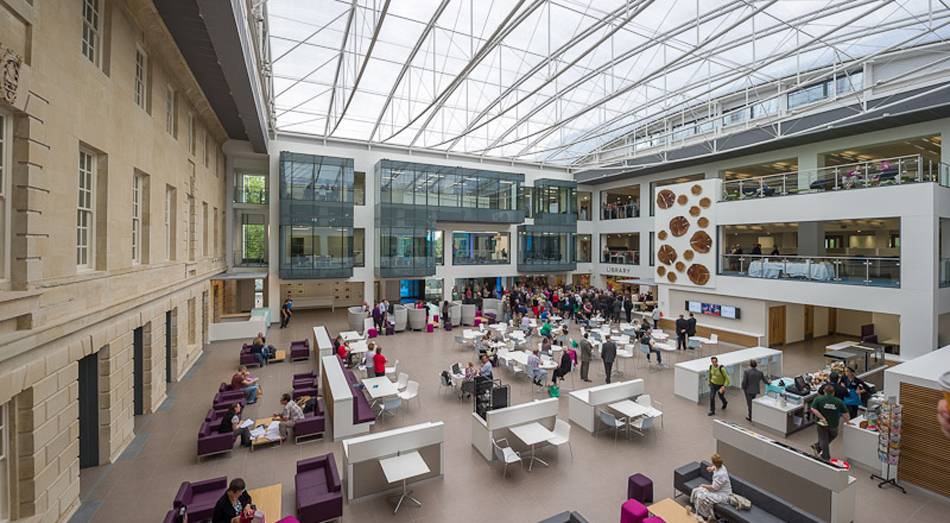
The Shard in the City of London, the Library of Birmingham, the Manchester School of Art, the London School of Economics, the Everyman theatre in Liverpool and the London Aquatics Centre have been named in the shortlist for the 2014 RIBA Stirling Prize for the best new building. The six shortlisted buildings will now go head-to-head for architecture’s highest accolade, to be awarded by the Royal Institute of British Architects (RIBA) on 16 October 2014. The six buildings will be judged by the same criteria: their design excellence and their significance in the evolution of architecture and the built environment. Stephen Hodder, RIBA President said: “The RIBA Stirling Prize is awarded to the building that has made the biggest contribution to the evolution of architecture in a given year. Every one of the six shortlisted buildings shows what great public architecture can do: it can transcend mere construction to something quite poetic.” (more…)


The recent Cabinet reshuffle in the UK Government won’t alter one fact; politicians simply don’t get it when it comes to technology, the workplace, the way people work and the needs of small businesses. Once you dismiss the paranoid idea that they DO get it but don’t care because they’re too busy looking out for The Man, you have to conclude that one of the big problems they have (this won’t go where you think) is that they don’t understand anything about technology and work, especially when it comes to emerging technology, the working lives of individuals, the needs and functions of small businesses and the fact the self-employed exist at all. These things exist outside the bubble. This is obviously a problem because they are implementing policies and making big, uninformed and anachronistic decisions about the things that shape every aspect of our lives, help to define us as people and determine how companies and individuals function. Here are just three examples.
The UK’s snail-paced broadband infrastructure isn’t up to the demands placed on it by 21st century businesses and there is not enough ambition to bring it up to speed with that of other nations, according to a new report from the Federation of Small Businesses. The report found that while nearly all small business owners (94 percent) consider a reliable internet connection essential, just 15 percent are happy with their provision and a staggering 45,000 small businesses are still dependant on a dial-up connection and many more are struggling by with slow broadband speeds under 2 Megabits per second (Mbps). The FSB also claims that current Government targets of 24Mbps for 95 per cent of the population and 2Mbps for the remaining five per cent will not meet future demands and that it should commit to delivering a minimum of 10Mbps (megabits per second) for all homes and businesses by 2017 rising to 1Gbps (gigabit per second) by 2030.
Arthur C Clarke was one of those scientists and science fiction writers who made a pretty decent fist of getting his technological predictions right. Not only did he foretell general trends such as
The UK’s public sector spends almost twice as much on outsourced services as the country’s private sector, according to research from the 


July 23, 2014
There is a moral imperative to meet global standards in workplace performance
by David Sharp • Comment, Company news, Facilities management
(more…)