








October 24, 2016
Corporate real estate sector continues to make progress in energy consumption, carbon emissions and water use 0
 The world’s leading corporate real estate owners and managers are making significant progress in reducing energy consumption, carbon emissions and water usage in their buildings, according to a new report from the Urban Land Institute’s (ULI) Greenprint Center for Building Performance. The Greenprint Performance Report, which measures and tracks the performance of more than 5,400 properties owned by Greenprint’s members, demonstrates a 3.4 percent reduction in energy consumption, a 3.9 percent reduction in carbon emissions and a 4.8 percent reduction in water use between 2014 and 2015. According to the study, since Greenprint started recording building performance in 2009, the energy consumed by members’ properties tracked by Greenprint has dropped 13.7 percent. Carbon emissions from those properties have decreased 16.5 percent; and water usage has dropped by 10.6 percent. The reductions occurred even as building occupancy rose, suggesting that greater space usage does not necessarily cause a decline in building performance.







 Some may think this is a daft question. They’ll argue that of course people matter when we design workplaces. Granted, there are those for whom the human experience of the built environment is really important. They demonstrate this it in their attitudes and actions. However, based on some of the attitudes and actions I have observed over the years, I would suggest that the belief that people really matter when some designers design workplaces for them is quite frankly all too often skin deep. How do we know this? And if we accept that it is true, it then begs the secondary question of why this should be the case. Is it entirely our fault? What might we do to address the issues? In part, we know that people haven’t really mattered enough in design because of mistakes of the past. Meanwhile, society is facing many pressing challenges, ranging from health to housing, work to economy and climate change to resource depletion.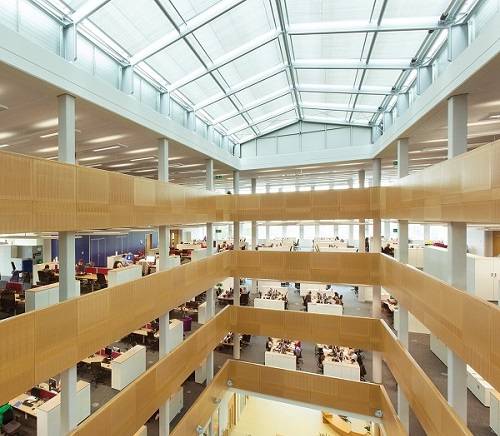

 A series of reports published in the past few days highlight the challenges faced by Britain’s disabled workers. The studies claim separately that disabled workers are keen to work but are less likely to be in employment and may be hiding disabilities from employers, are paid less when they are in work and that many employers do not feel they are well equipped to deal with the needs of disabled staff. The first study from Reed in Partnership and Disability Rights UK found that one in ten employers do not feel able to support a disabled employee. Meanwhile research from the Equality and Human Rights Commission (EHRC) found that employees who experience mental ill-health earn up to 42 per cent less than colleagues. A third report from Citizen’s Advice found that 40 percent of disabled people would like to work but can’t find a job. And finally a report from RIDI claims that many people applying for jobs may be hiding their disability from employers.

 We’re operating in an increasingly tech-centric environment, but human talent still remains one of the core differentiators if a business is to thrive. Not surprisingly, the mission to get the very best people on board and optimise the potential of those already in situ has become the Holy Grail for many companies, irrespective of scale and sector – a challenge that demands a more intuitive and precise, even scientific approach to human capital management. Data analytics is a case in point, designed to extrapolate insight from intelligence across a variety of disparate sources and establish actionable intelligence, capabilities which naturally lend themselves to powering key decisions around hiring and retention and building on existing talent. Yet despite the proliferation of analytics across many strands of the workplace, take up in the HR sphere remains relatively modest, in tandem with a long-held reticence over the use of the technology in this area.









October 24, 2016
How and why employee fitness became part of the corporate agenda 0
by Michael Page • Comment, Wellbeing, Workplace design
(more…)