Search Results for: technologies

Traditional performance management fails to match new digital workplace

Traditional performance management fails to match new digital workplace 0

Performance managementPerformance management plays a key role in  helping organisations measure how effectively their employees are contributing to business objectives. Yet despite 94 percent of workforce leaders in a global survey believing performance management improves business performance, only 39 percent of them think their current practices help to achieve their organisation’s business objectives. This isn’t just the employers’ view, within the workforce, 89 percent of people believe their performance would significantly improve if changes were made. The main reason for this credibility gap is the impact digital technologies are having on the nature of both work and the workforce. In the Accenture Strategy report, Is Performance Management Performing? – 92 percent of respondents report that work is faster, more networked and collaborative, and demands ever-evolving skills. This means that organisations need to innovate to keep pace.

(more…)

Great strides made towards fourth industrial revolution, but more to come

Great strides made towards fourth industrial revolution, but more to come 0

fourth industrial revolutionMany  countries and organisations are making significant strides in the development of the fourth industrial revolution, but there is much work still to do. Those are the conclusion of two new studies into the preparedness of firms and national economies with regards to the emerging digital economy.  The Cisco Digital Readiness report surveyed technology decision makers in eight countries and eight industries, categorising them as either ‘forwards’ and ‘laggers’. According to the report, globally, the ‘forwards’ have an average score of 77. The UK’s score is 75 placing it largely at the forefront of developments. According to a second report from PwC, Industry 4.0: Building the Digital Enterprise, the digitisation of businesses is progressing well, but with a lot of scope for development. The survey of more than 2,000 global companies found that 33 per cent of firms rate their digitisation levels as high, but the value will hit 72 percent over the next five years.

(more…)

While politicians squabble, here’s what the Budget meant for the workplace

While politicians squabble, here’s what the Budget meant for the workplace 0

Bash streetStrange as it may seem now, there was a Budget last week. We’d planned to produce a report on it once the dust had settled but given that whatever dust had originally been kicked up has now been swept away by a political storm, it’s only now we feel able to offer some perspective a few days out. As ever these days, the budget touched on a number of aspects of the workplace, sometimes hitting the mark and sometimes suggesting politicians don’t yet understand how people work. There was the usual stuff about rates and commercial property but also plenty to digest about the freelance economy, productivity, new technology, flexible working legislation and the current, often faltering attempts to develop wealth and infrastructure as well as the 21st Century creative and digital economy in places other than London. There’s plenty to digest here and plenty of people have already had their say, so a chance to grab a coffee and take all or some of it in.

(more…)

US businesses wasting $1.8 trillion annually on mundane tasks

US businesses wasting $1.8 trillion annually on mundane tasks 0

Boring mundane meetingsA new report from enterprise software firm Samanage, claims that US businesses are wasting up to $1.8 trillion annually on repetitive and mundane tasks that could easily be automated, leaving people free to carry out more productive and creative work.  The Samanage State of Workplace Survey, polled around 3,000 US working adults and claims that workers spend an average of 520 hours a year – more than one full day’s work each week – on repetitive services and tasks that could be easily automated, such as, password reset requests, contract reviews and approvals, office supply requests and performing other simple administrative tasks. In addition to lost time and money, the survey also claims employees are skirting organisational IT policy. Outdated technology is holding employees in the modern workforce back from driving process efficiency and identifying ways to make their work life better.

(more…)

Staff believe 91 percent of UK firms will no longer be competitive by 2020

Staff believe 91 percent of UK firms will no longer be competitive by 2020 0

right-information-right-technologiesStudies using 2020 as an apocalyptic landmark are thinner on the ground these days as we get closer to the actual year, so it’s great to see the old chestnut given another roasting in a new report from tech consultancy Infomentum. The headline stat from their new Beyond Digital report is that 91 percent of UK employees believe that new technology will mean that their current businesses will no long be competitive by 2020 unless they face up to the challenges of the digital economy. The report, based on a study of over 1000 office workers, examines how new technology is set to disrupt businesses and employment. Around 50 percent of respondents believe their employers will have to invest in new technology in order to fend off extinction. The survey also suggests that organisations resort to bandwagon jumping when it comes to new technology rather than assessing their needs before making decisions.

(more…)

Why WELL rather than green is the new black in building design

Why WELL rather than green is the new black in building design 0

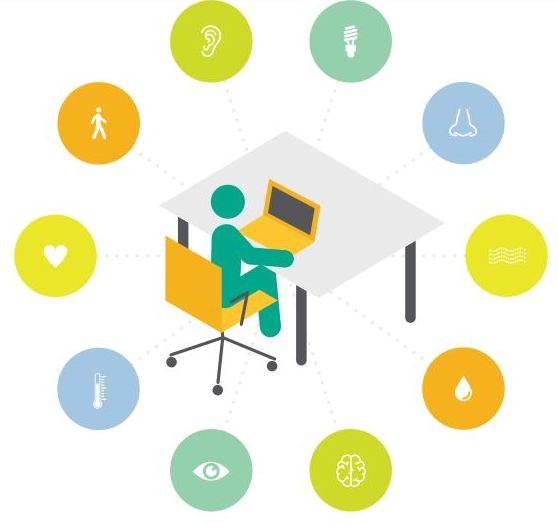
Building design WELLBusinesses that seek to occupy premium or grade A office accommodation are traditionally seduced by the next big thing. What was once a bespoke architectural design, then became an icon, a taller building, one made of glass and finally the inevitable iconic, tall, glass tower. Now it seems a good number of those businesses have moved on to green buildings as a must have upgrade to the skyscrapers of glass and steel. Green, it appears, is the new black. But is that really the next big thing or is being green merely the last big thing? Even worse, does going green in terms of building design actually deliver the types of benefits that an occupier or landlord was anticipating, beyond the significance of branding and an alignment with grade A quality office space? The green building narrative is a particularly powerful one and the growth of LEED and BREEAM rated buildings over the last decade is proof of that power.

(more…)

Employers’ attraction and retention rates rise with flexible working offer

Employers’ attraction and retention rates rise with flexible working offer 0

Flexible workingAlthough a quarter of UK workers now regularly work out of the office, there is a still a significant number (39 percent) who don’t know they have the right to request flexible working. Yet according to new research from UC EXPO, conducted amongst 1,000 UK office workers, job roles offering flexible working are more likely to attract a better candidate, with 82 percent of workers saying they would be more likely to take a job that offered flexible working benefits. An additional 71 percent said that the offer of flexible working would help businesses to attract a greater international talent pool. The research finds that the benefits of flexible working are more widely recognised than a year ago, with a fifth (22 percent) of those surveyed having worked at home or remotely more throughout 2015 than in 2014. Productivity concerns around employees working from home is decreasing, with over two-thirds (67 percent) believing that productivity levels either increase or stay the same when they work remotely.

(more…)

Report reveals huge surge in use of flexible working worldwide

Report reveals huge surge in use of flexible working worldwide 0

W-Careers-Flexible-workplace-004Three quarters of companies worldwide have now introduced flexible working to enable employees to vary their hours and work from home or on the move according to one of the largest global surveys of its kind conducted with 8,000 employers and employees across three continents. The Flexible: friend or foe? survey was commissioned by Vodafone and took place between September and October 2015. The countries surveyed were Germany, Hong Kong, India, Italy, Netherlands, Singapore, South Africa, Spain, the UK and the USA. A total of 8,000 employers and employees were interviewed online. The rapid adoption of high-speed mobile data services, fixed-line broadband and cloud services is playing an integral role in this workplace revolution: 61 percent of respondents now use their home broadband service to access work applications and 24 percent use a mobile data connection via their smartphone, tablet or laptop with a broadband dongle.

(more…)

Flexible working is now a requirement for many job seekers, claims report

Flexible working is now a requirement for many job seekers, claims report 0

flexible workingEmployees are increasingly keen to find jobs that offer them flexible working, according to a new study of the global labour market published by recruitment firm Indeed. The report also found that several of the world’s largest economies, including the US, Germany and Canada are suffering because low wages and lack of skills mean employers are unable to find the right people to hire. According to  the report, Labor Market Outlook 2016: Uncovering the Causes of Global Jobs Mismatch, interest in jobs that offer some form of flexible working as measured by online job searches that include terms such as “remote”, “work from home” and “telecommute”has increased by 42.1 percent over the last two years in nine of the 12 countries studied.  More than half of the top 50 keywords associated with searches for flexible work globally were related to high-skilled jobs, many in the tech sectors.

(more…)

The future of next generation TMT workplaces explored in new report

The future of next generation TMT workplaces explored in new report 0

TMT WorkplaceA new report from property adviser Cushman & Wakefield claims to outline the key future property trends for TMT workplaces based on the views of decision makers from global Fortune 500 organisations, architects, designers, founders of start-ups and high-growth businesses. The Future of the TMT Workplace report produced in association with Unwork, identifies the key forces ‘driving change and necessitating TMT players to fundamentally rethink their workplace strategies’. These include frictionless growth, engineered serendipity, the ‘gig’ economy, the pace of technological change, demand for top technological talent far outstripping supply and where to locate in order to succeed.At this week’s launch event for the report, a panel of expert speakers agreed that workplaces have a critical for TMT firms to respond to challenges such as the need to attract the most talented tech workers.

(more…)

New smart working code of practice launched by BSI and Cabinet Office

New smart working code of practice launched by BSI and Cabinet Office 0

CaptureWe’ll return to this in detail next week, but yesterday the business standards company BSI working with the Cabinet Office launched a new code of practice on Smart Working. The Smart Working Code of Practice, BSI Publicly Available Specification (PAS3000) has been designed to support organisations in implementing smart working principles. The Cabinet Office sponsors it on behalf of the Smart Working Charter Steering Group of industry, academia, institutions and other public sector bodies. According to the Cabinet Office, the code brings together best practice from across the world and across disciplines and will enable organisations to move from principles to standards and benchmark themselves against high performers in smart working. At the launch, the organisers also announced the second annual The Way We Work (TW3) Awards, a Civil Service programme recognising government teams that have created smarter ways of working.

(more…)

Digital media is having ‘largely positive’ effects on professional lives

Digital media is having ‘largely positive’ effects on professional lives 0

Digital workplaceThe digitization of content and data, along with new digital communication technologies, has fundamentally changed the way work gets done, and affected the nature of the employment relationship. While it has a largely positive impact on peoples’ lives, including individuals’ ability to find work, learn and develop skills, and balance work and life, it can, in some cases, lower worker productivity and increase inequality. These are among the key findings from Shaping the Future Implications of Digital Media for Society  – a report by the World Economic Forum conducted in collaboration with Willis Towers Watson and presented at the WEF 2016 annual meeting in Davos. In the study, which included a survey of more than 5,000 digital users from five of the world’s most important markets; Brazil, China, Germany, South Africa and the US, over half (56 percent) reported digital media has transformed the way they work, and two-thirds said digital media has improved their ability to do work.

(more…)