Search Results for: workforce

Most managers underestimate the role their emotions play in decision making

Most managers underestimate the role their emotions play in decision making

Managers are less rational and more influenced in their decision making by emotions than they think.Managers are less rational and more influenced in their decision making by emotions than they think, according to a new poll. The study, The empathy problem: Balancing emotion in decision-making, part of the Building Better Managers series [registration], surveyed 279 people leaders across eight countries and 51 industries, with qualitative interviews assessing how emotions and biases impact workplace choices. While four in five managers reported making decisions without emotional influence, almost all shared personal stories during interviews that indicated the opposite. This gap reflects the unconscious nature of decision making, according to the report. It suggests that, while humans see themselves as rational thinkers, many of our choices are instinctively fast, intuitive and emotionally driven. (more…)

Britain’s AI ambitions face delays from planning and energy challenges, report warns

Britain’s AI ambitions face delays from planning and energy challenges, report warns

The UK risks losing momentum in the global race to build the infrastructure for AI because of planning and energy constraints, according to a new report from the Centre for British Progress think tank. The study, Unblocking AI Growth Zones, argues that outdated regulatory processes, environmental approvals and pressure on the electricity grid could slow or derail major data centre projects. The authors say that while private investment of more than £30 billion has been committed to new sites, barriers in the planning system may prevent projects from being delivered quickly enough to compete internationally. (more…)

Very few people say they enjoy their work, HP study suggests

Very few people say they enjoy their work, HP study suggests

Just 15 percent of UK knowledge workers say they have a healthy relationship with work, according to the latest findings from HP’s third annual Work Relationship IndexJust 15 percent of UK knowledge workers say they have a healthy relationship with work, according to the latest findings from HP’s third annual Work Relationship Index [registration]. The poll of more than 18,000 desk-based employees across 14 countries, including 1,300 in the UK, shows an 11-point fall from 2024 and a figure five points lower than this year’s global average. The report suggests that business leaders in the UK influence most of the factors shaping employee wellbeing, yet many workers feel their needs are not being met. Only 14 percent of respondents believe leaders show empathy, and the same proportion say leaders communicate transparently. At the same time, 41 percent feel their company prioritises profit over people, while 61 percent say expectations and demands have increased – the highest level across developed markets. (more…)

Yale study finds little evidence that AI is taking people’s jobs

Yale study finds little evidence that AI is taking people’s jobs

A new analysis from the Budget Lab at Yale University has found little sign that AI is having a measurable impact on the composition of the US workforceA new analysis from the Budget Lab at Yale University has found little sign that artificial intelligence is having a measurable impact on the composition of the US workforce, despite widespread debate about its potential to transform the jobs market and reduce levels of employment. The study, led by Martha Gimbel, Molly Kinder, Joshua Kendall and Maddie Lee, examined monthly labour market data since the public release of ChatGPT in November 2022. (more…)

Young people aren’t lazy or disloyal. They just expect different leadership

Young people aren’t lazy or disloyal. They just expect different leadership

As they join the workforce in greater numbers, this new cohort is helping to redefine what work and leadership meanFor decades, the idea of a “good job” was measured with a simple formula: a stable contract and competitive salary. That rule does not seem to hold in the same way for Generation Z, broadly understood as those born between 1995 and 2010. As they join the workforce in greater numbers, this new cohort is helping to redefine what work and leadership mean. Salary still matters, of course, particularly when it comes to gaining independence in a time of high living costs, but many young people no longer see pay as the decisive factor in choosing or staying in a job. Instead, they are attentive to whether companies are genuine in their values, whether their work carries purpose, and whether employers are aware of their social impact. (more…)

Hybrid working is now more about when work is done, rather than where

Hybrid working is now more about when work is done, rather than where

The defining issue in workplace flexibility and hybrid working is now time rather than locationA new report from Owl Labs suggests that the debate over where people work is being replaced by questions about when they work. The firm’s 2025 State of Hybrid Work report argues that the defining issue in workplace flexibility and hybrid working is now time rather than location. The study, based on a survey of 2,000 US workers, claims that almost half of respondents believe they do not have enough flexibility in their working hours. Thirty seven percent said they would turn down a job that did not provide flexible scheduling, an increase compared to last year. Around a quarter said they would find a four day week more attractive than a traditional arrangement, with many indicating they would be willing to take a pay cut in exchange for greater control over their time. On average, workers said they would give up around eight to nine percent of their salary to secure more flexible hours or a reduced working week. (more…)

Lead boldly, pivot strategically: redefine change leadership, before it redefines you

Lead boldly, pivot strategically: redefine change leadership, before it redefines you

The question isn't whether change will continue to accelerate—it's whether we'll rise to meet it with the leadership our times demand. Change management is no longer just a discipline, it’s a mindset. In today’s hyperconnected, rapidly evolving business landscape, the ability to lead through constant transformation has become the defining characteristic of exceptional leadership, and one that is weighing heavily on all leaders. When leaders claim that “people don’t like change,” they’re missing a fundamental truth about human nature. We navigate change every single day, adapting our morning routines when a loved one falls ill, finding alternative routes when our train is cancelled, or pivoting our plans when circumstances shift. Change itself isn’t the problem. The issue is that people don’t like being changed or having transformation imposed upon them without agency, understanding, or involvement. (more…)

‘Side hustles’ are now a survival strategy for many UK workers

‘Side hustles’ are now a survival strategy for many UK workers

A growing number of UK workers are holding down more than one job because what was once a side hustle to pursue a passion or provide a little extra cash has become a financial lifeline for many peopleA growing number of UK workers are holding down more than one job because what was once a side hustle to pursue a passion or provide a little extra cash has become a financial lifeline for many people. According to Employment Hero’s 2025 Annual Jobs Report, 21 percent of UK employees now work multiple jobs. The trend is especially marked among Gen Z, of whom 42 percent say they juggle more than one role just to make ends meet. The report, based on insights gathered from more than 350,000 small businesses and two million employees across Australia, New Zealand and the UK, plus a YouGov survey of 3,635 UK workers, highlights a workforce under pressure from cost-of-living challenges and a cooling labour market. Among full-time employees, 17 percent now also hold additional roles. Nearly a third (29 percent) of all workers surveyed say they have taken on extra hours to cope with rising everyday expenses. (more…)

Climate health risks threaten global productivity, warns WEF

Climate health risks threaten global productivity, warns WEF

Climate-related health impacts could strip at least $1.5 trillion from global productivity by 2050, according to a new report from the World Economic ForumClimate-related health impacts could strip at least $1.5 trillion from global productivity by 2050, according to a new report from the World Economic Forum (WEF). The study warns that food and agriculture, the built environment, and health and healthcare are among the sectors most at risk unless businesses take urgent steps to adapt. The report, Building Economic Resilience to the Health Impacts of Climate Change, produced in collaboration with Boston Consulting Group, highlights the growing economic burden of heat stress, infectious disease and other climate-driven health threats. It argues that protecting workforce health is now a strategic priority, not only for humanitarian reasons but also to safeguard business continuity and economic stability. (more…)

Return to office policies now more common, but raise people’s expectation of better workplaces

Return to office policies now more common, but raise people’s expectation of better workplaces

The news that Microsoft has introduced a formal hybrid working policy has sparked the usual pointless to and fro on social media about return to office policies, but it would seem for a growing number of firms and their employees, the debate is overThe news that Microsoft has introduced a formal hybrid working policy has sparked the usual pointless to and fro on social media about return to office policies, but it would seem for a growing number of firms and their employees, the debate is over. According to new global research from JLL, 72 percent of employees now view attendance requirements in a positive light, but this shift comes with heightened expectations for workplace quality, flexibility and wellbeing. (more…)

Redefining the modern workplace: flexibility, zoning, and employee wellbeing

Redefining the modern workplace: flexibility, zoning, and employee wellbeing

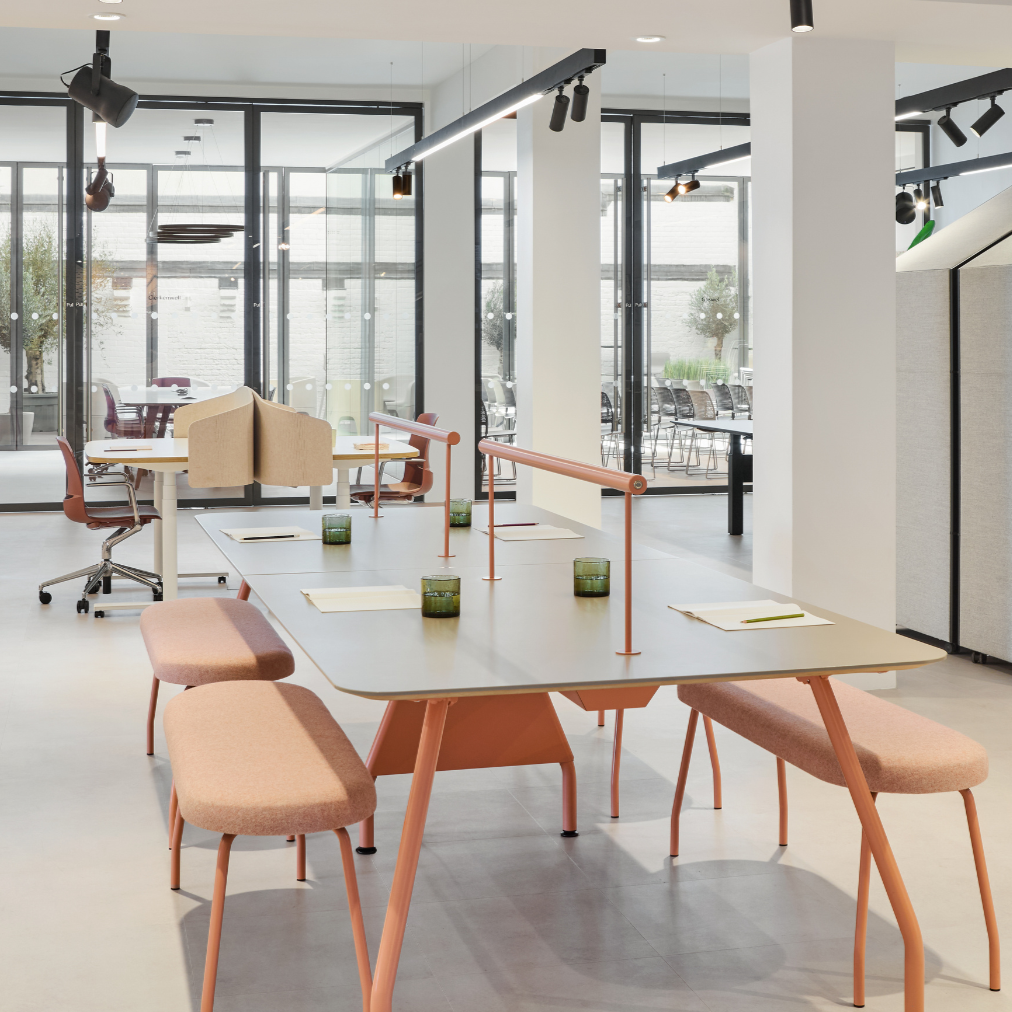
The modern workplace is evolving faster than ever. Traditional layouts of rows of desks and enclosed cubicles are giving way to offices designed around flexibility, collaboration, and employee wellbeingThe modern workplace is evolving faster than ever. Traditional layouts of rows of desks and enclosed cubicles are giving way to offices designed around flexibility, collaboration, and employee wellbeing. For organisations seeking to stay ahead, the key lies in thoughtful workspace zoning—creating adaptable environments that respond to how people actually work today. One of the most significant trends shaping office design is flexibility. Work patterns have changed: teams collaborate in bursts, focus deeply in concentrated periods, and switch between in-person and digital modes throughout the day. Workspaces that can transform to meet these changing needs without major disruption are becoming essential. Mobile partitions and modular systems allow offices to create temporary or permanent zones that can adapt in real time, supporting a mix of focused work, collaboration, and social interaction. (more…)

UK public sector appears to be phasing out remote and hybrid working

UK public sector appears to be phasing out remote and hybrid working

A new report suggests the UK public sector is moving sharply away from remote and hybrid working, despite signs that the shift could be undermining recruitment and retentionA new report suggests the UK public sector is moving sharply away from remote and hybrid working, despite signs that the shift could be undermining recruitment and retention. According to the 2025 State of Digital report by Unit4, just over half of UK public sector organisations now require employees to be fully office-based, compared with only 7 percent in 2023. The proportion operating fully remote models has dropped from 37 percent two years ago to 15 percent, while hybrid arrangements have fallen from 93 percent to 49 percent. (more…)