



Search Results for: working from home

The resistance to flexible working is entirely reasonable

Home workingIn recent media coverage of the decision by Yahoo to ban homeworking as well as a recent survey from Microsoft, the resistance to the idea that people work better when they are allowed to work flexibly has typically been put down to cultural inertia. Sometimes those who have resisted the uptake of flexible working have been portrayed as dinosaurs. While there’s no question that culture and management attitudes do create barriers to the uptake of flexible working, there is a growing recognition that certain flexible working practices may not be appropriate for many people and organisations and even specific sectors. The barriers may be there for a good reason.

(more…)

Flexible working: Falling out of fashion

 Image credit: <a href='https://www.123rf.com/photo_8784138_young-attractive-female-fashion-designer-working-at-office-desk-drawing-while-talking-on-mobile.html'>nyul / 123RF Stock Photo</a>

Just as ACAS concludes its consultation on flexible working, the practice has been declared démodé by none other than Alexandra Shulman, the editor of British Vogue. Writing in response to the recent news that Yahoo’s Marissa Mayer ordered the company’s 11,500 staff back to the office, the Vogue editor has argued that working from home is not an adequate alternative to showing your face in the workplace. Ms Mayer goes on to note that in a creative environment, important opportunities are missed when absent colleagues are tottering, undressed around their kitchens. The best stories, she says, arise from chance remarks, gossip and jokes between colleagues working alongside each other. (more…)

Homeworkers happier but more at risk from poor ergonomics

Flexible workingAmidst all the controversy over flexible working raised by the infamous Yahoo homeworking ban comes US research revealing homeworking policies lead to happier employers and employees. 93 percent of employees surveyed by Staples Advantage agree that telecommuting programs are mutually beneficial, and more than half 53 percent of business decision makers said telecommuting leads to more productive employees. However, the survey also reveals that 48 per cent of telecommuters use furniture or technology that is not ergonomically adjusted for them, which can lead to discomfort, loss of productivity or injury. (more…)

Working ‘proper hours’ may no longer be possible

I'm alright JackToday is the Trades Union Congress’s self-styled ‘Work Your Proper Hours Day’. Last week the TUC announced that it had used Government statistics to calculate that more than 5 million UK employees put in an average of over 7 hours of unpaid overtime a week, adding around £28 billion a year to the economy. Like me, you might be surprised the figures are that low and certainly I think a lot of people would be delighted to only put in an extra 7 hours a week. You might also be dismayed the TUC is advocating workers add less of their time into the economy by clocking off on time today. However, the bigger problem is surely with the language and ideas put forward by the TUC.

(more…)

Yahoo is not the only firm that doesn’t like flexible working

Yahoo! Sunnyvale headquarters.  October 28, 2001 (Y! Photo / Brian McGuiness)As news emerged over the weekend from Silicon Valley that Yahoo had introduced a new policy that insisted employees work from the company’s HQ, a survey from O2 in the UK highlighted just how many firms are not as keen on the practice of flexible working as they might claim in theory. The question we need to ask is whether this represents a genuine shift away from the assumption that we are moving towards more agile working practices, or is this just the last knockings of the old guard?

(more…)

Companies failing to communicate flexible working policies

consumerization-320x240

Less than one fifth of staff are being encouraged to work flexibly, with businesses failing to reap the rewards of increased productivity and employee well-being resulting from modern work practices and technology. New research by O2 reveals that whilst staff are ready to embrace new ways of working and understand the benefits, it is employers who are holding them back. More than three quarters (77 per cent) of employers say that flexible working is actively encouraged across their organisation but less than a fifth (19 per cent) of staff say their company encourages them to work flexibly. (more…)

Reversal of usual state of affairs as offices turn into homes

After years in which we have gradually seen technology and flexible working practices transform our homes into offices, the UK Government has reversed this apparently natural order of things by introducing legislative changes to the planning system that will allow developers to convert office buildings into blocks of flats without asking councils for planning permission.  The intention is to address the UK’s housing shortage and stimulate the economy. It’s also a sign that many offices are empty as both a consequence of  the downturn and changes in the way they are designed and used. (more…)

Unity Place shows how a day in the office can be worth the commute

Unity Place shows how a day in the office can be worth the commute

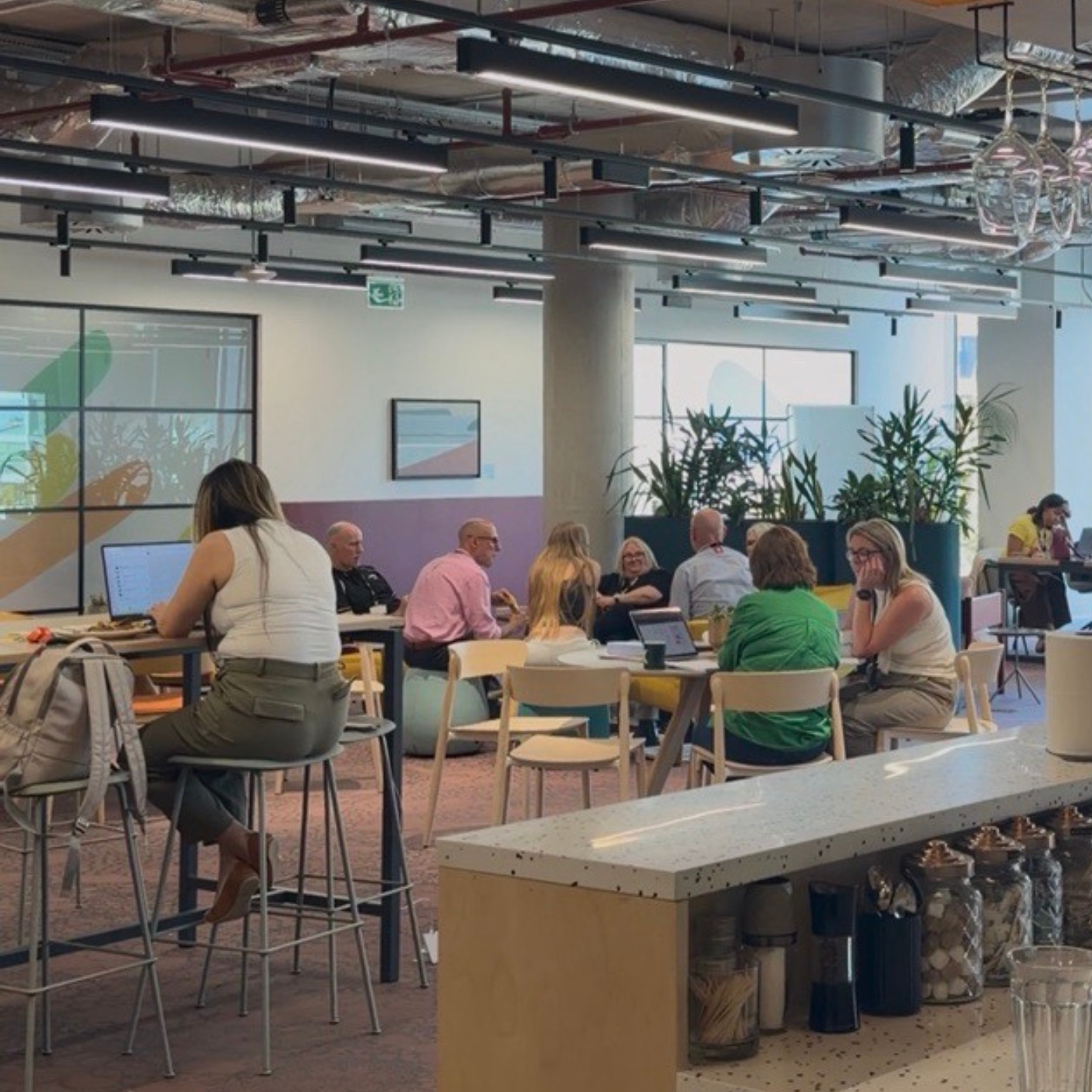
At Unity Place, the trend to split time between office and home is being seen across coworking, informal workspaces, meeting rooms and event spacesHybrid working may have changed how often people travel into the office, but businesses in Milton Keynes are becoming more intentional about what they want from face-to-face time. At Unity Place, the trend is being seen across coworking, informal workspaces, meeting rooms and event spaces, with people increasingly using in-person days for collaboration, team catch-ups, client meetings, networking and shared experiences rather than simply sitting at a desk. At x+why Unity Place (main image), there have been 868 meeting room bookings so far this year, with around 5,800 visitors year to date. The coworking provider has also seen regular repeat bookings from businesses that do not need a permanent office, but still want a flexible place to bring their teams together. (more…)

Is being back in the office making you desk bound?

Is being back in the office making you desk bound?

According to the British Medical Bulletin, UK office workers spend up to three quarters of their day sittingMost UK offices were not designed with movement in mind. They were designed to fit as many people as possible into a given space, keep overheads manageable and ensure everyone had somewhere to plug in a laptop. According to the British Medical Bulletin, UK office workers spend up to three quarters of their day sitting. Scientific Reports puts it more precisely, between 68 percent and 82 percent of the working day is spent seated, the highest proportion of any occupation. (more…)

Greater use of AI linked to more collaborative work patterns, survey claims

Greater use of AI linked to more collaborative work patterns, survey claims

Employees who make frequent use of AI tools are spending less time working alone and more time collaborating and learning with colleaguesEmployees who make frequent use of artificial intelligence (AI) tools are spending less time working alone and more time collaborating and learning with colleagues, according to a new global workplace survey from the Gensler Research Institute. The Global Workplace Survey 2026, based on responses from more than 16,000 office workers across 16 countries, suggests that as routine tasks become automated, work is shifting towards more human-centred activities, including mentoring, problem solving and teamwork. (more…)

AI users report stronger workplace connections, according to Gensler survey

AI users report stronger workplace connections, according to Gensler survey

New research from Gensler suggests that employees who make the greatest use of artificial intelligence tools are also among the most connected to their colleagues, challenging assumptions that increased use of technology leads to more isolated ways of working.New research from Gensler suggests that employees who make the greatest use of artificial intelligence tools are also among the most connected to their colleagues, challenging assumptions that increased use of technology leads to more isolated ways of working. The firm’s 2026 Global Workplace Survey gathered responses from more than 16,400 office workers across 16 countries. Around 30 percent of respondents were identified as “AI power users”, defined as people who regularly use AI tools in both their work and personal lives. (more…)

Rebuilding belonging: how offices can overcome loneliness  

Rebuilding belonging: how offices can overcome loneliness  

In the coming weeks it will be six years since the UK entered lockdown and working life changed overnight. While much has stabilised, the impact of the pandemic still shapes how people experience work, particularly when it comes to connection and belonging. Loneliness is widely recognised as a growing societal issue and government data shows that around a quarter of adults in Great Britain report feeling lonely at least some of the time, rising significantly among younger age groups. Hybrid working has not created this challenge but it has highlighted that for many people the workplace was a consistent source of social interaction. (more…)