To provide the best experiences, we use technologies like cookies to store and/or access device information. Consenting to these technologies will allow us to process data such as browsing behaviour or unique IDs on this site. Not consenting or withdrawing consent, may adversely affect certain features and functions.
The technical storage or access is strictly necessary for the legitimate purpose of enabling the use of a specific service explicitly requested by the subscriber or user, or for the sole purpose of carrying out the transmission of a communication over an electronic communications network.
The technical storage or access is necessary for the legitimate purpose of storing preferences that are not requested by the subscriber or user.
The technical storage or access that is used exclusively for statistical purposes.
The technical storage or access that is used exclusively for anonymous statistical purposes. Without a subpoena, voluntary compliance on the part of your Internet Service Provider, or additional records from a third party, information stored or retrieved for this purpose alone cannot usually be used to identify you.
The technical storage or access is required to create user profiles to send advertising, or to track the user on a website or across several websites for similar marketing purposes.








 Half of workers in the UK (50 percent) say their employers have provided support for their mental health during the COVID-19 pandemic, while two-thirds of employees globally reported the same (65 percent). This may illustrate a growing awareness and concern from businesses about the potential psychological impact on staff, according to a new study People at Work 2021: A Global Workforce View by the ADP Research Institute. (more…)
 HR leaders, heads of real estate and IT decision-makers have not always spent huge amounts of time working together – their roles and responsibilities have often been siloed. But in the new world of work, that’s all changing. These three groups of senior leaders are being asked to collaborate on one of the biggest challenges corporate occupiers, as they try to figure out when and how to return to office-based working and shape the future of work. Failure to collaborate will increase the probability of workplaces having low occupancy rates, low employee engagement and decreased productivity.
 Ten years ago, the day after I left my full-time job at FM World magazine* to set up Magenta I wrote a blog called
 When the global pandemic struck last year, many companies were forced to close offices and enable employees to work remotely – bringing forward their digital transformation roadmap by a good few year. A year on, and while it seems that the Covid-19 restrictions are reducing, there is unlikely to be a complete shift back to the office. Instead, most companies are now planning to adopt a hybrid work model; with employees working a mix of in-office or remotely.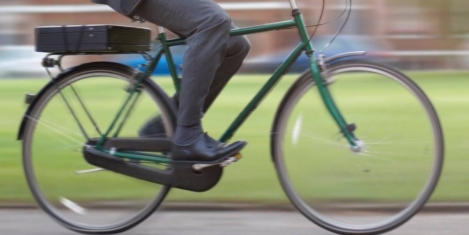
 Organisations and businesses have a lot to contend with as they begin to reopen their offices. From social distancing, working from home policies, office layouts, hand gel stations and more. But there also remains one key issue when it comes to welcoming employees back to the office. And that’s how they will get to work in the first place. That’s because the daily commute is going to look a lot different than it did pre-COVID. Firstly, while many employers and workers see the benefit of meeting in person, the hybrid world we now live in will see workers commuting to the office far less frequently. And, if they do travel to the office, there is an element of hesitancy about how they will get there; a recent study revealed
 The focus on creating a more sustainable workplace is increasing. Many designers, specifiers, manufacturers, suppliers and, of course, users are pledging their allegiance to the cause. Some are driven by a genuine recognition of the climate crisis whilst others are appreciating that commercially, it’s an essential direction. ‘Zero to landfill’ has been given ‘green bragging rights’ for some time. In reality, due to the significantly lower cost of incineration versus recycling, most material isn’t reclaimed, it is burnt. Whilst ‘energy from waste’ might alleviate some guilt, it is still contributing to pollution.
 The European Commission recently announced its proposal for the regulation of artificial intelligence, looking to
 We’re all biased. We all recognise the sharp bump of our critical thinking skills kicking into life when confronted with ideas and information that go against our beliefs. We know how they doze in the comforting embrace of affirming data. So, it’s been entertaining this week to observe the reaction to
 At 6.31 a.m. on Tuesday, December 8, 2020, the UK became the first country in the world to administer the COVID-19 vaccine. Just over five months earlier, I had been deployed to the NHS England and NHS Improvement COVID-19 vaccination programme to help drive the highly complex design and planning needed to bring the nation to this point. My role involved leading the set up and embedding of the Estates, Equipment, Consumables and Logistics workstream. The purpose of this was to establish and combine the new and existing infrastructure required in England to manage the distribution, regulation and administration of multiple vaccines so that all systems would be ready to vaccinate on the ‘go-live’ date.
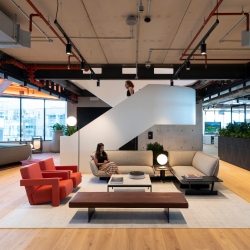 As 2020 came to a close, there was a palpable sense of hope that 2021 would bring with it a fresh slate with the horrors of COVID behind us. Alas, that has not happened and it seems we have more of the same, certainly for the next few months and with that the speculation about the ‘future of the office’ will no doubt continue.
 Is the workplace industry stuck in the past, in a 20th century model of how and where work is done? The separation of work and the rest of life during the Industrial Age has shaped the structures of modern life: the houses we live in, the offices, factories and shops we work in, and the transport networks that shuffle us from one location to another for different activities. It has also shaped the planning system, the institutional and financial structures of how places are designed and built, and perhaps most of all the mindsets of just about everyone involved in creating places to work and live.







June 3, 2021
Engineered familiarity in the new era of work
by Robin Bayliss • Comment, Working lives, Workplace design