







January 31, 2019
Political uncertainty continues to hold back UK commercial property market
 The Q4 2018 RICS UK Commercial Property Market Survey results continue to display mixed fortunes with changing shopping habits and uncertainty around politics remaining strong influences. The retail sector, with declines driven by the structural shifts in consumer preferences, is in stark contrast to the strong performance of the industrial sector over the quarter. In Q4 all-sector occupier demand declined for the third consecutive quarter, as the net balance moved down to -13% from -9% previously. The headline reading continues to be weighed down by declines in demand across the retail sector (net balance -58%), although the Q4 results also point to a slight decline in demand for office space (net balance -9%). At the same time, demand continued to rise in the industrial sector, with a net balance of +21% of respondents noting an increase in demand over the period.
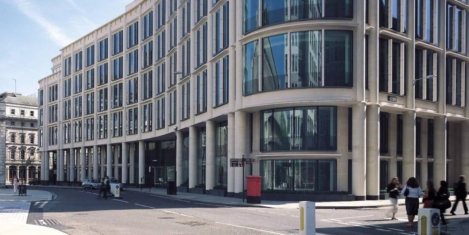
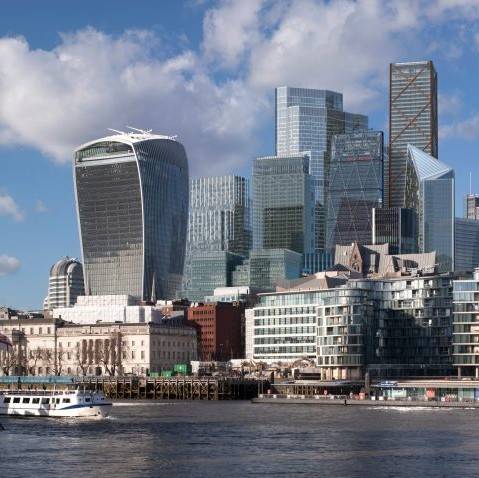
 Investment in Central London offices totalled £5bn in the final quarter of 2018, bringing the year-end total to £17.6bn, a 10 percent rise from 2017 and the highest level since 2014, according to data from CBRE. The final quarter of 2018 saw a 16 percent quarterly rise in investment volumes compared to Q3 2018 and a 69 percent increase on Q4 2017. Over the course of the year, five deals over £500m transacted, including the £1bn sale of 5 Broadgate to CK Asset Holdings and the £1.3bn sale of leaseback of Goldman Sachs’ new European HQ. Whilst none of these larger transactions completed in the final quarter of 2018, Q4 was the most active of the year in terms of number of deals transacted. A total of 65 deals completed in the final quarter of 2018, highlighting the persistent demand for assets in Europe’s principal gateway city. The largest investment transaction in Q4 2018 was the £400m+ sale of 30 Gresham Street to Wing Tai and Manhattan Group from Samsung.

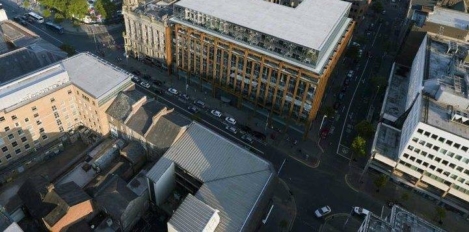
 There was a record-breaking rate of take-up within the regional office occupier markets outside of London and the South East in 2018, with few signs of Brexit-related uncertainty, according to an analysis by CBRE. Across the ten regional cities monitored by CBRE, provisional analysis shows that overall take-up reached nearly 7.3m sq ft. This level was 16 percent above the five-year average and 6 percent higher than 2017, the previous record-breaking year. The majority of regional office demand has again been driven by the business and professional services sectors. 2018 saw record take-up from flexible office operators across the UK, representing the leading portion of business services take-up. This was the year the co-working revolution surged into regional cities. Birmingham, Bristol and Glasgow were all stand out expansion locations. With more demand from flexible workspace operators – both from established and new entrants, further expansion is anticipated in 2019 albeit at a further pace as markets become more saturated.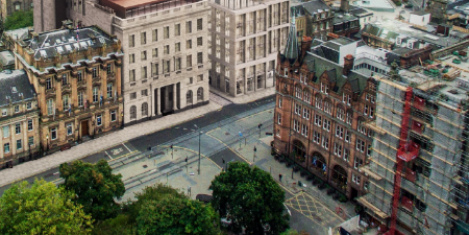
 An acute lack of supply in Edinburgh’s city centre will push up office rents to over £35 per sq ft in 2019 according to the latest estimates by Savills, which suggests that rental increases and lack of supply may cause certain organisations to consider opportunities on the city’s western periphery. The latest research from the firm shows office take-up in Edinburgh in 2018 totalled 950,000 sq ft – 18 percent ahead of the 10-year annual average – as the city continues to see robust levels of demand from across a number of key sectors and a continued focus amongst occupiers on the city centre. However, despite strong occupier demand, there was a decline in office take-up in 2018, compared to 2017 (1.04 million sq ft) which the firm attributes to a lack of good quality, city centre office supply. Edinburgh’s city centre office availability has been reducing since 2012 and take-up activity during 2018 has seen the majority of new developments being wholly or partially pre-let. This lack of supply is forcing an increasing number of occupiers to re-gear leases on existing offices against a lack of alternative options.
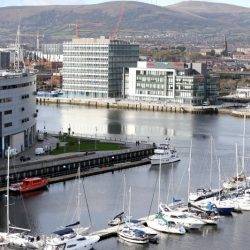 The Northern Ireland office market had a record year in 2018, with a 100 percent increase in take-up, according to the latest figures from CBRE. The Northern Ireland (NI) office sector enjoyed its most successful year on record with 885,023 sq ft of take-up reported across 84 transactions, more than double that achieved last year. Notable office deals completed in 2018 included the PwC move to Merchant Square, Northern Ireland Civil Service at 9 Lanyon Place, Allstate at Mays Meadow, TLT at River House and Baker McKenzie at City Quays 2, which is part of Belfast’s City Quays mixed-use regeneration project. However, according to CBRE’s Real Estate Outlook report, the office market in NI is hampered by a severe lack of investment deals in the face of ongoing local, national and international political uncertainty. This means that while the real estate market in Northern Ireland generally has performed well in 2018, the investment sector experienced a decrease in activity as a resulting knock-on effect of the current political situation locally at Stormont as well as ongoing Brexit negotiations.
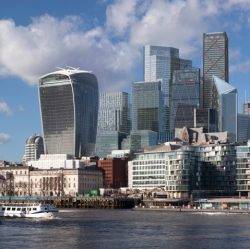 Office investment volume in Central London in 2018 is expected to come close to £20 billion, despite the ongoing economic and political uncertainties of Brexit. According to Savills London witnessed notably above average levels of office take-up in 2018 and achieved the best ever City of London rent (£80 per sq ft). The list of global businesses committing to long term leases has continued to grow with announcements in the last 12 months from Facebook, LinkedIn and Sidley Austin. The constrained development pipeline has seen more office pre-lets over 50,000 sq ft agreed in 2018 than ever before, while a shortage of available Grade A options has matured into a greater number of development opportunities. Savills also predicts a greater number of value-add and development opportunities coming to the market and that trading in London will insure the ongoing creation of the world’s best office buildings in a city where people will continue to want to work. This in turn creates new investment opportunities for global investors searching for prime assets.








January 25, 2019
The state of the workplace right now? Everywhere and nowhere, baby 0
by Paul Carder • Comment, Facilities management, Features, Premium Content, Property, Workplace design
(more…)