








August 22, 2017
Regional office market remains strong and embraces the co-working revolution
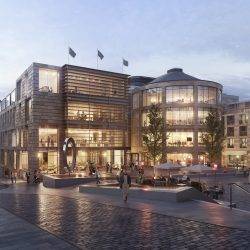 The creative industries sector accounted for over a third 35 percent) of take-up in the regional office market in the first half of the year, with this sector in particular driving the co-working revolution and the provision of flexible office space. Latest figures in CBRE’s H1 2017 Property Perspective, which monitors the performance of ten regional cities, overall, the UK’s regional office markets saw continued demand in the first half of 2017, with office take-up reaching 2.8 million sq ft, only slightly lower than the five-year average. For the first half of 2017, several cities witnessed improved levels of take-up when compared with the first half of 2016, these include Aberdeen, Edinburgh, Leeds and Manchester. Select locations such as Reading, Maidenhead and Watford also saw a continuation of record rents being set during the first half of the year, which has largely been driven by the delivery of new developments.



 An increase in the number of UK-born employees leaving the UK’s workforce, either through retirement or emigration is coinciding with a shrinking pool of younger workers, which a fall in immigration can no longer fill, a new report warns. An analysis of the UK’s workforce showed that the UK’s workforce grew in 2016-2017 only because of an increase in EU and non-EU workers.


 Acas’ helpline receives many callers working on a zero hours, agency or self-employed arrangement who do so out of necessity rather than by choice, with some people feeling taken advantage of and unfairly excluded from employment rights. In its response to the Matthew Taylor review on modern employment practices the Acas Council looked at calls to its employment helpline, which revealed confusion and uncertainty around employment status and rights for those involved in the non-standard types of working. Prompted by evidence that these types of working arrangements are on the rise Acas has also published a new discussion paper on non-standard or ‘atypical’ forms of work, and identifies areas where good practice can be encouraged and improved. The discussion paper, Ain’t that typical? Everyday challenges for an atypical workforce, also reveals that the practice of ‘zeroing down’ workers’ hours is used in some workplaces to discourage staff from raising concerns or asserting rights.












August 11, 2017
Reducing the risk of personal gambling becoming a corporate fraud issue
by Andrew Durant • Comment, Workplace
(more…)