







November 7, 2017
New research identifies nine distinct segments of the self employed workforce
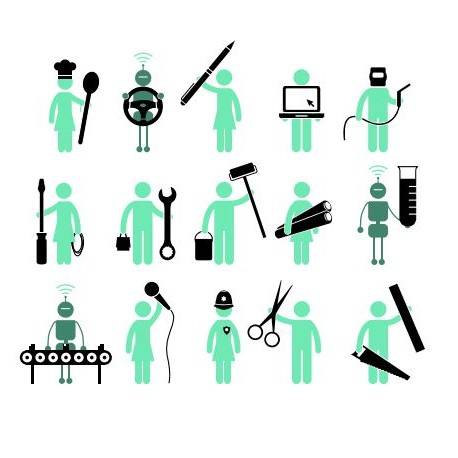
Far from being a homogeneous group, nine distinct segments of the solo self-employed workforce have been identified in new research published by the Centre for Research on Self-Employment, in partnership with IES. This segmentation furthers understanding of the solo self-employed population, including the levels of independence and security, and variation in earnings across this broad section of the UK workforce. The solo self-employed are those who do not employ other people and therefore work on their own account, and makes up 84 per cent of the self-employed workforce.







 UK employment is predicted to grow strongly in the third quarter of 2017, but wage growth is likely to remain weak, according to the latest CIPD/The Adecco Group Labour Market Outlook. Although the UK labour market remains buoyant, basic pay award expectations for the next 12 months remain at just 1 percent. Put against the backdrop of poor productivity growth, the report points to an increase in labour supply over the past year as a key factor behind the modest pay projection. This is driven by relatively sharp increases in the number of non-UK nationals from the EU, ex-welfare claimants and 50-64 year olds. This increase in labour supply may explain why the jobs market remains challenging for some jobseekers, especially those seeking lower-skilled jobs. Employers report a median number of 24 applicants for the last low-skilled vacancy they tried to fill, compared with 19 candidates for the last medium-skilled vacancy and eight applicants for the last high-skilled vacancy they were seeking to fill. Overall, employers felt that around half of applicants were suitable for each role they were trying to fill.
 An increase in the number of UK-born employees leaving the UK’s workforce, either through retirement or emigration is coinciding with a shrinking pool of younger workers, which a fall in immigration can no longer fill, a new report warns. An analysis of the UK’s workforce showed that the UK’s workforce grew in 2016-2017 only because of an increase in EU and non-EU workers.








October 10, 2017
We (still) need to talk about mental health in the workplace
by Liam Butler • Comment, Wellbeing
(more…)