Search Results for: future of work

Most people managers would prefer not to manage people

Most people managers would prefer not to manage people

More than two-thirds of managers would rather not be managers at all, according to a YouGov survey commissioned by SafetyCultureMore than two-thirds of managers would rather not be managers at all, according to a YouGov survey commissioned by SafetyCulture. According to the poll, 69 percent of team leaders in frontline sectors across the UK and Ireland would prefer not to manage people if there was no impact to their salary or benefits. Younger generations are the least willing to be managers. Nearly three-quarters of Generation Z and Millennial managers (73 percent) say they’d rather be individual workers compared to 65 percent of people aged 50 or older. (more…)

The ROI of predictive property management with IoT sensors

The ROI of predictive property management with IoT sensors

It’s all well and good eulogising about the technological benefits of incorporating the burgeoning Internet of Things (IoT) within property management but do the numbers stack up?It’s all well and good eulogising about the technological benefits of incorporating the burgeoning Internet of Things (IoT) within property management but do the numbers stack up? What is the likely return on investment (ROI) of shifting from the existing reactive model to something distinctly more proactive and predictive? A recent six-month project at a retirement complex in the Scottish Borders might just shed some light on the viability, or otherwise, of the IoT revolution that’s well underway. (more…)

Lack of innovation continues to hamper small business and startups

Lack of innovation continues to hamper small business and startups

Small business innovation in the UK has fallen for the fourth consecutive year despite record levels of entrepreneurial ambition,Small business innovation in the UK has fallen for the fourth consecutive year despite record levels of entrepreneurial ambition, according to the latest State of Small Business Britain report from the Enterprise Research Centre. The annual study draws together findings from a range of business surveys and shows that 36 percent of working age adults are now starting, running or planning to launch a business. This is the highest level recorded since the Global Entrepreneurship Monitor began tracking activity in 1999. Early stage entrepreneurial activity has doubled since the early 2000s and has stabilised at around 12 percent. (more…)

The squeezed middle: supporting frontline managers in 2026

The squeezed middle: supporting frontline managers in 2026

I’ve spent hundreds of hours listening to thousands of people across organisations, and I’ve discovered something troubling: everyone is waiting for someone else to give them direction. It’s an organisational standoff. Senior leadership wants proactive teams. Frontline staff are desperate for clarity. And in the squeezed middle? Nothing but limbo. If we’re looking to grow, recover or sustain our organisations, the answer lies in frontline management skills. Your manager makes the biggest impact on how you feel about work and how secure you feel about your future. If you have to work for money, and most of us do, this relationship has enormous consequences for your wellbeing. (more…)

AI adoption exposes generational divide in management, research finds

AI adoption exposes generational divide in management, research finds

KEDGE Business School has published new research suggesting that artificial intelligence (AI) is already reshaping management practice, but that a strong generational divide is emergingKEDGE Business School has published new research suggesting that artificial intelligence is already reshaping management practice, but that a strong generational divide is emerging in how leaders use the technology. The findings come from an OpinionWay survey carried out in October 2025 among managers, and point to younger leaders adopting AI at a significantly faster pace than their older counterparts. While AI tools such as ChatGPT are now widely used across the profession, the study suggests that managers under 40 are far more likely to integrate AI into day-to-day leadership decisions, while older managers remain more cautious and selective. (more…)

AI isn’t turning robots into humans, it’s turning humans into robots.

AI isn’t turning robots into humans, it’s turning humans into robots.

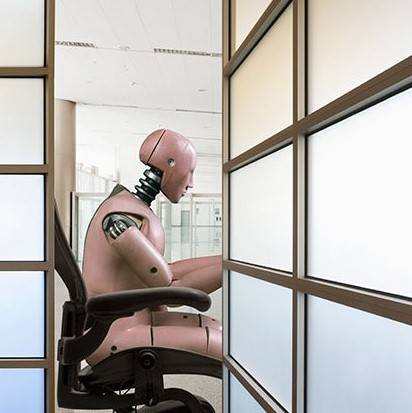
in amongst all the noise, I’m paying less attention to how AI is seemingly becoming more human, and more attention to how we are using AI to become robot-like.In all the conversations, debates and shouting matches about AI that continue to dominate the internet, there is much talk about the insidious danger of anthropomorphising AI. There is something chilling about the deliberate stumbles, inflections and hesitations that are put into AI communications, to try and convince people that they are talking to a sentient being. Explanations of AI deliberately use language such as ‘the model understands’ to make us believe that AI is developing a human level of learning, as that is more appealing than saying ‘the algorithm predictions are expanding’ (and neatly glosses over the increasing error rates and hallucinations). However, in amongst all the noise, I’m paying less attention to how AI is seemingly becoming more human, and more attention to how we are using AI to become robot-like. (more…)

KI Achieves FISP (S) Certification, reinforcing its commitment to sustainable and circular practices

KI Achieves FISP (S) Certification, reinforcing its commitment to sustainable and circular practices

KI has reaffirmed its long-standing commitment to sustainability by achieving the enhanced FISP (S) certification, building on over a decade of continuous accreditation under the Furniture Industry Sustainability Programme (FISP).KI has reaffirmed its long-standing commitment to sustainability by achieving the enhanced FISP (S) certification, building on over a decade of continuous accreditation under the Furniture Industry Sustainability Programme (FISP). As the only independently certified sustainability standard created specifically for the furniture sector, FISP represents the industry’s most comprehensive benchmark for environmental, social and economic best practice. KI first became FISP-certified in 2013. Its progression to the advanced FISP (S) standard in late 2025 demonstrates the company’s ambition to lead the industry toward more circular, transparent and future?ready product development. (more…)

Intentional AI adoption is a leadership challenge, not just a technology problem

Intentional AI adoption is a leadership challenge, not just a technology problem

even in an AI-driven future, the real challenge remains deeply human—guiding teams with intention, empathy, and trust.A lot of conversations about AI jump straight to the end state. Leaders envision a future where the human workforce is focused on higher-order thinking and augmented with agentic capabilities across the enterprise, and where operational costs are much lower. While visionary thinking is not negative, we’re discovering that the transition from today’s version of the organization to a more automated state will require a massive transformation to achieve. Effective, sticky change requires active work and leadership to truly pivot processes, integrate technology, cultivate new skillsets, establish the cultural foundations, reformat the organizational structure, and ramp to new ways of working. Machines can’t steer that kind of change; humans still have to. (more…)

Surface Design Show announces details of speaker’s programme

Surface Design Show announces details of speaker’s programme

The Surface Design Show has announced the final details of its speaker’s programme for the 2026 edition of the show.The Surface Design Show has announced the final details of its speaker’s programme for the 2026 edition of the show. Featuring a range of topics with some of the most innovative voices in industry, the schedule includes an impressive list of industry names including Michelle Ogundehin, Katie Treggiden, Liz Bell, Tim Gledstone, Giles Miller and Justine Fox.  The main stage is designed by Design Command using acoustic surfaces, soft textures and gentle light, with furniture supplied by Table Place Chairs. The design treats silence not as absence but as an active design language, exploring how materials can shape space while creating a pause for visitors to reflect and feel inspired amid the show. The programme will consist of 21 presentations from over 50 speakers spanning the full breadth of the design industry. (more…)

Surface Design Show 2026 champions the next generation of material innovators

Surface Design Show 2026 champions the next generation of material innovators

Surface Design Show 2026 reaffirms its commitment to nurturing emerging design talent, placing material innovation, sustainability and future-focused thinking firmly at the heart of the show. Through its ongoing partnerships with the Royal College of Art, the Green Grads initiative and for the first time the Emerging Talent category within the Surface Design Show Awards, the 2026 edition highlights a new generation of designers redefining what surface design can be. Across the exhibition, visitors will encounter projects that challenge extractive systems, transform waste streams and place human and environmental wellbeing at the centre of material design. (more…)

Evidence of AI-driven job losses remains limited, says Oxford Economics report

Evidence of AI-driven job losses remains limited, says Oxford Economics report

The authors suggest that some firms may be framing layoffs as AI-driven to present a more positive narrative to investors, rather than citing weaker demand or earlier over-hiring.Claims that artificial intelligence is already driving large-scale job losses appear to be overstated, according to a new global research briefing from Oxford Economics [registration], which suggests that the impact of AI on labour markets so far has been uneven and modest. The report argues that while there is anecdotal evidence of job losses in sectors most exposed to automation, firms are not yet replacing workers with AI at a scale that would materially raise unemployment rates. Oxford Economics concludes that near-term fears of widespread AI-driven unemployment are not supported by current data. (more…)

Addressing the problem of burnout in high stress industries 

Addressing the problem of burnout in high stress industries 

This article will explore the root cause of burnout, which often goes unnoticed and unaddressed. You will gain insights into what the early signs look like and how a sustainable workplace design can help reduce unnecessary strain on employees.What would happen if a bridge constantly supports a stream of traffic over time? No matter how robust or well-built it is, there will come a time when the materials begin to strain, revealing cracks and deeper structural issues.  Now, high stress industries tend to operate in a similar manner. Employees, acting as the bridge, may crumble under the continual weight of increasing workloads. Inevitably, burnout awaits at the end of the rope, something which serves as a warning of an overextended system.

This article will explore the root cause of burnout, which often goes unnoticed and unaddressed. You will gain insights into what the early signs look like and how a sustainable workplace design can help reduce unnecessary strain on employees.


Burnout As a Signal of Systemic Imbalance 

For the longest time, burnout has been viewed as an individual failure to cope. However, the fact that this condition is so persistent across industrial sectors reveals something far more structural.

Personal resilience, or lack thereof, becomes secondary when exhaustion and disengagement are reported across roles and sectors. By this stage, burnout has turned into a system-level signal that organizational demands have drifted out of alignment with human capacity.

A 2025 report showed that 72 percent of employees reported moderate to high levels of work-related stress. This marked the highest figure recorded in the past six years. Another independent research conducted the same year discovered that 66 percent of employees were experiencing some form of burnout.

The truth is that certain industries are known to be high-stress, including education, healthcare, emergency services, finance, and technology. When burnout is reported across these, it’s a sure sign that the operating models are relying on endurance rather than sustainability.

Since time pressure and emotional labor are treated as inherent to such sectors and the roles therein, burnout goes largely unaddressed. Common indicators of systemic imbalance include:

  • Workloads remain high despite changing demand cycles.
  • Recovery time is treated as optional.
  • Professionals are given high responsibilities with limited control or discretion.
  • Crisis conditions become normalized, masking long-term risk.
  • Moral and emotional strain occur, especially where workers cannot meet professional standards consistently.

Interestingly, burnout first appears among the most capable employees, those most invested in the outcomes. This should ring alarm bells, but sadly, many continue to see it as an individual issue. It’s time to understand that burnout is an early warning that the system itself is operating beyond sustainable limits.


How Workforce Shortages Intensify Burnout Cycles 

It’s important to note that high-stress industries also suffer from workforce shortages alongside burnout. This means the two are not separate challenges. When staffing levels are inadequate, the result is sustained pressure on remaining employees, no matter the market demand.

Staffing gaps go beyond redistributing work. They reshape job conditions in such a way that burnout only gets worse. The scale of this problem is most evident in the healthcare sector. As per a 2025 report, 72 percent of hiring professionals reported ongoing staffing shortages in their facilities.

What’s more is that such conditions are expected to continue in the near future. When more than two-thirds of managers cannot find enough qualified applicants to fill their vacancies, we can understand that the problem is real.

Under such circumstances, burnout tends to intensify through the following mechanisms:

  • Workloads don’t get reduced, just redistributed. The remaining staff have to work harder to complete the additional tasks generated due to high demand.
  • The work environment continues to stay fast-paced and high-stakes.
  • Experienced staff members spend more time covering direct services and less on mentoring or decompression.
  • Since shortages persist, the workforce doesn’t get replenished properly.
  • As the existing employees strain under pressure, that in itself fuels burnout and attrition rates.


Rethinking Talent Pipelines in High-Stress Sectors 

If organizations operating across high-stress industries are somehow able to replenish and sustain their workforce, that should provide some relief from burnout. The problem is that traditional talent pipelines, particularly in sectors like healthcare, emergency services, and education, were built for linear careers and predictable demand.

Under prolonged pressure, these models struggle to respond quickly enough. As a result, existing staff members are left to absorb the ongoing gaps. Many organizations are now reconsidering how people enter demanding professions in the first place.

In other words, many have decided not to rely solely on early-career entrants. Mid-career transitions and return-to-practice routes are also becoming a part of broader workforce strategies. For instance, in healthcare, career changers with a university degree in other disciplines can also pick up nursing training.

Within this context, online second-degree accelerated BSN programs have emerged as one example of how talent pipelines are being restructured. These programs lead to a Bachelor of Science in Nursing, the standard qualification for registered nurses.

As Elmhurst University shares, students with a prior Bachelor’s in any other discipline will earn their basic nursing degree within 16 months. The online structure addresses burnout in ways that traditional programs may not, as follows:

  • Trainees can stay partially employed while they complete their coursework.
  • The workforce across crucial, high-stress sectors can be replenished faster.
  • Candidates across different regions and demographics can have access to learning.
  • Organizations are able to avoid cyclic depletion caused by pulling staff out for upskilling or retraining.

Such adaptations can reduce the duration and intensity of understaffing across high-stress sectors. However, pipeline flexibility alone cannot resolve burnout. Parallel improvements in workload design and staffing support are also needed. Otherwise, the system already operating beyond sustainable limits will keep feeding itself.


Moving From Wellbeing Rhetoric to Sustainable Work Design 

Addressing burnout through well-being initiatives has become commonplace across high-stress industries. The world is all too familiar with wellness apps and stress management workshops. These interventions do provide short-term relief for individuals. However, they do little to tackle the root of the problem: systemic drivers such as chronic understaffing and excessive workloads.

According to Gallup’s State of the Global Workplace 2025 report, only 33 percent of employees worldwide said they were thriving. 58 percent were struggling to cope, and 40 percent even experienced significant stress “a lot of the previous day.” Such trends cut across sectors, showcasing that burnout and disengagement are not merely isolated personal challenges.

The need of the hour is sustainable work design that addresses how work is structured and paced. Key elements of this include the following:

  • Realistic workload distribution to ensure tasks are aligned with staffing levels and capacity
  • Predictable scheduling that reduces last-minute changes, which could erode recovery time
  • Built-in recovery periods to protect rest as a structural requirement
  • Clarity of roles to prevent overload that results from blurred responsibilities
  • Feedback loops that adjust workflows before the strain escalates

This type of design views burnout as a signal of system failure, rather than an individual employee’s weakness. High-stress industries cannot afford to consider this design as an optional enhancement.

The same is critical to stabilizing teams and protecting workforce capacity so as to mitigate long-term burnout. This is especially important as recent research has emphasized that organizations need to adapt workforce structure and skills to evolving demands.

With that being said, organizations also need to factor in anticipated future pressures, not just current workforce strain. This means the next frontier lies in intelligent workforce design. It would include predictive workload modeling and cross-training of teams for flexibility.

As digital tools and remote learning expand access, changes in workplace policy and culture can help prioritize sustainable work practices. This is crucial because the future of high-stress industries depends on proactive, structural solutions if burnout is to become a thing of the past.