




Search Results for: human resources

UK public sector leading the way in procurement and sustainable building

Nottingham City Council's Loxley Building

Nottingham City Council’s Loxley Building

Over the last few years, the UK Government has grown increasingly interested in finding ways of making its £30 billion property portfolio more efficient. Both the last Labour government and the current Coalition administration have been driven by the opportunities offered them with the advent of new technology, new ways of working and new procurement models. They’ve pursued these issues to cut costs by reducing and changing the way property is designed and managed but have also found how that can also help to establish best practice in sustainable building. What is increasingly apparent, especially given recent news from the Major Projects Authority about cost savings in procurement is that the public sector is now leading the way as models of good practice.

(more…)

Lack of skills hampering business growth say UK CEOs

Lack of skills training is hampering growth say business leaders

Nearly two thirds (65 per cent) of UK employers say a lack of key skills is hampering their growth prospects – with construction, mining, engineering and energy companies reporting the most chronic shortage of skilled employees. Yet, according to a PwC global survey, while three out of four UK CEOs said creating a skilled workforce should be the Government’s highest priority only a third intended to do anything about it for the coming year. Instead, they see it as a longer-term goal; with 70 per cent of respondents saying they plan to increase investment in their workforce over the next three years. (more…)

Fully mobile workplace for Cisco’s new Singapore regional HQ

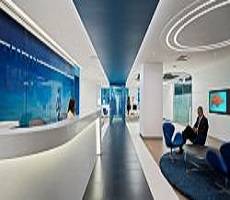
Cisco Singapore HQ offers fully flexible working

IT giant Cisco has opened a new regional headquarters in Singapore that features utilisation-based space allocation that for the first time allows all of its staff to work just about anywhere in the building, using whichever kind of mobile device they prefer. The move reflects the findings of Cisco’s recent report which revealed that growing numbers of workers prefer to use an iPad or iPhone rather than a PC. The new offices, located at UE Biz Hub, within the Changi Business Park in Singapore, brings together 1,000 employees from Cisco’s previous four offices around the island and has reduced around 40 per cent of the required workspace.

(more…)

The latest edition of the Insight newsletter is now online

2.Insight_twitter_logo smThe April 10 edition of the Insight newsletter is now available to view online covering a range of themes from commercial property to ergonomics, human resources to workplace technology, office design to legislation, all done with the usual verve and willingness to tackle issues in a genuinely engaging and unique way. Office Insight is already the most widely read publication in the UK dedicated to workplace design and management with up to 1,000 unique readers daily. The online newsletter is available to read here and it’s quick and easy to subscribe through the main website if you don’t receive a copy already.

The resistance to flexible working is entirely reasonable

Home workingIn recent media coverage of the decision by Yahoo to ban homeworking as well as a recent survey from Microsoft, the resistance to the idea that people work better when they are allowed to work flexibly has typically been put down to cultural inertia. Sometimes those who have resisted the uptake of flexible working have been portrayed as dinosaurs. While there’s no question that culture and management attitudes do create barriers to the uptake of flexible working, there is a growing recognition that certain flexible working practices may not be appropriate for many people and organisations and even specific sectors. The barriers may be there for a good reason.

(more…)

Staff development still tops European employers’ priorities

Image credit: <a href='https://www.123rf.com/photo_10259161_portrait-of-successful-young-businessman-showing-presentation-in-a-meeting-at-office.html'>logos / 123RF Stock Photo</a>

European employers are still maintaining ambitious staff development plans, despite the gloomier macro-economic climate. According to a study by Aon Hewitt, the proportion of companies that expect to add new jobs in 2012 has increased to 47 per cent, overtaking the number of companies foreseeing a reduction of their workforce (31 per cent). Explained Leonardo Sforza, chair of the European Club for human resources Scientific Committee: “The slow and painful road to economic recovery is not discouraging successful multinationals from continuing to invest in their human capital and from demonstrating the belief that their people remain the most powerful engine for sustainable growth and innovation.” (more…)

Using the office treadmill to fight the flab

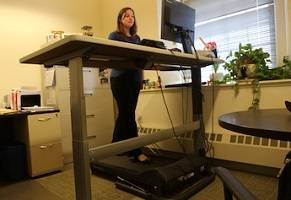
Office treadmill

While shopping recently for a new arm chair, I noticed the prevalence of “snuggle chairs”, marketed as wider than average chairs in which two people can sit cosily together. However, judging by some of the customers checking them out, they appeared much more suitable for use by individuals with a wider girth. You don’t have to people-watch in a furniture store or visit the town of Tamworth, which this weekend the Daily Mail branded ‘”the fattest town in Britain” to notice people are getting fatter. Could a new “office treadmill” help address the obesity problem?

(more…)

Whatever the office of the future is, it should be there to serve people

Whatever the office of the future is, it should be there to serve people

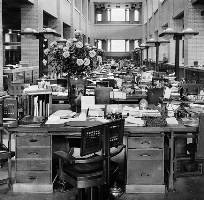
Larkin BuildingFuturology is notoriously a mug’s game. Especially when it comes to making predictions about technology. Just ask Ken Olson, the founder of DEC who in 1977 pronounced that ‘there is no reason anyone would want a computer in their home’. Or Bill Gates himself who once claimed that Microsoft ‘will never make a 32 bit operating system’. But that shouldn’t make us blind to those predictions that we know will largely come true, not least those based on what we know is happening in the present. This is typified by research carried out by Cass Business School and Henley Business School and presented in a book called Future Work: How Businesses Can Adapt and Thrive in the New World of Work. It found that two-thirds of the 360 managers it surveyed believe that there would be a revolution in working practices over the coming decade. Ninety per cent said that staff were more productive when empowered to decide when and where and how to work.

(more…)

A more decentralised office inevitable for world’s workers

The changing nature of work and the workforce continues to transform offices around the world. And nowhere more so than in the United States  According to a recent report from McKinsey – called Preparing for a New Era of Knowledge Work – not only are we seeing the final stages of the transition to a knowledge economy with all that entails, demographic inertia means that there may be a huge shortfall in the number of skilled graduate workers needed to service it. This pattern will be evident around the world, especially in rapidly developing economies such as China and India.  (more…)

There’s a simpler, more natural and diverse approach we can take to workplace design

There’s a simpler, more natural and diverse approach we can take to workplace design

A different approach to workplace design, one that values clarity, quiet and coherence, is being driven more by carbon reductions and overall user experienceOur buildings do more than house activity. They shape our states of mind. Yet many contemporary spaces, whether offices, schools or public buildings, are full of visual noise, synthetic finishes and unnecessary complexity. These elements are often justified in the name of expression or efficiency. But they can leave people disoriented, distracted or exhausted. A different approach to workplace design, one that values clarity, quiet and coherence, is being driven more by carbon reductions and overall user experience than by neurodiversity alone. Through seeking simpler, more durable ways to build: an architecture grounded in natural materials, minimal finishes and thoughtful restraint. (more…)

A break in the workspace-time continuum

A break in the workspace-time continuum

The fracturing of time and place underlies every one of the great workplace issues of our time. Everything that springs from this – the where, when, how, what and why of work – is defined by the shattering of any fixed idea we may once have had of a time and a place to work. Because the challenge to these traditional ideas is now so inextricably linked in our minds with new technology, we might often  forget that people have been asking questions about how we can get the most out of each day for thousands of years. Tempus fugit after all, and as a consequence we’ve always known that how we spend our days is how we spend our lives. (more…)

People are still powering productivity in the era of AI

People are still powering productivity in the era of AI

The rise in employers committing to employee-first productivity practices is encouraging. Ultimately, people are still at the heart of every organisation. AI will continue to develop, but with teams that bring personality and spark to their roles, businesses can boost efficiency without losing the human element.Employee productivity has been cast into the spotlight in recent months, thanks to the acceleration of AI. Our new research shows that 50 percent of businesses are prioritising employee productivity over the next two years, budgeting for resources that promote individual staff performance and effectiveness. AI’s growing role in the workplace is, of course, a key driver of this trend. But it’s not the only factor. Increased remote work and other operational challenges mean businesses are looking to maximise efficiency and get the best possible return on their investment. (more…)