Search Results for: human resources

Actionable workplace wellness initiatives for small businesses

Actionable workplace wellness initiatives for small businesses

Wellness initiatives, however, can serve as a practical and powerful solution. When done thoughtfully, they help reduce stress, improve morale, and create a work environment where people feel supportedAmerican workplaces are going through big changes now. Employee engagement has hit a ten-year low. Small businesses often feel these pressures more intensely than large corporations. Limited resources make turnover and declining morale especially difficult for small firms. When even one employee feels overwhelmed or disengaged, the impact can ripple through an entire team.

Wellness initiatives, however, can serve as a practical and powerful solution. When done thoughtfully, they help reduce stress, improve morale, and create a work environment where people feel supported rather than stretched thin.

In this article, we’ll share a few actionable workplace wellness initiatives that can help you foster healthier habits, stronger engagement, and long-term resilience.


1 Encourage Flexible Work Options

The traditional nine-to-five office hours are quickly becoming a thing of the past. Many employees now value flexibility just as much as salary. Flexibility helps your team balance their work and their actual lives. This reduces stress and prevents that burnout we all fear.

Around 76% of businesses in the UK already offer flexible work options to their employees.

You do not have to go fully remote if that does not fit your small business’s model. There are so many ways you can give your team more control over their time. One common way is to offer telecommuting or remote work. This lets people work from home some or all of the time. It saves them a long commute and saves you on office costs.

If your team needs to be in the office, try flexible hours or flextime. This lets them choose their own start and finish times. You can also look into compressed workweeks. This is where employees work their 40 hours in fewer days.

A popular choice is working 10 hours for 4 days. This gives them a 3-day weekend every single week. This model is great for high-workload industries, such as retail, healthcare, or manufacturing.


2 Foster Happiness with Growth Opportunities

People want to feel like they are moving forward. When employees feel stuck, they start looking for the exit. Offering growth opportunities is a huge part of wellness. It keeps the mind sharp and reduces stress about the future.

For a small business, you might not have a big training budget. That is okay. You can check out the Small Business Association (SBA) Learning Platform. It offers online courses on everything from managing a team to marketing for free. Then there is SCORE. This is a network of retired executives who offer free mentoring.

For those looking to advance their careers, you could offer partial tuition reimbursement for continuing education.

Healthcare roles offer a relevant example. Nurse practitioners are expected to remain in high demand through 2031. Many bedside nurses aspire to move into these advanced practice roles.

Supporting an employee who wants to pursue an MSN-FNP degree can make that goal far more attainable. MSN-FNP stands for Master of Science in Nursing–Family Nurse Practitioner. Rockhurst University explains that this program helps registered nurses transition into primary care for patients of all ages.

Many universities now offer the MSN-FNP degree online. By opting for online degrees, employees can continue working while expanding their skills. Supporting education like this builds loyalty, confidence, and a healthier, more engaged workforce.


3 Create a Comfortable and Healthy Physical Workspace

The physical office environment directly affects how people feel. Small changes in lighting and furniture can boost productivity. These improvements prevent chronic pain and eye strain.

As a small business, you do not need a total redesign to make a difference. You just have to be creative with your space.

Sitting for too long can lead to chronic back pain. Ergonomic chairs support the spine and reduce physical fatigue. High-end chairs are expensive, but there are cheaper options. Lumbar support cushions can make a standard chair better.

Standing desks allow employees to switch positions all day. Standing desk converters are a great low-cost alternative.

Lighting is often overlooked in workplace design. Poor light causes digital eye strain for many workers. This is known as computer vision syndrome or CVS. Data shows that nearly 70% of workers suffer from CVS. Symptoms include headaches, blurred vision, and dry eyes.

Combine overhead and adjustable task lights to customize their environment to prevent discomfort.

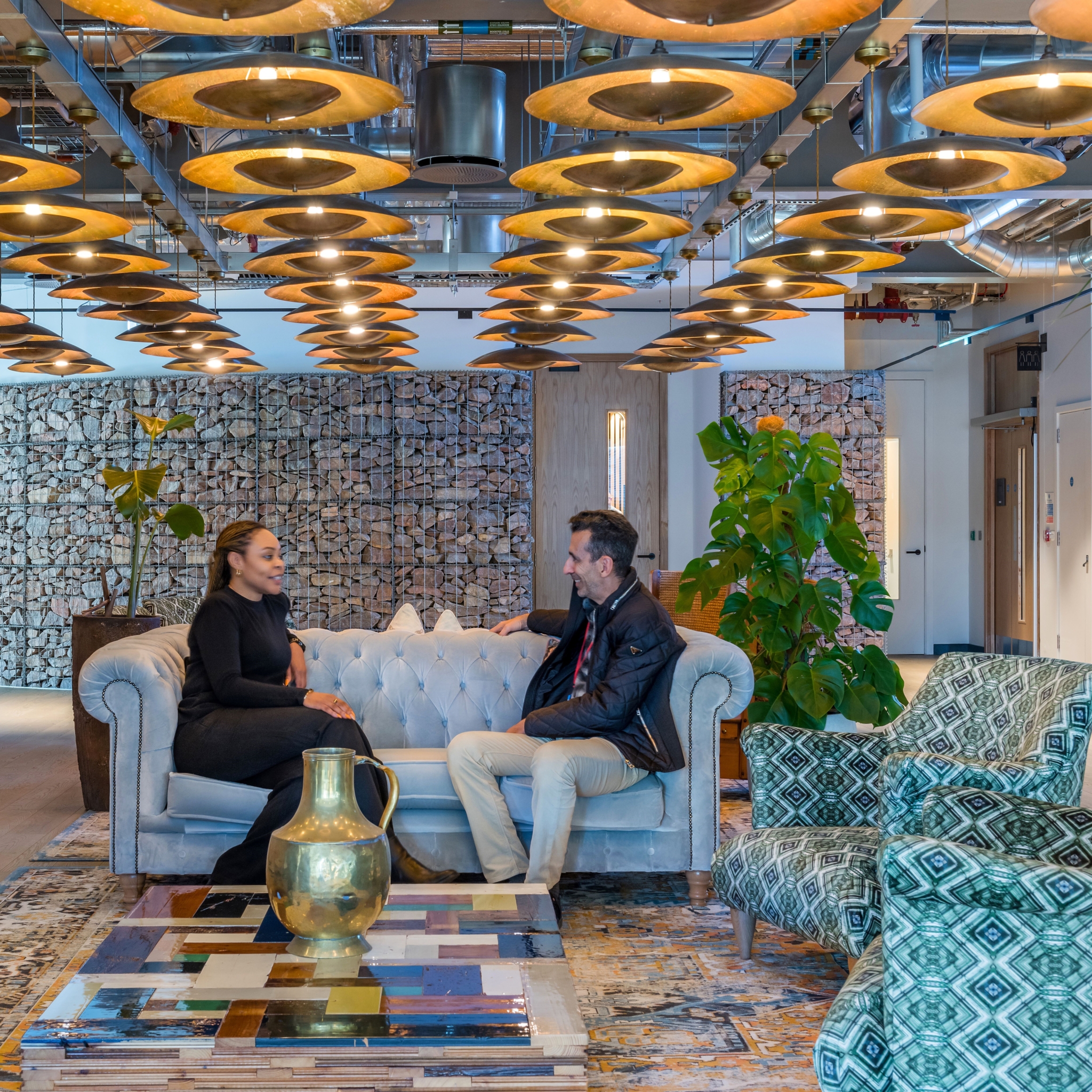
Plants lower stress and improve the air we breathe. They can even absorb radiation from our electronic devices. Bring in plants like pothos and snake plants. These are quite affordable and nearly indestructible in an office setting.

Small Steps, Big Impact

Workplace wellness doesn’t require a big budget or a long list of policies. For small businesses, it’s about intention, consistency, and genuine care.

You do not have to do it all at once, however. The key is to start small. Pick one or two initiatives that feel doable right now and build from there. Over time, these small actions create a culture where people feel supported, not just as employees, but as humans. And when your people thrive, your business does too.

There’s a simpler, more natural and diverse approach we can take to workplace design

There’s a simpler, more natural and diverse approach we can take to workplace design

A different approach to workplace design, one that values clarity, quiet and coherence, is being driven more by carbon reductions and overall user experienceOur buildings do more than house activity. They shape our states of mind. Yet many contemporary spaces, whether offices, schools or public buildings, are full of visual noise, synthetic finishes and unnecessary complexity. These elements are often justified in the name of expression or efficiency. But they can leave people disoriented, distracted or exhausted. A different approach to workplace design, one that values clarity, quiet and coherence, is being driven more by carbon reductions and overall user experience than by neurodiversity alone. Through seeking simpler, more durable ways to build: an architecture grounded in natural materials, minimal finishes and thoughtful restraint. (more…)

A break in the workspace-time continuum

A break in the workspace-time continuum

The fracturing of time and place underlies every one of the great workplace issues of our time. Everything that springs from this – the where, when, how, what and why of work – is defined by the shattering of any fixed idea we may once have had of a time and a place to work. Because the challenge to these traditional ideas is now so inextricably linked in our minds with new technology, we might often  forget that people have been asking questions about how we can get the most out of each day for thousands of years. Tempus fugit after all, and as a consequence we’ve always known that how we spend our days is how we spend our lives. (more…)

People are still powering productivity in the era of AI

People are still powering productivity in the era of AI

The rise in employers committing to employee-first productivity practices is encouraging. Ultimately, people are still at the heart of every organisation. AI will continue to develop, but with teams that bring personality and spark to their roles, businesses can boost efficiency without losing the human element.Employee productivity has been cast into the spotlight in recent months, thanks to the acceleration of AI. Our new research shows that 50 percent of businesses are prioritising employee productivity over the next two years, budgeting for resources that promote individual staff performance and effectiveness. AI’s growing role in the workplace is, of course, a key driver of this trend. But it’s not the only factor. Increased remote work and other operational challenges mean businesses are looking to maximise efficiency and get the best possible return on their investment. (more…)

AI tools are widening the workplace divide between management and employees, report warns

AI tools are widening the workplace divide between management and employees, report warns

New research suggests there is a widening gulf in the use of AI tools between senior leaders and junior staff, raising concerns that productivity gains from the technology are being unevenly sharedNew research suggests there is a widening gulf in the use of AI tools between senior leaders and junior staff, raising concerns that productivity gains from the technology are being unevenly shared. According to the Work that Works report from employment platform Employment Hero, nearly three-quarters of senior managers in the UK use AI tools each month. Among entry-level staff, that figure falls to just 32 percent. (more…)

UK architects embrace AI more and more, although concerns about creativity remain

UK architects embrace AI more and more, although concerns about creativity remain

Use of artificial intelligence (AI) among UK architects has risen sharply over the past year, according to a new report published by the Royal Institute of British Architects (RIBA)Use of artificial intelligence (AI) among UK architects has risen sharply over the past year, according to a new report published by the Royal Institute of British Architects (RIBA). The 2025 RIBA AI Report reveals that nearly six in ten architecture practices now make use of AI tools, up from 41 percent last year. The data suggests a growing belief within the profession that digital technologies can support rather than replace architectural practice. (more…)

Negative feelings about work continue to grow, especially for managers

Negative feelings about work continue to grow, especially for managers

People are becoming increasingly disengaged from work at a time when technological change is demanding more from them than everThe State of the Global Workplace: 2025 Report from Gallup frames a stark warning to business leaders and policymakers: people around the world are becoming increasingly disengaged from work at a time when technological change is demanding more from them than ever before. As artificial intelligence (AI) accelerates across industries, transforming everything from operations to communication, the human foundations of the workplace—employee engagement and wellbeing—are showing signs of deep strain. (more…)

The full stop emerges as a major point of contention in the workplace

The full stop emerges as a major point of contention in the workplace

The humble full stop has emerged as one of the major sources of friction when people communicate in the workplaceA new poll from The Adaptavist Group claims that there is a growing generational divide in workplace communication, with emojis, punctuation, and AI use emerging as key areas of contention. The study, which surveyed 1,000 UK knowledge workers, reveals how different age groups interpret digital communication tools in the workplace, affecting collaboration and productivity. The Workplace Communication Atlas suggests that nearly half of workers (46 percent) struggle with misinterpreting tone or phrasing, making it the most significant communication challenge. Differences in response time expectations (also 46 percent) and lack of context (31 percent) were also cited as common issues. The findings build on previous research from The Adaptavist Group, which showed that 56 percent of workers find generational collaboration difficult. (more…)

Brain rot is the word of the year and we only have ourselves to blame

Brain rot is the word of the year and we only have ourselves to blame

In December, ‘brain rot’ was announced as the word or phrase of the year 2024 according to the Oxford University Press. And right on time, we had the viral story of the hawk tuah girl meme coin rug pull to prove it. If you don’t know what any of that means, then do yourself a favour by not finding out. I do know and feel as if something meaningful and important has been cauterized from my brain for ever to make way for it. (more…)

We may think we are pretty aware of the effects of AI. But posterity may draw different conclusions

We may think we are pretty aware of the effects of AI. But posterity may draw different conclusions

Artificial Intelligence (AI) is reshaping the world around us at breakneck speed, unlocking opportunities we could not have even imagined a few years ago. But with its potential comes an immense set of challenges. How we handle this transformation will define the future of our workplaces, economies, and societies. Recent events, including Trump’s revocation of Biden’s executive order addressing AI risks, Labour’s ambitious plans to integrate AI across the UK, and Facebook’s unsettling U-turn on content moderation, highlight the urgent need for businesses to take an ethical, informed, and responsible approach to AI adoption. (more…)

Most people are happy for AI to inform decisions about work, CIPD claims

Most people are happy for AI to inform decisions about work, CIPD claims

To coincide with National Productivity Week, a CIPD poll suggests that almost two thirds of people (63 percent) would trust artificial intelligence (AI) to inform - but not make - important decisions at workTo coincide with National Productivity Week, a CIPD poll suggests that almost two thirds of people (63 percent) would trust artificial intelligence (AI) to inform – but not make – important decisions at work. According to the poll of over 2,000 people, over a third (35 percent) wouldn’t trust AI to make important decisions at work, preferring to use human intelligence. Just 1 percent of respondents would trust AI to make important work decisions. (more…)

Five predictions for how the public sector will tackle challenges and lead digital transformation in 2025

Five predictions for how the public sector will tackle challenges and lead digital transformation in 2025

widespread skills shortages and legacy IT systems within the public sector remain an obstacle to digital transformationThe UK government is committed to modernising and becoming tech-first, but widespread skills shortages and legacy IT systems within the public sector remain an obstacle to digital transformation. While we are seeing steps to digitise, and the £2bn set aside to improve IT across the NHS is a good case in point, capital investment is only one part of the puzzle. As we look to the new year, we can expect the public sector to continue to face challenges in keeping pace with technology innovation, particularly in adopting AI and cloud solutions, combating talent gaps, and modernising workflows. (more…)