

Search Results for: people management

CIPD calls for a budget to address decline in UK productivity

UK productivity requires budget boostThe CIPD has urged the Chancellor to focus on delivering a “Budget for Productivity” when he delivers his 2014 Budget on 19 March. The employment body has today put forward a package of proposals which call for labour market inclusion and the development of more productive, inclusive, and engaging workplaces. It is calling for a fundamental review of UK skills policy, together with a new focus on the workplace, the nature of jobs for the future, and how skills are being utilised. This, the CIPD argues, is critical if the necessary leap in productivity is to be delivered to boost real wages. A recent CIPD report  found that already weak UK productivity has worsened as a result of a slow-down in job turnover during the recession and an extraordinary run of hiring that has preceded the recent return to growth. (more…)


Retaining valuable employees is top global priority for CEOS this year

Retaining valuable employees is top global priority for CEOS this yearThe number one priority of business leaders worldwide this year is how best to develop, engage, manage, and retain existing talent. This worker-centric approach means that employee engagement and better management will take centre stage as the way to improve competitiveness, win new customers and raise productivity. According to new research from The Conference Board and UK partner CMI (Chartered Management Institute), CEOs will concentrate on creating a strong internal talent pipeline rather than seeking to recruit externally, with nine out of the top 10 global Human Capital strategies focused on current employees, including providing training and development, raising employee engagement and increasing efforts to retain critical talent. Other closely linked priorities identified in the CEO Challenge 2014 are customer relationships, innovation, operational excellence, and corporate brand and reputation. (more…)

Employers need to ‘up their game’ as 1 in 4 employees admit to looking for a new job

Employers need to 'up their game' as 1 in 4 employees look for a new job

Job seeking intentions are at their highest since spring 2011, as fewer organisations implement recruitment freezes. According to the CIPD/Halogen Employee Outlook survey, 24 per cent of employees in the private and voluntary sectors, and 23 per cent in the public sector, are looking for a new job. The greatest motivator to move jobs is disengagement (71% compared with 9% who are engaged), followed by job dissatisfaction (62%, compared with 10%), and those facing pressure every day (45% compared with 19% who never feel under excessive pressure). More than 3 in 5 (61%) said that an opportunity to progress within their role is important to them, but a shocking one in four employees (27%) said that they had never had a performance review at work. (more…)

FM must deliver better value to be perceived as strategic role

 FM must deliver better value to achieve strategic recognition

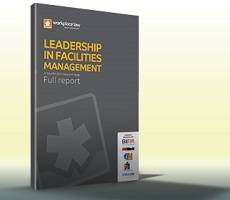
Clients and suppliers believe that the FM profession still has some way to go before it achieves the recognition given to other professions. According to Workplace Law’s second annual research study into leadership in facilities management (FM), 91 per cent of client organisations still feel that FM is seen as a supporting, rather than strategic, role – while the same number feel that FM will only achieve a higher ranking within an organisation’s hierarchy when it finds new ways to deliver value. FM suppliers strongly agree with the need to professionalise FM and attract more talent into the profession if FM is to continue as a separate discipline. (more…)

Better reporting required on employee engagement and wellbeing

Wellness reporting could be improved by FTSE 100

There is a need for more open reporting on employee engagement and wellbeing by FTSE 100 organisations according to an inaugural report into wellness by Business in the Community. The first Workwell FTSE 100 benchmark, which analysed how FTSE 100 organisations manage their 6.3 million employees gave an average score of just 21 per cent, which said BITC was “not unexpected” at this first stage of development.  The highest scoring Workwell indicators were Diversity and Inclusion (at 50 per cent of total marks) and Health and Safety (at 44 per cent), showing how compliance drives measurement and reporting.

(more…)

Staff development still tops European employers’ priorities

Image credit: <a href='https://www.123rf.com/photo_10259161_portrait-of-successful-young-businessman-showing-presentation-in-a-meeting-at-office.html'>logos / 123RF Stock Photo</a>

European employers are still maintaining ambitious staff development plans, despite the gloomier macro-economic climate. According to a study by Aon Hewitt, the proportion of companies that expect to add new jobs in 2012 has increased to 47 per cent, overtaking the number of companies foreseeing a reduction of their workforce (31 per cent). Explained Leonardo Sforza, chair of the European Club for human resources Scientific Committee: “The slow and painful road to economic recovery is not discouraging successful multinationals from continuing to invest in their human capital and from demonstrating the belief that their people remain the most powerful engine for sustainable growth and innovation.” (more…)

Challenge for workplace is balancing culture with the business’s need for speed and innovation

Challenge for workplace is balancing culture with the business’s need for speed and innovation

A new EU-funded study suggests that many European organisations are struggling to balance strong workplace culture with the need for speed and innovation.A new EU-funded study suggests that many European organisations are struggling to balance strong workplace culture with the need for speed and innovation. The Culture Compass 2026 report, developed by Rotterdam School of Management at Erasmus University and the Meet Your Purpose think tank, draws on responses from more than 540 managers and employees across Austria, Germany, the Netherlands and Switzerland. It identifies what researchers describe as a “productivity paradox”, in which employees feel valued and engaged but are constrained by slow decision-making and limited autonomy. (more…)

Recent events highlight a clear shift in how firms approach workplace strategy

Recent events highlight a clear shift in how firms approach workplace strategy

Two recent events hosted by HubStar in London and Amsterdam suggest there has been a shift in how organisations now approach workplace strategy, with a growing focus on three core prioritiesTwo recent events hosted by HubStar in London and Amsterdam suggest there has been a shift in how organisations now approach workplace strategy, with a growing focus on three core priorities. The regular quarterly gatherings bring together senior leaders from corporate real estate, facilities management, HR, IT and workplace experience to discuss current challenges and emerging trends. Conversations at the two sessions centred on how organisations are responding to changing expectations around hybrid work and the role of the office. Organisations are increasingly focused on creating workplaces that: justify the commute; develop a clearer understanding of how space is used through better data; and adopt more flexible approaches to planning and design. (more…)

Memories of the Office Age 

Memories of the Office Age 

memories of the office ageOriginally published in November 2021. No author uses the built environment like J G Ballard. In his 1975 novel High-Rise, the eponymous structure is both a way of isolating the group of people who live and compete inside it and a metaphor for their personal isolation and inner struggles. Over the course of three months, the building’s services begin to fail. The 2,000 people within, detached from external realities in the 40-storey building, confronted with their true selves and those of their neighbours, descend into selfishness and – ultimately – savagery.  (more…)

Employee engagement falls worldwide as AI investment fails to deliver productivity gains

Employee engagement falls worldwide as AI investment fails to deliver productivity gains

Global employee engagement has declined for a second consecutive year, despite rapid investment in artificial intelligence, according to Gallup’s latest State of the Global Workplace report.Global employee engagement has declined for a second consecutive year, despite rapid investment in artificial intelligence, according to Gallup’s latest State of the Global Workplace report. The study, based on one of the largest ongoing surveys of employee experience, suggests that organisations are struggling to translate technological change into measurable improvements in performance or working life. Employee engagement fell to 20 percent in 2025, down from a peak of 23 percent in 2022 and its lowest level since 2020. This decline has significant economic implications, with Gallup estimating that low engagement costs the global economy around $10 trillion in lost productivity, equivalent to 9 percent of global GDP. (more…)

How the 21st Century office was born in post war Europe

How the 21st Century office was born in post war Europe

Central Beheer Building There was a curious addition to a 2016 report on the Top 10 Technologies Driving the Digital Workplace from tech researchers Gartner. It wasn’t a technology at all but rather a slightly obscure office design concept that originated in Hamburg in the late 1950s, but which tells us a lot about how we work in the 21st Century office, according to Gartner. Its history lies with the German consulting firm Quickborner. Led by the brothers Eberhard and Wolfgang Schnelle, the firm applied the egalitarian principles of the post war world and rejection of the scientific management theories that had created the familiar factory-like rows of desks that had come to dominate open plan offices to create something more in tune with the new age.

(more…)

Creativity, thinking and expertise in the workplace should be safeguarded from AI

Creativity, thinking and expertise in the workplace should be safeguarded from AI

Workplace professionals and general managers should proceed with caution if they want to use AI to improve efficiency and human capital in the workplace, and should take steps to ensure creativity and critical thinking are preserved, new research from the University of Bath School of Management suggests. The research team identified two types of knowledge which appeared partially compatible with AI – encoded knowledge, which encompasses rules, procedures, policies, and datasets; and embedded knowledge – essentially digitalised processes and routines. (more…)