






January 20, 2019
The changing shape of the insurance workplace
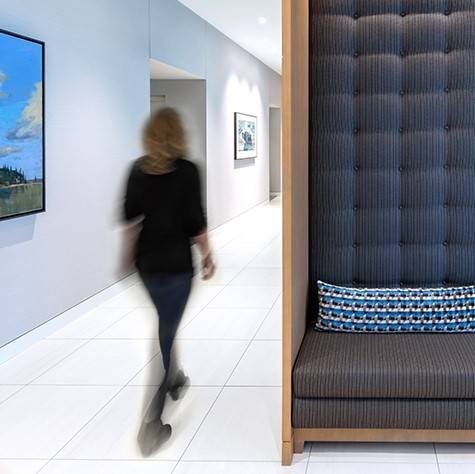 HOK’s WorkPlace group has released The New Insurance Workplace (registration required), a report which sets out to examine the forces reshaping the insurance industry and how workplace design can position these companies for success. The report’s concludes that insurance firms take pride in their conservative approach to risk management and traditional business models. They also have high-performance cultures that demand strong results. Yet changing regulations, emerging technologies and increasingly obsolete work processes have left many legacy players with underutilised, outdated office and retail space that hinders their ability to meet the fast-changing expectations of customers.
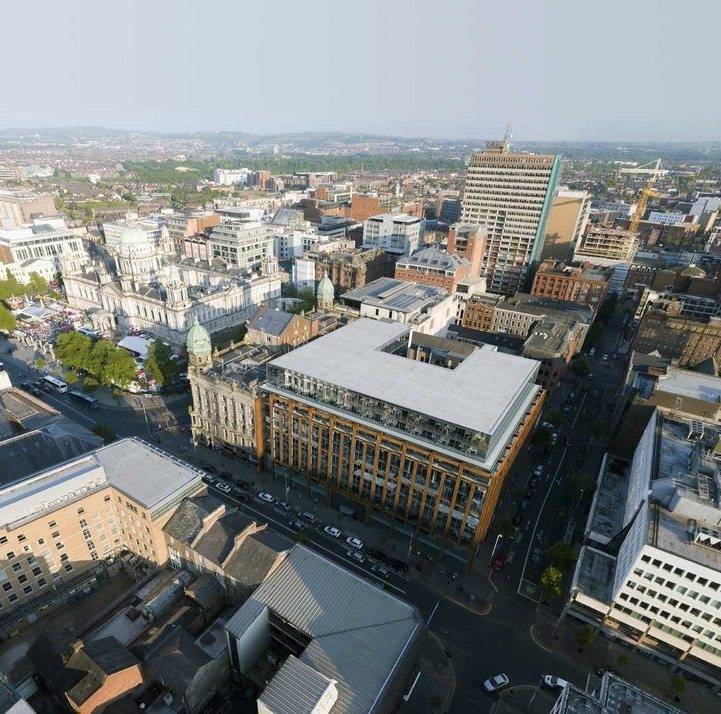
 There was a record-breaking rate of take-up within the regional office occupier markets outside of London and the South East in 2018, with few signs of Brexit-related uncertainty, according to an analysis by CBRE. Across the ten regional cities monitored by CBRE, provisional analysis shows that overall take-up reached nearly 7.3m sq ft. This level was 16 percent above the five-year average and 6 percent higher than 2017, the previous record-breaking year. The majority of regional office demand has again been driven by the business and professional services sectors. 2018 saw record take-up from flexible office operators across the UK, representing the leading portion of business services take-up. This was the year the co-working revolution surged into regional cities. Birmingham, Bristol and Glasgow were all stand out expansion locations. With more demand from flexible workspace operators – both from established and new entrants, further expansion is anticipated in 2019 albeit at a further pace as markets become more saturated.
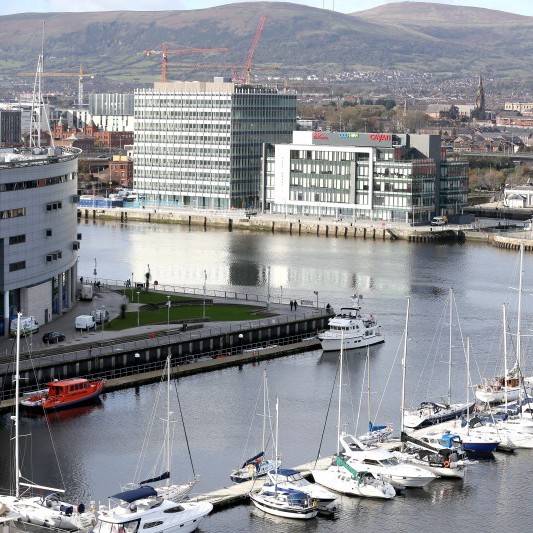
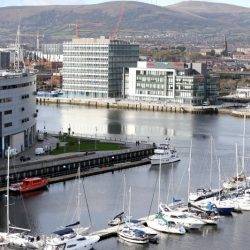 The Northern Ireland office market had a record year in 2018, with a 100 percent increase in take-up, according to the latest figures from CBRE. The Northern Ireland (NI) office sector enjoyed its most successful year on record with 885,023 sq ft of take-up reported across 84 transactions, more than double that achieved last year. Notable office deals completed in 2018 included the PwC move to Merchant Square, Northern Ireland Civil Service at 9 Lanyon Place, Allstate at Mays Meadow, TLT at River House and Baker McKenzie at City Quays 2, which is part of Belfast’s City Quays mixed-use regeneration project. However, according to CBRE’s Real Estate Outlook report, the office market in NI is hampered by a severe lack of investment deals in the face of ongoing local, national and international political uncertainty. This means that while the real estate market in Northern Ireland generally has performed well in 2018, the investment sector experienced a decrease in activity as a resulting knock-on effect of the current political situation locally at Stormont as well as ongoing Brexit negotiations.


 The European property sector is predicted to grow next year, according to CBRE’s 2019 EMEA Market Outlook report. Although recent indicators suggest some slowing of momentum economic growth in Europe will remain above-trend rate in 2019 and 2020, with Spain, Ireland and the central European countries expected to see the fastest economic growth. France’s growth is expected to accelerate as recent economic reforms begin to pay off; however, UK growth is expected to remain below-trend, but with better long-term potential once the current uncertainty around Brexit passes. Office markets around the region are expected to see positive growth in leasing levels in 2019. However, major European cities, including Paris, Berlin, Stockholm and London, are expected to see lower levels of employment growth in office-using sectors.












November 23, 2018
Communities are the key factor to rapid growth of coworking
by Petr Boruta • Comment, Coworking, Property, Workplace design
(more…)