Search Results for: recruitment

UK employers predict workforce growth in 2017 along with more inclusive hiring

UK employers predict workforce growth in 2017 along with more inclusive hiring 0

Four in ten (41 percent) of firms across the UK will grow their workforce in 2017 but uncertainty about the UK’s future relationship with the EU has shaken overall business confidence in the labour market claims a new report. According to respondents to the 19th CBI/Pertemps Network Group Employment Trends Survey, for the fourth year running, growth in permanent job opportunities will outstrip temporary recruitment. But the balance of those expecting the UK to be a more attractive place to employ people in the next five years has flipped from +16 percent in the 2015 survey to -21 percent in this year’s results. In terms of engagement, over three quarters (76 percent) of respondents reported that a diverse and inclusive workforce is vital or important to the future success of their organisation. They report a range of benefits of inclusive workplace practices including increased skills (73 percent), attraction and retention of staff (60 percent) and engagement levels (46 percent).

(more…)

Lack of free childcare dissuades workers from shared parental leave

Lack of free childcare dissuades workers from shared parental leave 0

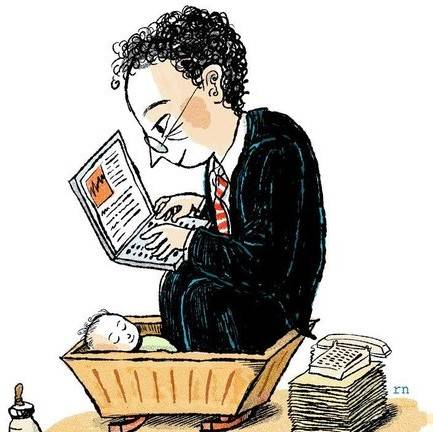
parental-leaveJust 5 percent of new fathers and 8 percent of new mothers have opted for Shared Parental Leave (SPL) since its introduction in April 2015 a new report claims. Just one organisation in five (21 percent) said they had received requests from male employees to take up SPL since April 2015 and in two-thirds (67 percent) of organisations with mothers eligible for SPL, none have opted in. This low take-up of (SPL) and the lack of affordable childcare options for parents with 0-2 year-olds are both major problems that need to be addressed to support working parents more effectively, according to ‘Labour Market Outlook: Focus on Working Parents’ from the CIPD. The survey of over 1,000 HR professionals also suggests that the lack of free childcare for 0-2 year-olds could be having a negative impact on women returning to work after maternity leave.

(more…)

US study projects massive shift to agile working model over the next decade

US study projects massive shift to agile working model over the next decade 0

agile-working-randstadBy the year 2025, most workers (70 percent) and employers (68 percent) agree a majority of the workforce will be employed in an agile working capacity as contractors, consultants, temporary or freelance staff, according to a study released by Randstad US. The Workplace 2025 report of more than 3,100 workers  and 1,500 HR and c-suite executives across the US found that as early as 2019, as much as 50 percent of the workforce will be comprised of agile workers, as nearly 4 in 10 (39 percent) workers say they are likely to consider shifting to an agile arrangement over the next two-to-three years. The study claims that this movement is fuelling an equally aggressive adoption of new workforce models that tap into both permanent and agile employees to combat staffing shortages, leverage globalisation and fuel greater innovation for organisations.

(more…)

Are these the best places to work in 2017?

Are these the best places to work in 2017? 0

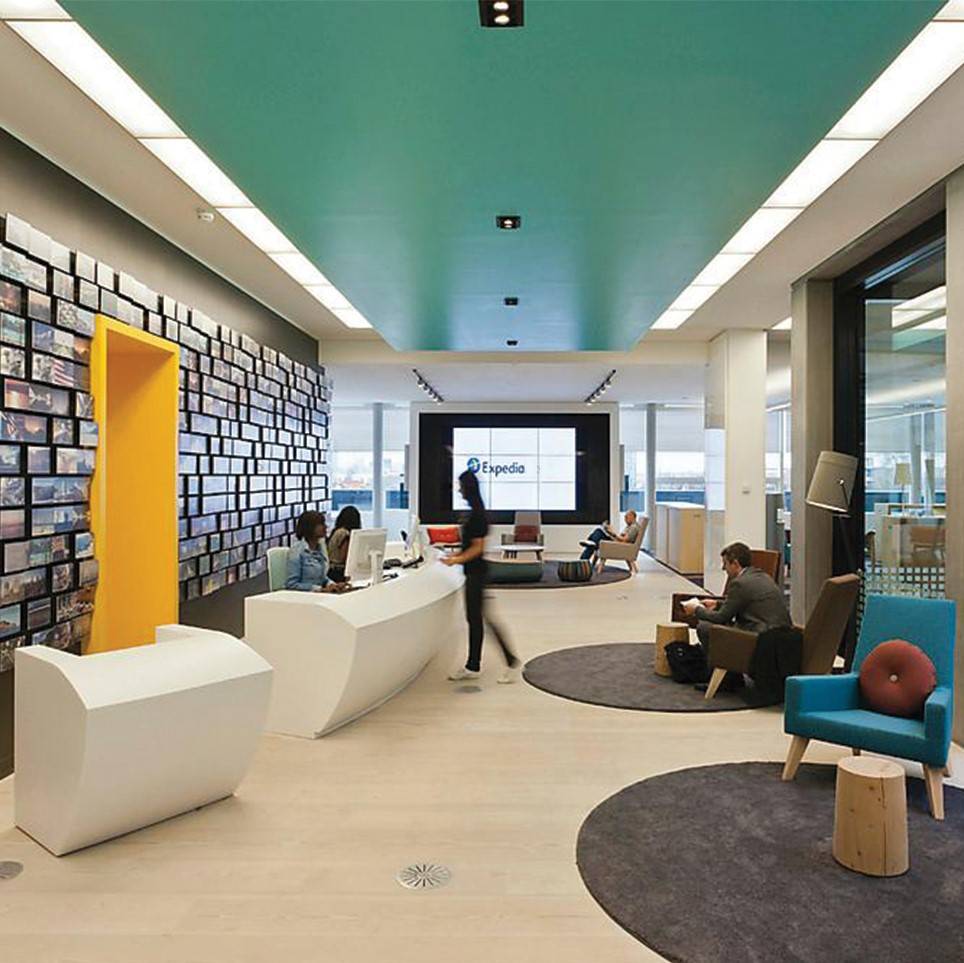
1_expediaRecruitment site Glassdoor has announced the winners of its ninth annual Employees’ Choice Awards to find the best places to work in North America and parts of Europe. The Awards are based on the input of employees who voluntarily provide anonymous feedback, by completing a company review, about their job, work environment and employer over the past year. This year, the Glassdoor Employees’ Choice Awards feature six categories, honouring the Best Places to Work across the UK, US (both large and small companies), Canada, France and Germany. There is one category in the UK: 50 Best Places to Work (honouring employers with 1,000 or more employees). Winners are ranked based on their overall rating achieved during the past year.  The top five UK Best Places to Work in 2017 are Expedia, ARM, HomeServeUK, Mott MacDonald and Hays plc

(more…)

HR directors struggle to devise long term digital workplace strategies

HR directors struggle to devise long term digital workplace strategies 0

Digital AmericaOne of the effects of the UK’s falling unemployment levels is that HR Directors risk becoming so consumed with issues of talent retention and hiring that they are unable to plan effectively and build a long term strategy for their business, especially when it comes to key emerging issues such as the digital workplace. While the latest ONS statistics show that UK unemployment fell by 37,000 to 1.6 million in the three months to September, hitting an 11-year low, in an anonymous survey carried out by The Curve Group, 92 percent of HR Directors say re-designing their organisation in response to the emergence of the digital workplace, new entrants and a flat economy should be their main priority, but only 44 percent feel able to do so.

(more…)

Two thirds of female professionals’ jobs downgraded after career break

Two thirds of female professionals’ jobs downgraded after career break 0

Two thirds of female professionals' jobs downgraded after career breakA lack of flexible roles means that two thirds of professional women who return to work after a career break, work fewer hours than they prefer or go into lower-skilled or lower-paid roles, claims new research by PwC, in conjunction with Women Returners and 30% Club. 427,000 UK female professionals are currently estimated to be on a career break and likely to return to the workforce in the future. Of those, three in five (249,000) are likely to enter lower-skilled roles when they return to work. This has serious implications for earnings as this downgrading is associated with an immediate 12-32 percent reduction in hourly earnings, depending on whether the woman remains with the same employer. A further 29,000 women returning to part-time work would prefer to work longer hours but are unable to due to a lack of flexible roles. Altogether, two-thirds of (or around 278,000) women could be working below their potential when they return to the workforce.

(more…)

Business association calls for action on high cost of childcare

Business association calls for action on high cost of childcare 0

childcareThe British Chambers of Commerce and Middlesex University, have published a new survey to gauge the opinion of business leaders on the cost and availability of childcare and its impact on the workforce. The survey of businesses claims that a third of firms (33 percent) regard the availability of childcare as a key issue in recruiting and retaining staff. The survey of more than 1,600 business leaders across the UK also claims that over a quarter (28 percent) of firms have seen a reduction of working hours by staff due to the cost of childcare, while nearly 1 in 10 (9 percent) have seen employees leave their business. Although the survey suggests that nearly 40 percent of businesses already view government plans to double the availability of free childcare next year as likely to have a positive impact on their business, the BCC is calling on government to go further. It says the administration should consider the costs and benefits of a universal entitlement up until school entry, which would help more firms retain and promote productive staff, and help working parents progress.

(more…)

Vast majority of UK employers are against a ‘hard Brexit’ finds CIPD

Vast majority of UK employers are against a ‘hard Brexit’ finds CIPD 0

Vast majority of UK employers are against a 'hard' Brexit' finds CIPD

The implications of Brexit are raising concerns over a reduction in employers’ intentions to invest in their staff and its effects on access to migrant labour. As a result, according to the latest quarterly CIPD/Adecco Group Labour Market Outlook, while employment growth looks set to continue in the UK, there are signs that this is beginning to slow and that real wages are likely to fall during 2017 for many employees. The data shows that the net employment balance, while remaining in positive territory at +22, based on the difference between the share of employers expanding their workforce and the share of employers reducing their workforce, has shown a slight negative decline from the previous quarter’s figure of +27. Although 42 percent of employers believe that future restrictions on EU labour could damage their UK operations, just 15 percent have started to prepare for this eventuality; which is probably why the vast majority are against a ‘hard Brexit’.

(more…)

Nearly half of HR professionals don’t feel up-to-speed with new workplace legislation

Nearly half of HR professionals don’t feel up-to-speed with new workplace legislation 0

homepage-insideNew research from identity data intelligence firm GBG claims there are a startling number of HR professionals (41 percent) who are struggling to keep up with new and changing workplace legislation. Recent changes to UK law, such as those made to the Right To Work in the Immigration Act and Modern Day Slavery Act are met with anxiety by 34 percent of respondents. Only 26 percent feel prepared and just 4 percent feel optimistic that the changes will be advantageous for their organisation. Despite half of HR professionals not feeling prepared to handle legislation changes, 62 percent believe it’s their primary responsibility. Almost one in five (18 percent) said it was their manager’s obligation and 9 percent believed the Board should be in charge of monitoring for change.

(more…)

Toxic culture at work a leading grievance for unhappy staff 0

resignation lettersNearly a third of UK workers (30 percent) would not describe themselves as happy at work and would move jobs for better benefits and a more pleasant workplace culture, a new survey claims. The report by Perkbox finds that the power of ‘Thank You’ in business is an overlooked and often underestimated resource, yet its influence to elevate moods, increase engagement and uplift productivity is profound. Over two thirds (69 percent) of UK workers polled rate company perks and benefits as important to their overall satisfaction and more than a quarter (26 percent) rate lack of reward and recognition for good work as their number one grievance at work. Yet over half (53 percent) of UK companies do not formally recognise outstanding employees on a regular basis, while 44 percent believe that rewards and recognition are either very or extremely relevant to their business. UK workers also reported that a toxic negative culture at work was their biggest grievance (cited by 21 percent of respondents) while 17 percent highlighted micro management and 15 percent said long hours. In London, nearly half (48 percent) of workers would be likely to switch to a job that offered better benefits and overall women are more likely than men to consider work/life balance an important factor in switching jobs (41 percent vs 35 percent).

(more…)

Larger employers much more optimistic about post-Brexit outlook than SMEs

Larger employers much more optimistic about post-Brexit outlook than SMEs 0

BrexitA gap is emerging between UK businesses regarding the impact of Brexit, with large businesses significantly more optimistic about the future than their small business counterparts, joint research by NGA Human Resources (NGA HR) and its SMB division, Moorepay suggests. Six in ten (59 percent) respondents working for large businesses expect Brexit to have a positive impact on their business, but only 35 percent of SMBs share this view. In fact, a quarter of (25 percent) SMB employees in the UK actually believe their situation will worsen after the UK has left the European Union. Looking ahead, the majority (79 percent) of larger UK businesses are ready to address the challenges and exploit the opportunities resulting from Brexit, whereas just over half of small businesses (56 percent) feel the same. Asked about their wish list for a post-Brexit economy, all UK businesses agree that access to the single market is the biggest advantage of the EU membership and one that both large businesses (64 percent) and SMBs (54 percent) would like to retain. Additionally, opening up trade to new countries and markets is seen as the main advantage of Brexit for both large (70 percent) and smaller businesses (54 percent), followed by freedom from EU laws and regulations (both 48 percent).

(more…)

Older job seekers believe age discrimination remains rife in the workplace

Older job seekers believe age discrimination remains rife in the workplace 0

older workersResearch released by recruitment website totaljobs claims that almost two-thirds (63 percent) of 55-64 year olds have said they have felt discriminated against by a prospective employer because of their age and only 6percent of the same age group see their age as an advantage when applying for a job. The research from totaljobs, based on responses from over 4,000 job seekers, also claims that 72 percent of 55-64 year olds spend over an hour preparing for an interview compared with just 62 percent of 16-24 year olds. The study also claims that young people are much less likely to feel discriminated against because of their age. Just 33 percent of 16-24 year had felt age discrimination, with this number falling to 21 percent for 25-34 year olds and 22 percent for 35-44 year olds – a stark contrast to the 63 percent of 55-64 year olds. Whereas 82 percent of 55-64 year olds and 62 percent of 45-54 year olds see their age as a disadvantage when applying for a job, only 31 percent of 16-24 year olds and 16 percent of 25-34 years olds feel the same.