Search Results for: resilience

Resilience is missing for many employees

Resilience is missing for many employees

ResilienceA new report from Aon,examined the views of employers and employees across five major countries in Europe and claim that just 30 percent of employees are resilient while also suggesting that resilience can triple when employers adopt a well-rounded programme of support. Employees with poor resilience have 55 percent lower engagement at work and are 42 percent less likely to want to stay with their employer. In the UK, 29 percent of employees are resilient, and those with poor resilience have 59 percent lower engagement and are 43 percent less likely to want to stay with their employer. (more…)

Need for employee resilience heightened in a time of constant change

Need for employee resilience heightened in a time of constant change

Challenges facing UK businesses in the next five years have heightened the need for employee resilience, according to new research from recruitment specialist Robert Half UK. As businesses adapt to an ongoing period of change, more than nine in 10 (94 percent) CFOs think developing resilience amongst their employees will be important over the next two to five years, with 43 percent citing this as very important. This is critical to almost all (97 percent) CFOs from London-based businesses – the UK’s financial hub. (more…)

Perils of sitting + Meeting change with resilience + Root causes of stress 0

Insight_twitter_logo_2In this week’s Newsletter; Gary Chandler argues we are witnessing a new era for office design; Neil Franklin wonders who fares best when working remotely; Mark Eltringham unpicks the facts from fiction on the dangers of sitting; suggests the ways we can break ourselves out of groupthink and delves into a report which suggests order and disorder are perfectly functional ways for firms to operate. The overwhelming majority of UK employees are working beyond their contracted hours; employers’ views on the causes of workplace stress differ from employees; managers struggle with the fall-out from crises; and despite the prospect of a female PM, the boardroom remains out of reach for many business women. Download our new Briefing, produced in partnership with Boss Design on the link between culture and workplace strategy and design; visit our new events page, follow us on Twitter and join our LinkedIn Group to discuss these and other stories.

Ability to meet failure with resilience is a vital management skill

Ability to meet failure with resilience is a vital management skill 0

Management resilience

The political fallout since the Brexit vote has left many feeling that the UK’s politicians could do with brushing up their leadership skills and prompted debate on whether some of those whose ambitions have been derailed might bounce back. A timely report from the Chartered Management Institute offers advice on the management skills they might need to employ in times of uncertainty. The report claims that within the world of business, unsupportive cultures leave managers to struggle with the fall-out from crises. Most managers (94 percent) have faced crises during their career, but only half (55 percent) have handled them professionally, according to Bouncing Back: Leadership lessons in resilience. The absence of professional management ranks as a major factor in the cause of crises in the survey of 1,100 managers; 78 percent blamed a lack of support from senior management and 68 percent cited culture failure as responsible.

(more…)

People are increasingly concerned that their job roles are becoming irrelevant

People are increasingly concerned that their job roles are becoming irrelevant

A new report from Arden University suggests that while many UK workers recognise the growing pace of change in the workplace, only around half are actively developing new skills to keep up with new and emerging job rolesA new report from Arden University suggests that while many UK workers recognise the growing pace of change in the workplace, only around half are actively developing new skills to keep up with new and emerging job roles. The survey of 2,000 UK employees found that 58 percent believe their industry is changing faster than before, yet only 51 percent said they are currently engaged in upskilling. The findings have been released as part of Arden University’s Future of Work and Learning Report. (more…)

Data centres are the most significant building type in the world right now. And we need to talk about that

Data centres are the most significant building type in the world right now. And we need to talk about that

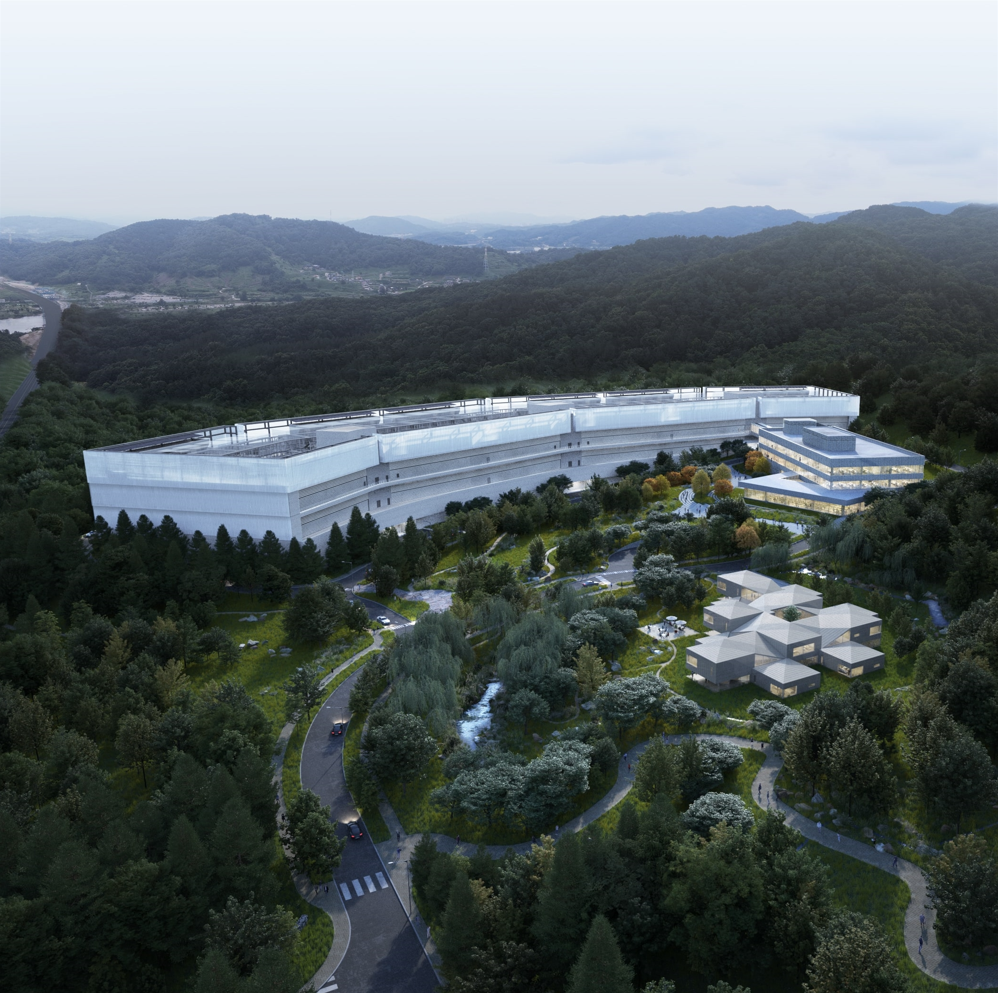
Data centres have always been a slight anomaly in the Built Environment sector, part property and part critical infrastructure (talking in wattage rather than square footage for example), lacking aesthetic appeal and they are not significant employers, they are often considered a necessary evil to support our hyper-communicative lifestylesThe Data Centre Congress which took place from June 1st to 4th in Cannes is to data centres what mipim is to the more traditional markets in property, a place where the good and the great – from investors and operators, to the engineers and power providers, gather to network and contemplate the challenges and the future of the sector. In Q1 last year there was a slight chill through the sector after Microsoft halted data centre plans across the US and Europe to the tune of 2GW, citing caution around the overexpansion of AI and uncertainty around tariffs. What seemed like bombshell news at the time, felt like a mere blip and a distant memory at the 2026 edition and this juggernaut of activity is showing zero signs of slowing, a market that is currently worth over $300 billion is set to rise to $699.13 billion by 2034. (more…)

The ten emerging technologies set to transform the World in the near future

The ten emerging technologies set to transform the World in the near future

The World Economic Forum (WEF) has published its annual Top 10 Emerging Technologies Report, highlighting a group of scientific and technological advances that it believes are approaching a tipping point between research and widespread adoptionThe World Economic Forum (WEF) has published its annual Top 10 Emerging Technologies Report, highlighting a group of scientific and technological advances that it believes are approaching a tipping point between research and widespread adoption. Produced in collaboration with scientific publisher Frontiers and developed with the Dubai Future Foundation, the report focuses on innovations expected to reach significant commercial and societal scale within the next three to five years. According to the WEF, this year’s list reflects a broader shift towards technologies that are more distributed, personalised and resource-efficient, with potential implications for energy systems, healthcare, manufacturing, environmental management and digital security. (more…)

Issue 19 of Works magazine is out now and ready for you to explore

Issue 19 of Works magazine is out now and ready for you to explore

The digital edition of the new issue of Works magazine has landed, bringing you another compelling mix of insight and ideas from across the workplace design and management sector. The print edition is on its way and, we think, better than ever. Whichever format you choose, issue 19 offers a comprehensive look at the trends, projects, ideas, products and people shaping the contemporary workplace and the way we think about it. from global perspectives and expert commentary to case studies, interviews and a closer look at the materials and products shaping modern workplaces. (more…)

The new leadership imperative: from decision makers to experience makers

The new leadership imperative: from decision makers to experience makers

the leaders who truly make change stick aren't just making decisions, they are making experiences and those two things are very, very different.Ask most leaders what their job is, and they’ll tell you: to make decisions, to set direction and to drive results. They are not wrong but they are also not telling the whole story about leadership. Here’s what 25 years of working with organisations through some of their most complex transformations has taught me: the leaders who truly make change stick aren’t just making decisions, they are making experiences and those two things are very, very different. (more…)

UK is trapped in reactive cycle of sickness and inactivity, warn wellbeing experts

UK is trapped in reactive cycle of sickness and inactivity, warn wellbeing experts

Business leaders, policymakers and workplace experts have warned that the UK’s fragmented approach to work, wellbeing and welfare is undermining economic resilienceBusiness leaders, policymakers and workplace experts have warned that the UK’s fragmented approach to work, wellbeing and welfare is undermining economic resilience, with comparisons to Denmark highlighting the pressure placed on the NHS and benefits system in Britain. The warning came during a Westminster roundtable  for the Policy Liaison Group on Workplace Wellbeing chaired by Dame Carol Black on 13 May. The discussion followed shortly after the King’s Speech opened the new parliamentary session with a renewed emphasis on “economic security”. Participants argued that Britain’s rising levels of long-term sickness and economic inactivity will require a more coordinated approach involving employers, government departments, healthcare systems and insurers. (more…)

Geopolitics reshapes CEO priorities as firms focus on profitability, AI and dealmaking

Geopolitics reshapes CEO priorities as firms focus on profitability, AI and dealmaking

Geopolitical instability has become the dominant concern for global business leaders, prompting a shift in corporate strategy towards profitability, resilience and targeted growth, according to the latest EY-Parthenon CEO Outlook Survey.Geopolitical instability has become the dominant concern for global business leaders, prompting a shift in corporate strategy towards profitability, resilience and targeted growth, according to the latest EY-Parthenon CEO Outlook Survey. The quarterly study, based on responses from 1,200 CEOs across 21 countries, suggests that executives are adapting to what they see as a prolonged period of structural uncertainty by tightening their focus on disciplined investment, artificial intelligence and strategic transactions. More than half of respondents, 56 percent, identified geopolitical risk as the most significant threat to their business over the next 12 months, representing a rise of 28 percentage points since September 2025. The findings indicate that geopolitical pressures are now shaping boardroom priorities more directly than in previous years. (more…)

Re-humanising the workplace: why prevention, support and standards matter more than ever

Re-humanising the workplace: why prevention, support and standards matter more than ever

There is growing recognition that the workplace needs to become more human again, not less.There is growing recognition that the workplace needs to become more human again, not less. For all the talk of performance, productivity and retention, too many organisations still treat stress, ill health and emotional wellbeing as secondary matters. They are not. They sit at the heart of business success. The figures from the Keep Britain Working report, an independent review commissioned by the UK government and led by Sir Charlie Mayfield, the former chair of John Lewis, are a wake-up call. The value at stake is enormous. Employers face an estimated £85 billion a year in lost output and costs linked to ill health. For government, the additional burden in welfare payments and NHS demand is around £47 billion annually. On top of this lies the wider cost to the economy through lower participation, and the human and social costs of lost opportunity, stalled careers and reduced life chances. (more…)