



Search Results for: social media

Third of businesses see flexible work as main Olympic legacy

300px-Olympic_Stadium_(London),_16_April_2012

Flexible working facilities brought in for London 2012 are the most important legacy of the Olympic Games for a third of businesses, according to a new BT legacy survey. The survey of 600 large private and public sector organisations across the UK found 34% are continuing to enjoy the benefits from flexible working facilities (34%), with sales/revenue for 37% higher than before the Games. When asked what they have learnt about their organisation’s capabilities, 36% think that when they are pushed they can do a lot more business, 26% are more resilient and 25% feel they could increase their margins.
(more…)


Rebuilding belonging: how offices can overcome loneliness  

Rebuilding belonging: how offices can overcome loneliness  

loneliness as a complex societal issue which workplaces alone will not solve. However, through the spaces we create we can begin to meaningfully contribute to a solution.In the coming weeks it will be six years since the UK entered lockdown and working life changed overnight. While much has stabilised, the impact of the pandemic still shapes how people experience work, particularly when it comes to connection and belonging. Loneliness is widely recognised as a growing societal issue and government data shows that around a quarter of adults in Great Britain report feeling lonely at least some of the time, rising significantly among younger age groups. Hybrid working has not created this challenge but it has highlighted that for many people the workplace was a consistent source of social interaction. (more…)

AI will either save work or destroy it. Apparently.

AI will either save work or destroy it. Apparently.

It's too early to know what precise impact AI will have on jobs, writes Jo Sutherland. Fortunately for us, the future is still ours to shapeAs someone who works at the intersection of communications and responsible AI, I spend a lot of time thinking about how emerging technologies are explained, sold, feared, embraced and misunderstood. Nowhere is that more palpable than in conversations about AI and the future of work, where certainty is sometimes projected before it’s earned. Over the past few months alone, taking part in debates at both the Westminster Employment Forum and the University of Cambridge, I’ve been struck by just how wide the spectrum of opinion still is. Depending on who has the floor, AI is framed either as a magical productivity fix or an existential threat to jobs. The reality probably lies somewhere in the middle. (more…)

Employment Rights Act is already putting the brakes on hiring, CIPD warns

Employment Rights Act is already putting the brakes on hiring, CIPD warns

New research from the CIPD suggests the Government’s Employment Rights Act could discourage employers from recruiting permanent staff, add to business costs and increase workplace conflictNew research from the CIPD suggests the Government’s Employment Rights Act could discourage employers from recruiting permanent staff, add to business costs and increase workplace conflict. The findings come from the CIPD’s latest Labour Market Outlook, based on a survey of more than 2,000 UK employers. It reports that overall hiring intentions remain at their lowest level on record outside the first year of the pandemic. (more…)

Life at the coalface: How the agile workplace first appeared in the mid 20th Century

Life at the coalface: How the agile workplace first appeared in the mid 20th Century

agile working began in the coal fields of NottinghamshireThe idea of diffusion of innovation has become so embedded in our culture, and most recently so associated with the adoption of new technology, that we might assume it happens in predictable ways. The steps between innovators, early adopters, early majority, late majority, and laggards seem intuitive and certain even when their peaks might be unsure. And yet history teaches us that sometimes new ideas can take years or even decades to take hold, even when they are potentially world-changing and relevant for the era in which they were formulated. (more…)

Time to admit we were wrong about Canary Wharf and other business districts

Time to admit we were wrong about Canary Wharf and other business districts

There was a time during and after the pandemic when it looked like time was up for the world’s major business districts. For a start Canary Wharf looked like it would need to completely reinvent itself as firms started to relocate to smaller more central premises. Instead of housing tenants such as HSBC it would focus on becoming a mixed-use space with more homes and leisure facilities. Hell, we even published a feature setting that all out ourselves. But it’s funny how things turn out. The latest news is JP Morgan’s announcement of a vast new headquarters building in the area. The bank, already one of the largest employers in the UK financial sector, has confirmed plans for a three million sq ft tower on the waterfront that will accommodate 12,000 staff and represent an investment estimated at £3 billion. (more…)

Shift to a low carbon economy could create millions of jobs but risks widening global divides

Shift to a low carbon economy could create millions of jobs but risks widening global divides

The shift to a low carbon economy is expected to reshape labour markets across the world over the next five years, with almost 14.4 million jobs set to be affected by 2030The shift to a low carbon economy is expected to reshape labour markets across the world over the next five years, with almost 14.4 million jobs set to be affected by 2030, according to a new report from the World Economic Forum. The research suggests that while 2.4 million roles will be phased out, the emergence of new industries and technologies will generate around 12 million new positions, resulting in a net gain of 9.6 million jobs. Yet the report warns that the scale of disruption, combined with persistent economic and geopolitical pressures, could deepen existing inequalities both within and between countries. (more…)

Workspace Design Show Amsterdam reports strong growth for second edition

Workspace Design Show Amsterdam reports strong growth for second edition

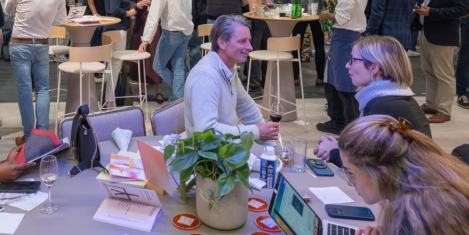
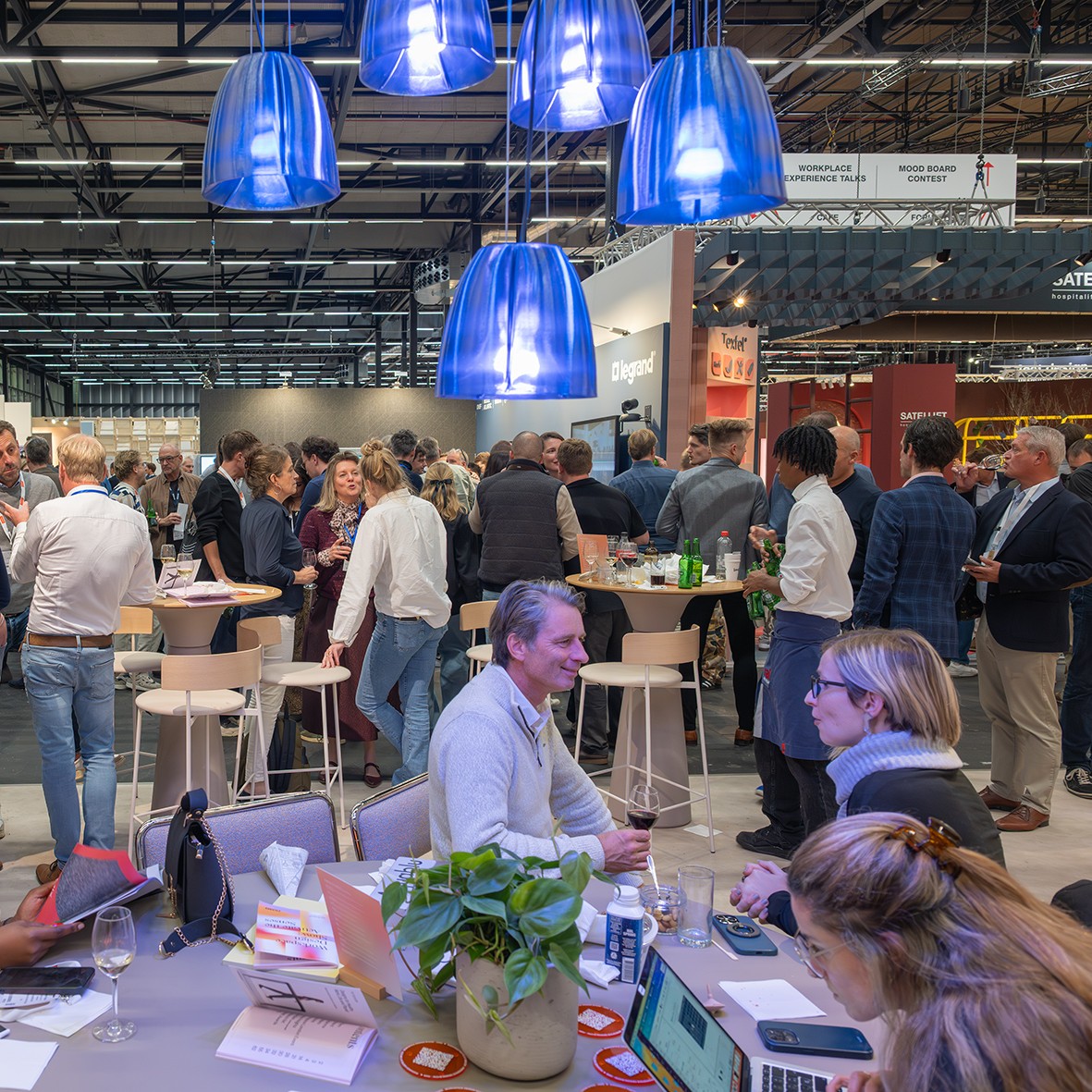
The second Workspace Design Show Amsterdam drew record attendance to the RAI on 5 and 6 November, marking a notable expansion of interest in workplace interiors across Europe

The second Workspace Design Show Amsterdam drew record attendance to the RAI on 5 and 6 November, marking a notable expansion of interest in workplace interiors across Europe. The event, now in its second edition following its 2023 debut, brought together architects, designers, occupiers and suppliers for two days of discussion, product launches and industry networking. Organisers reported more than six thousand visitors from more than sixty five countries, a sharp rise from the first edition. Attendance was led by the Netherlands, followed by Belgium, Germany and the United Kingdom. More than one hundred and fifty exhibitors presented products spanning furniture, lighting, acoustics, flooring and workplace technology. The programme also expanded significantly, with more than one hundred and forty speakers taking part across three stages covering occupier strategies, design thinking and workplace experience. (more…)

Amsterdam’s Workspace Design Show Unveils Sensory-Driven Feature Spaces

Amsterdam’s Workspace Design Show Unveils Sensory-Driven Feature Spaces

The Workspace Design Show showcases the latest transformative workplace interiors products, from furniture, seating, lighting, acoustics, surfaces, biophilia, tech and moreThis November, Workspace Design Show (Wednesday 5th to Thursday 6th November 2025, RAI Amsterdam) doesn’t just ask what the workplace should be; it lets you feel the answer. Five of the Netherlands’ most creative design studios have turned conversation into atmosphere, theory into tactility, and workplace talk into spaces you can smell, hear, shift and claim as your own. (more…)

The evolving workplace in the hybrid working era

The evolving workplace in the hybrid working era

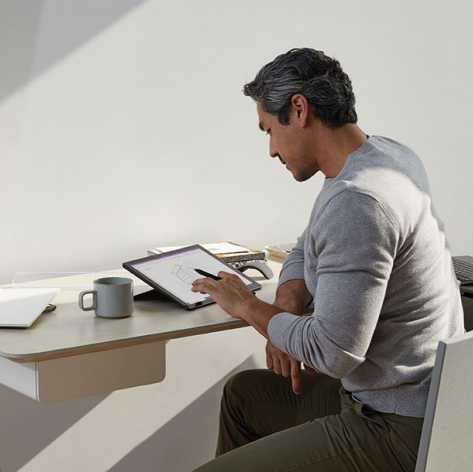
A little over five years ago, most knowledge workers went home — and dialed into the office remotely. The pandemic triggered a massive uptick in the “virtual workforce,” and organizations raced to provide technology to make connectivity possible. The limitations of those early “quick and dirty” solutions became apparent as the majority of the workforce settled into a hybrid model. (According to Gallup, 51 percent of US workers with remote-capable jobs follow a hybrid schedule while 28 percent are fully remote.) (more…)

People’s expectations of work have changed forever (and they think office work should pay better than remote work)

People’s expectations of work have changed forever (and they think office work should pay better than remote work)

The Covid-19 pandemic and the rapid shift to remote work have had a “radical impact” on the global workforce, particularly among younger employeesThe Covid-19 pandemic and the rapid shift to remote work have had a “radical impact” on the global workforce, particularly among younger employees who began their careers during this unprecedented period, according to new research published by BSI in collaboration with the think tank ResPublica. The study, part of BSI’s Evolving Together series, claims to provide a comprehensive picture of a workforce cohort shaped by the pandemic and explores how these formative experiences continue to influence their expectations and behaviours. Drawing on a global survey of 4,700 individuals who entered the workforce during or since the pandemic, as well as focus groups and international literature reviews, the research sets out to paint a nuanced portrait of the so-called “hybrid generation”. (more…)

Supporting employees with brain injuries: key tips for employers

Supporting employees with brain injuries: key tips for employers

Brain injuries can have a profound impact on a person’s life, and when it comes to returning to work, both employees and employers face unique challenges.Brain injuries can have a profound impact on a person’s life, and when it comes to returning to work, both employees and employers face unique challenges. Whether the individual is returning to their previous role or starting anew, employers must be prepared to offer support and make necessary adjustments – not just because it’s morally right but because it is legally required. Employers do not have the luxury of turning a blind eye to this, as statistics indicate that a person is admitted to hospital with a brain injury every 90 seconds. Brain injuries can present subtly, and chances are you will know someone who has survived a brain injury, even if you are not aware of it. ‘Brain injury’ refers to both traumatic injuries (caused by an external impact, such as a car accident or assault) and acquired brain injuries (caused from internal factors, such as a stroke or tumour). (more…)