




Search Results for: technologies

How modern FNP programs prepare nurses for a changing workplace

How modern FNP programs prepare nurses for a changing workplace

The healthcare landscape is evolving faster than ever before. From the rise of telehealth to new models of patient-centered care, nurses today face a dynamic workplace that demands not only clinical expertise but adaptability, leadership and a commitment to lifelong learning. Family Nurse Practitioner (FNP) programs are stepping up to meet this challenge and equipping nurses with the skills and knowledge necessary to thrive in a changing environment.

Modern FNP programs recognize that healthcare is no longer confined to traditional hospital settings. Graduates may find themselves working in clinics, community health centers, telemedicine platforms or even corporate wellness programs. To prepare for these diverse roles, FNP programs emphasize flexible learning pathways that combine online coursework, simulations and in-person clinical experiences. This hybrid approach mirrors the evolving nature of the healthcare workplace itself where technology and adaptability are essential for success.

For example, a nurse pursuing an FNP program may complete a significant portion of theoretical learning online, allowing them to balance work, family or other commitments while still gaining essential knowledge. Clinical rotations in multiple healthcare settings ensure exposure to a wide variety of patient populations and workplace environments. This combination prepares graduates to adapt quickly and perform effectively no matter where they practice.

Bridging clinical expertise and leadership skills

Healthcare organizations today require practitioners who can make independent decisions, lead teams and coordinate care across multiple settings. Modern FNP programs integrate leadership training, evidence-based practice and interprofessional collaboration into their curriculum. Nurses graduating from these programs are not only clinically competent but also prepared to take on managerial roles, lead quality improvement initiatives and contribute to organizational strategy.

Leadership training often includes exercises in conflict resolution, team communication and project management. Students may participate in simulated scenarios where they lead a patient care team, making decisions under pressure while coordinating with physicians, nurses and support staff. These experiences build confidence and practical skills, ensuring graduates can navigate the complexities of modern healthcare workplaces.

Emphasizing technology and innovation

Digital transformation is changing healthcare delivery. Electronic health records, remote patient monitoring and telehealth platforms are now standard tools in many practices. FNP programs are adapting by incorporating training in healthcare technology, data analysis and telehealth. By familiarizing students with the tools they will use in practice, these programs ensure that graduates are ready to thrive in technologically sophisticated workplaces.

For instance, students may practice conducting virtual consultations or learn to interpret patient data from remote monitoring devices. They also gain skills in digital documentation, privacy compliance and cybersecurity, which are increasingly important when it comes to protecting sensitive patient information. By integrating technology into the curriculum, FNP programs produce graduates who are capable of improving efficiency and patient outcomes through innovation.

Prioritizing well-being and workplace resilience

The pandemic highlighted the critical importance of well-being in the healthcare workforce. Nurses are at risk of burnout due to long hours, high stress and the emotional demands of patient care. Modern FNP programs increasingly focus on self-care, stress management and professional resilience. By fostering emotional intelligence and coping strategies, these programs help nurses sustain long and demanding careers.

Courses may include mindfulness techniques, time management strategies and guidance on maintaining work-life balance. Mentorship programs provide additional support, helping students navigate the challenges of both education and professional practice. Graduates who have been trained to prioritize well-being are better equipped to manage stress, contribute positively to their teams and maintain high-quality patient care over time.

Preparing for the future of healthcare

Modern FNP programs aren’t just about clinical skills. They are about preparing nurses for a rapidly changing workplace that values flexibility, leadership and technological competence. Graduates are ready to meet the challenges of healthcare environments that range from traditional hospitals to community clinics, telehealth platforms and corporate wellness programs. They are equipped to support patient-centered care while also advancing organizational goals and improving workplace resilience.

Healthcare organizations benefit from hiring nurses trained in these comprehensive programs. FNP graduates bring advanced clinical knowledge, strong leadership capabilities and the ability to adapt to new technologies. They are prepared to implement evidence-based practices, mentor junior staff and contribute to innovations in patient care delivery. In short, FNP programs are shaping a workforce that is ready for the demands of modern healthcare.

Building a resilient healthcare workforce

The role of the Family Nurse Practitioner is now more important than ever before. Modern FNP programs prepare nurses to meet the needs of a complex and changing healthcare workplace by combining clinical expertise, leadership training, technological skills and well-being strategies. Graduates leave these programs ready to deliver high-quality care, lead teams and adapt to new challenges. For nurses pursuing advanced education and healthcare organizations seeking a resilient workforce, FNP programs provide the tools and training necessary to succeed in today’s evolving healthcare environment.

Connected Realities theme will explore the fusion of physical and digital workplaces at the 2026 Workspace Design Show

Connected Realities theme will explore the fusion of physical and digital workplaces at the 2026 Workspace Design Show

The 2026 edition of the Workspace Design Show in London will explore how the boundaries between physical and digital workplaces are becoming increasingly blurredThe 2026 edition of the Workspace Design Show in London will explore how the boundaries between physical and digital workplaces are becoming increasingly blurred. The event, taking place at the Business Design Centre on 25–26 February 2026, will centre around the theme Connected Realities, which examines how technology and design combine to create more responsive and human work environments. According to the organisers, the show will focus on how hybrid working models, immersive technologies and smart environments are influencing workplace design. (more…)

Not just cuckoo clocks. Why Switzerland is the world’s most innovative country

Not just cuckoo clocks. Why Switzerland is the world’s most innovative country

Switzerland retains its long-standing position as the world’s most innovative economy, followed closely by the United States, Sweden, the United Kingdom, and SingaporeIn Orson Welles’ famous scene-stealing cameo in The Third Man, his character Harry Lime comes out with that (in)famous speech about Swiss culture. “In Italy for thirty years under the Borgias, they had warfare, terror, murder, and bloodshed, but they produced Michelangelo, Leonardo da Vinci, and the Renaissance,” he says. “In Switzerland, they had brotherly love, they had five hundred years of democracy and peace, and what did that produce? The cuckoo clock.” This does the Swiss a disservice in a number of ways, not least that a major new report claims that Switzerland is maintaining a long tradition as the most innovative country in the world. (more…)

Exhibitors to look out for at Workspace Design Show in Amsterdam

Exhibitors to look out for at Workspace Design Show in Amsterdam

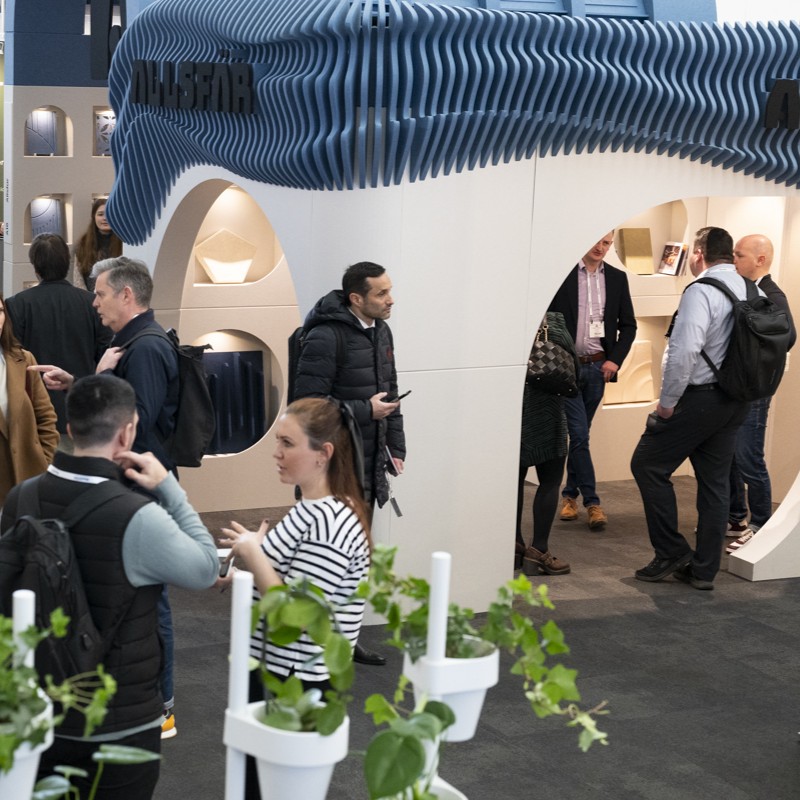
This November, Workspace Design Show returns to RAI Amsterdam, Hall 5 with the theme Activate the Senses — transforming the exhibition floor into a vibrant journey through sound, light, texture, and space. Over two inspiring days, 5–6 November 2025, the Benelux workplace design community will gather to explore how multi-sensory design is reshaping the way we work. Alongside 150+ international exhibitors, visitors will encounter interactive features and installations created by the likes of Biophilic Design Academy, Casper Schwarz Architects, UNS, Mecanoo, and Tank Design. (more…)

Global commission on healthy indoor air launches at United Nations

Global commission on healthy indoor air launches at United Nations

The Global Commission on Healthy Indoor Air has been formed to drive action on indoor air qualityA new international initiative was launched in New York during Climate Week to address what experts describe as one of the most overlooked public health issues of our time. The Global Commission on Healthy Indoor Air has been formed to drive action on indoor air quality, bringing together nearly 170 leaders from over 30 countries across health, academia, business and the built environment. The Commission was announced at a United Nations side event and is backed by the International WELL Building Institute. Its members include former United States Surgeon General Dr Richard Carmona, leading scientists and researchers, deans of major universities, as well as executives and sustainability leaders from real estate, technology, and manufacturing. Architecture, engineering and building science are also strongly represented, reflecting the cross-disciplinary nature of the challenge. (more…)

Carbon capture could help turn CO2 into fuels, chemicals and building materials

Carbon capture could help turn CO2 into fuels, chemicals and building materials

The report, Defossilizing Industry: Considerations for Scaling-up Carbon Capture and Utilization Pathways, outlines how industries could transform captured carbon dioxide into fuels, chemicals and building materialsA new report from the World Economic Forum warns that current plans for carbon capture and utilisation (CCU) fall well short of what is needed to meet global climate goals. The study, launched today in collaboration with Wood Mackenzie, concludes that planned CCU projects represent only around six percent of the scale required by 2040 to align with international targets. The report, Defossilizing Industry: Considerations for Scaling-up Carbon Capture and Utilization Pathways, outlines how industries could transform captured carbon dioxide into fuels, chemicals and building materials, creating new markets while cutting emissions. It argues that CCU has the potential to convert carbon from a liability into an asset, generating jobs and value chains across multiple sectors. However, it warns that without stronger policy signals and investment, the opportunity will remain unrealised. (more…)

Climate health risks threaten global productivity, warns WEF

Climate health risks threaten global productivity, warns WEF

Climate-related health impacts could strip at least $1.5 trillion from global productivity by 2050, according to a new report from the World Economic ForumClimate-related health impacts could strip at least $1.5 trillion from global productivity by 2050, according to a new report from the World Economic Forum (WEF). The study warns that food and agriculture, the built environment, and health and healthcare are among the sectors most at risk unless businesses take urgent steps to adapt. The report, Building Economic Resilience to the Health Impacts of Climate Change, produced in collaboration with Boston Consulting Group, highlights the growing economic burden of heat stress, infectious disease and other climate-driven health threats. It argues that protecting workforce health is now a strategic priority, not only for humanitarian reasons but also to safeguard business continuity and economic stability. (more…)

People are still powering productivity in the era of AI

People are still powering productivity in the era of AI

The rise in employers committing to employee-first productivity practices is encouraging. Ultimately, people are still at the heart of every organisation. AI will continue to develop, but with teams that bring personality and spark to their roles, businesses can boost efficiency without losing the human element.Employee productivity has been cast into the spotlight in recent months, thanks to the acceleration of AI. Our new research shows that 50 percent of businesses are prioritising employee productivity over the next two years, budgeting for resources that promote individual staff performance and effectiveness. AI’s growing role in the workplace is, of course, a key driver of this trend. But it’s not the only factor. Increased remote work and other operational challenges mean businesses are looking to maximise efficiency and get the best possible return on their investment. (more…)

Younger people want more office time as remote work leaves many feeling isolated

Younger people want more office time as remote work leaves many feeling isolated

A new poll suggests that younger people are increasingly seeking a return to office working, as large numbers report that remote work has left them feeling lonely and disconnected. The survey from Bupa, based on responses from employees aged between 16 and 24, found that around 40 percent say they feel lonely when working from home. Many of those in this group began their careers during the pandemic, with limited experience of office-based work and the informal social interactions that accompany it. (more…)

Better offices for all as occupiers shift focus away from cost cutting

Better offices for all as occupiers shift focus away from cost cutting

New research suggests a worldwide shift in workplace strategy, with portfolio optimisation (better offices basically) now the top priority for corporate real estate leaders, overtaking cost reduction for the first time.New research suggests a worldwide shift in workplace strategy, with portfolio optimisation and better offices now the top priorities for corporate real estate leaders, overtaking cost reduction for the first time. JLL’s 2025 Occupancy Planning Benchmark Report found that 73 percent of respondents identified portfolio optimisation as their main focus, compared with 70 percent who cited cost reduction and improved reporting. (more…)

Cities must embrace the radical retrofit of buildings to meet future challenges

Cities must embrace the radical retrofit of buildings to meet future challenges

The Radical Retrofit report by Economist Impact, supported by JLL, argues that making cities more sustainable and resilient will depend on retrofits that improve safety, health and accessibility, while also driving economic valueAs cities continue to grow, the pressure on infrastructure, resources and the environment is intensifying. A new global study warns that urban centres must move beyond new construction and reimagine the buildings they already have. Retrofitting – enhancing and upgrading existing structures -is emerging as a key strategy to cut emissions, improve energy performance and boost urban liveability. The Radical Retrofit report by Economist Impact, supported by JLL, argues that making cities more sustainable and resilient will depend on retrofits that improve safety, health and accessibility, while also driving economic value. Though still in its early stages, the movement is gaining traction across global cities such as Singapore, New York, Paris and Dubai. Yet the pace must accelerate dramatically from today’s retrofit rate of 1 percent per year to at least 3 percent to align with net-zero goals. (more…)

Workplace AI doesn’t appear to be having a negative effect on wellbeing for now, research suggests

Workplace AI doesn’t appear to be having a negative effect on wellbeing for now, research suggests

A new study published in the journal Nature: Scientific Reports offers a cautiously optimistic view of how artificial intelligence is affecting workers’ wellbeingA new study published in the journal Nature: Scientific Reports offers a cautiously optimistic view of how artificial intelligence is affecting workers’ wellbeing. Contrary to common fears, the research finds no clear evidence that AI exposure is harming workers’ mental health or job satisfaction. In some cases, it may even be contributing to small improvements in physical health, particularly among workers without a college degree. (more…)