Search Results for: technologies

HR managers appreciate importance of IT, but don’t work with IT people

HR managersResearch sponsored by Sungard Availability Services claims that while almost two thirds (63 percent) of the UK’s senior HR managers believe a closer alignment with their organisation’s Chief Information Officer will be vital in realising their department’s ideas, only 12 per cent currently work very closely with the IT crowd. The findings of the report show that 97 percent of HR professionals believe the CIO is very capable in supporting business growth through technology including enabling mobile and flexible working (58 percent), creating new ways to communicate with employees (64 percent) and driving efficiencies (66 percent) Nevertheless, the HR department profess to be big supporters of technology within the enterprise – with over two thirds (68 percent) stating that if the CIO was not sitting on the board within their organisation, then they should be.

(more…)

EU’s targeted 2030 greenhouse gas cuts receive lukewarm welcome from industry

greenhouse gas renewable energyThe states of the European Union (EU) have reached an agreement to cut greenhouse gas emissions by 40 percent by 2030, compared with 1990 levels. The EU says it aims to meet the new target in the most cost-effective ways possible. The EU has also set itself the target of generating 27 percent of energy from renewable sources over the same period. The new target is set to remain independent of any more ambitious cuts set by individual member states suggesting that the EU sees the new targets as being a minimum ambition. The new targets will also take account of the EU’s internal energy markets and the degree of integration of members states. The EU, in its announcement, claims that the market for renewable energy is dependent on a well integrated internal energy market, co-ordinated at regional level. The new announcement has been broadly welcomed by industry sources albeit with some significant caveats.

(more…)

Employers unready to meet demand for flexible working in UAE, claims report

flexible workingAccording to a new survey from YouGov and Citrix, office workers in the United Arab Emirates are almost universally aware of the benefits of flexible working and increasingly demand it from their employers. Yet under a quarter of organisations ‘encourage and enable’ employees to work away from their main place of work routinely.  The report claims that 94 percent of the 800 UAE office workers who took part in the study say they would feel less stressed, be more productive and achieve better balance between work and family responsibilities if they were given the freedom to work flexibly outside of the office. As a result, demand for flexible working has increased by 20 per cent since an equivalent report in 2013, with many UAE workers also indicating that the ability to work from anywhere would significantly increase their job satisfaction. In contrast, only 23 percent of the businesses surveyed fully ‘encourage and enable’ employees to work from anywhere, using any device.  (more…)

Work begins on ‘living laboratory’ to test eco-build products

Work begins on 'living laboratory' to test eco-build productsAccording to Constructing Excellence, buildings collectively account for around half the UK national output of carbon dioxide. To help address this, work has begun on the construction of a new £1.4 million ‘living laboratory’ at the Eden Project in Cornwall, where new eco-build products can be installed, tested and monitored. The Green Build Hub (GBH), is designed as a training centre that encourages inward investment by specialist green suppliers by enabling them to showcase and test innovative products. The project, by the Cornwall Sustainable Building Trust (CSBT), made possible by an investment of £1.1 million from the European Regional Development Fund Convergence Programme, aims to deliver a BREAAM ‘Outstanding’ building that acts as a resource of specialist green building knowledge. The GBH design team includes Gilbert & Goode Ltd, Ward Williams Associates, PBWC Architects, Hoare Lea, CDEC Ltd and TClarke Ltd; with an expected completion date of June 2015. (more…)

Few employers offer digital tools or support for flexible working

Majority of staff not been given digital tools to work remotelyAs we reported recently, flexible working has become a massive recruitment incentive, and this is reflected in yet another survey which found nearly three quarters of parents rate flexible working as very important when they are looking for a new job. Homeworking remains the most popular form of flexi-work, yet according to the survey from Workingmums.co.uk of over 2,000 parents, relatively few employers supply equipment or technical support to enable people to work outside the office. It seems the desire amongst employers to accommodate home workers is there, but not the will to furnish them with the tools they need to do the job properly. In fact, the majority of homeworkers use their own equipment and have to deal with any problems themselves. Though 36 per cent can call on technical support if they get into trouble, unsurprisingly, the survey of over 2,000 parents, sponsored by BBC Future Media, found that many still lack full confidence in remote communications tools despite their desire to work from home. (more…)

Julian Assange escapes incarceration to take part in conference as a hologram

Julian Assange escapes incarceration to take part in conference as a hologram

[embedplusvideo height=”200″ width=”230″ editlink=”https://bit.ly/1x5tY4Y” standard=”https://www.youtube.com/v/3EjcSc_44vE?fs=1&vq=hd720″ vars=”ytid=3EjcSc_44vE&width=230&height=200&start=&stop=&rs=w&hd=1&autoplay=0&react=0&chapters=&notes=” id=”ep1089″ /]

We have grown accustomed to the way technology distorts time and space. This, after all, is the underlying tension that defines each of the major debates about the workplace, including flexible working, office design, facilities management and the acquisition of commercial property. But, as they say, we ain’t seen nothing yet as the next generation of technologies starts to scale the upslope of the diffusion of innovation curve. People have been talking about telepresence for a little while, but it is about to achieve mainstream awareness thanks to events such as the appearance of Wikileaks Founder Julian Assange at a conference in the USA last week. Assange is famously holed up in London in the Ecuadorian Embassy, challenging his extradition to Sweden to face trial and can’t leave the building without being arrested. So the way he appeared at the conference in Nantucket was as a hologram.

(more…)

BIM’s impact on future of built environment mapped out by construction experts

New report by construction group on digital future for built environmentA new report by an influential group of young construction professionals has been published today which illustrates the need for organisations to consider new skills, new processes and develop strategies around emerging technologies that will ensure that the UK stays ahead in embracing the digital construction future. The report by the BIM2050 Group, comprises a compilation of essays authored by BIM2050 work stream leads, and focuses on three key areas; education and skill; technology and process; and the culture of integration. Built Environment 2050: A report on our digital future, highlights the risks and challenges and the opportunities and benefits that come with large scale innovation and game-changing new technologies. Commented Graham Watts OBE, CIC Chief Executive: “It is an important discussion document of ideas and concepts that will, I hope, spark debate in the wider construction community.” (more…)

Hotels allocating more public space to meet the needs of business travellers

Business TravellersPresenteeism isn’t restricted to the workplace. Growing demand from business travellers means hotels are increasing the amount of working and meeting space they provide in their facilities in cities across Europe and the rest of the world. Three quarters of British employees work while staying in a hotel according to the survey carried out by the Fraunhofer Institute on behalf of hotel business solutions firm HRS. Only Italians spend more time working in hotels (76 percent), followed the UK (75 percent), Poland and Switzerland (50 percent respectively), Germany (46 percent), China (45 percent), Russia (43 percent), Austria (42 percent) and France (25 percent). The firm has also identified a number of hotels around the world which it believes offers exemplars of the new working spaces available.

(more…)

Two fifths of workers ignore social media bans – and they’re right

We all remember the days, not that long ago, when companies actively discouraged the use of personal technology and social media at work. How quickly things change. Now many firms not only want people to use their own smartphones, they pretend that it was their idea all along by labelling it BYOD. Some even measure their employees’ social engagement and judge them on it. Even those firms who maintain policies to restrict the use of social media may be fighting a losing battle according to new research from Samsung Electronics, which found that British employees are most likely to ignore them. But then again, maybe businesses shouldn’t worry about it because a growing body of research suggests that people who use social media tend to be more collaborative and productive at work.

(more…)

BIFM survey reveals lukewarm approach to sustainable facilities management

Sustainable facilities managementA new report from the British Institute of Facilities Management reveals the lukewarm approach many UK organisations have to sustainable business practices generally and sustainable FM in particular. The study, based on online research carried out in the Spring with the University of Reading found that, while an overall majority (60 percent) of facilities managers think sustainability is effectively integrated in to their businesses, most operate on the ‘border of compliancy’. The report makes this conclusion based on the fact that its survey showed that over three quarters of respondents (78 percent) claimed that the main driver for the development of sustainability policies is corporate image and a similar proportion (77 percent). The report concludes that this ‘suggests a ‘box-ticking’ approach to sustainability instead of businesses embracing and investing in longer-term practices and the advantages of spending to save’.

(more…)

Three ways in which politicians display their ignorance of the workplace

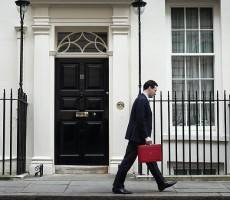
Workplace bubbleThe recent Cabinet reshuffle in the UK Government won’t alter one fact; politicians simply don’t get it when it comes to technology, the workplace, the way people work and the needs of small businesses. Once you dismiss the paranoid idea that they DO get it but don’t care because they’re too busy looking out for The Man, you have to conclude that one of the big problems they have (this won’t go where you think) is that they don’t understand anything about technology and work, especially when it comes to emerging technology, the working lives of individuals, the needs and functions of small businesses and the fact the self-employed exist at all. These things exist outside the bubble. This is obviously a problem because they are implementing policies and making big, uninformed and anachronistic decisions about the things that shape every aspect of our lives, help to define us as people and determine how companies and individuals function. Here are just three examples.

(more…)

Climate committee exposes limited progress on energy efficiency of buildings

Climate committee exposes limited progress on energy efficiency of buildingsIn its latest progress report to Parliament, the Committee on Climate Change (CCC), the statutory body set up to advise the government on meeting long-term carbon goals, says that progress has been limited in energy efficiency improvement in the commercial and industrial sectors and previous good progress in residential energy efficiency fell away with the new policy regime in 2013.While there are specific examples of organisations that have made progress, much potential remains unexploited. This is because the policy landscape is complex and has mixed incentives. It recommends that policies should be simplified to lower administrative costs while, at the same time, improving delivery. There is a need to strengthen incentives and at the same time rationalise the number of policy instruments, leading to lower administrative costs as well as better delivery. (more…)