Search Results for: wellbeing

Third of employers admit rise in numbers of staff coming to work when ill

Third of employers admit rise in numbers of staff coming to work when ill 0

Sick at workNearly a third of employers have reported an increase in people coming to work while they are ill, according to the annual CIPD / Simplyhealth Absence Management Survey. The survey of nearly 600 employers found that 31 percent have seen an increase in ‘presenteeism’ in the last year. It also claims that any increase is likely to be associated with a culture in which working long hours is seen to be the norm and where operational demands take precedence over wellbeing. Employers that have noticed an increase in presenteeism are nearly twice as likely as those that haven’t to report an increase in stress-related absence, and more than twice as likely to report an increase in mental health problems amongst its staff. However, despite this, nearly three-fifths (56 percent) of organisations that have reported an increase in presenteeism haven’t taken any steps in order to discourage it.


(more…)

How biodynamic lighting stimulates sense and performance at work

How biodynamic lighting stimulates sense and performance at work 0

lavigo-pulse-vtl-b1-tagesverlauf-1-bBiodynamic lighting is an artificial light source that replicates the dynamic variations of daylight and sunlight through a light management system. Up until recent times, it was commonly believed that light was only needed for seeing. However, in 2001, an American scientist, G. C. Brainard discovered a circadian photoreceptor in the retina, which receives a specific quality and quantity of light, and sets the biological clock.* He discovered that light not only provides us with the ability to see, but that light enters the eye via the ‘fourth pathway’, which has a vital non-visual or biological effect on the human body. His studies showed that a certain quantity and quality of light stimulates the biological clock, also known as the circadian rhythm, which regulates hormone levels, particularly melatonin and cortisone, in the body and so plays a vital role in our physical and mental wellbeing.

(more…)

Generation Z is the smart generation that will redefine work, claims report

Generation Z is the smart generation that will redefine work, claims report 0

Generation ZThe trade association BSRIA has launched a White Paper called Products and Systems for Generation Z in Reduced Carbon Buildings to explore the future needs of buildings designed for what it calls the ‘smart generation’. It considers ways in which the value of buildings might be improved in order to raise productivity and wellbeing for occupiers and at the same time generate new revenue streams for suppliers. Authored by Jeremy Towler and based on data collected in March of this year, it suggests that Generation Z  are the “first tribe of true digital natives” and are ‘smarter and more prudent than Generation Y. They are empowered, have more job choices, seek freedom of movement and flexible working policies. They are the ‘see it – want it’, ‘touch it – get it now’ generation.’ The report claims this will define their relationship with work and drive demand for flexible working and on-demand offices.

(more…)

Changing behaviour and fidgeting reduce problems linked to sedentary work

Changing behaviour and fidgeting reduce problems linked to sedentary work 0

fidgetingThere are a number of well established strategies for reducing the incidence of the back problems associated with sedentary worker. Two new studies have identified important ways that can be used to address the challenges. One will be familiar – training and encouraging people to be aware of and modify their behaviour; the other less so- fidgeting. The first study, published in Occupational and Environmental Medicine, found that combining sound ergonomic practice with behaviour modification strategies led to a 60 percent reduction lower back pain compared to ergonomics in isolation. The second study, published in the American Journal of Preventative Medicine, found that fidgeting may also reduce the harmful effects of sedentary working across a range of health issues, with the authors concluding that “fidgeting may reduce the risk of all-cause mortality associated with excessive sitting time”.

(more…)

More people are working from home, but they can end up feeling lonely

More people are working from home, but they can end up feeling lonely 0

RoneryMore and more British workers are working remotely, from home and other locations, but they are growing increasingly disconnected from their colleagues. Those are the findings of two studies into new ways of working conducted independently by Plantronics and Regus. According to the Plantronics survey of 2,500 staff, flexible working was given another boost over this Summer in response to the (intermittent) good weather and industrial action by London public transport staff. During August, more than half (55 percent) of the workforce chose to work from home or remotely more convenient to them, the audio communications firm’s study found. On the flipside,  the survey of 4,000 workers by serviced office provider Regus claims that almost two-thirds of employees who work from home miss mixing with colleagues and can feel lonely as a result.

(more…)

New study highlights the key roles of real estate at UK’s top law firms

New study highlights the key roles of real estate at UK’s top law firms 0

Shoosmiths-4The UK’s top law firms are spending more on their real estate and allocating more space to staff, following years of reductions. Those are two of the key findings of a new report from The Lawyer magazine and property consultants JLL. Around  half of the UK’s Top 200 law firms shared detailed data with the study, which also incorporates publicly available information on transactions. The study also takes into account the links between real estate strategy and broader strategic, management and human resources issues. While the report says the amount of space dedicated to each lawyer has risen by 7 percent over the last two years and the costs of owning real estate have also risen markedly, it also describes how many firms are now actively using flexible working to reduce real estate costs.The report concludes with a speculative look at future trends, including the uptake of coworking space.

(more…)

Quiet at work + Office design and conflict + The on-demand revolution

Quiet at work + Office design and conflict + The on-demand revolution 0

Insight_twitter_logo_2In this week’s issue; Dan Callegari lists ten unusual ways to ensure peace and privacy in the workplace; Sara Bean says senior executives are unaware of the effects of ‘change fatigue’ in their organisations; and Mark Eltringham notes a growing acceptance of sit/stand furniture as a standard workstation option. In news; the results of a new study which found men and women are likely to react differently to specific types of office layout; the introduction of the revised version of one of the world’s most popular environmental standards and SMEs fail to embrace effective wellbeing programmes, despite appreciating their role in future growth. And why is there a growing dread of the influx of the latest generation Z into the workplace? Check out our new events page, subscribe for free quarterly issues of Work&Place and weekly news here., You can follow us on Twitter and join our LinkedIn Group to discuss these and other stories.

The way we talk about workplace productivity needs another dimension

The way we talk about workplace productivity needs another dimension

workplace productivityOne of the most typical claims that suppliers in this sector make about their products is that they will make people more productive at work. Many go so far as to put numbers on what this means, and usually not just 0.4 percent or whatever but something far more. We can understand why they do this because they are seeking to link workplace productivity to whatever it is they have to sell. This is often tenuous for at least two reasons. The first is that even when such a causal link is demonstrably true, it still assumes that all other things at work are equal, whereas they never are because there are so many factors involved. That is why you will find some people cheerfully working in shabby, cluttered, underlit offices while others mope around unhappily in gilded cages with expensive chairs, soaring daylit atria and olive groves. The second is that such claims simply ignore what makes people tick.

(more…)

Wellness policies often ignore the role of the workplace environment

Wellness policies often ignore the role of the workplace environment 0

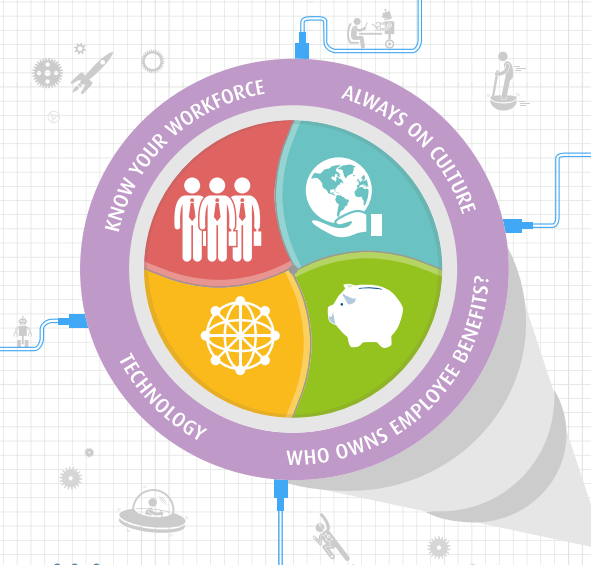
StressA new meta analysis compiled by researchers from Harvard Business School and Stanford University raises questions about the way Government and organisational policies designed to tackle the problems of work related health costs in the United States have largely ignored the health effects of ‘psychosocial workplace stressors’ such as high job demands, economic insecurity, and long work hours. The analysis of 228 existing studies assessed the effects of ten workplace stressors on four specific health outcomes. The researchers claims that job insecurity increases the odds of reporting poor health by about 50 percent, high job demands raise the odds of having a diagnosed illness by 35 percent, and long work hours increase mortality by almost 20 percent. They argue that any policies designed to address these issues should account for the health effects of the workplace environment.


(more…)

Traffic congestion costing UK firms £4.5 billion a year, claims report

Traffic congestion costing UK firms £4.5 billion a year, claims report 0

The daily grind of commuting to work is not only taking its toll on the health, wellbeing and fuses of employees, it is also costing businesses billions of pounds a year in lost working hours, claims a new report from fleet management firm Lex Autolease. The study, part of the firm’s annual survey of trends in corporate car use, estimates that employees spend around 13 percent of their work-related journey times held up by jams and congestion and that the 1,041 people surveyed also spent an average of 70 minutes each day in their car travelling to and from work. In addition, around one in twenty (5 percent) of people commute for more than three hours each day, while just 8 percent said they were based from home so commuting wasn’t an issue. The study concludes that this costs UK employers some £4.5 billion each year.

(more…)

Mind research reveals relentless email checks extend to toilet breaks

Mind research reveals relentless email checks extend to toilet breaks 0

empty-toilet-rollThere have been quite a number of polls over the summer warning of the dangers of presenteeism and overwork; but the latest one from Mind does make for uncomfortable reading. It has found that more than 1 in 7 of people (15 percent) who receive work emails sometimes check them while in the toilet and nearly 2 in 5 (38 percent) of those who receive work emails admit that they often check them outside of work. Only half of respondents (50 percent) say that their manager respects that they have a life away from work. As well as having personal lives interrupted, the survey found that this relentless email-checking culture is making it difficult for workers to switch off when they should be preparing for sleep and the mental health charity warns a culture of working round-the-clock is making it difficult  for people to achieve a healthy work/life balance.

(more…)

Flexible working now an almost universal employee benefit, claims study

Flexible working now an almost universal employee benefit, claims study 0

flexible workingA new report from employee benefits provider Unum claims to set out the future trends and challenges affecting the benefits packages firms should offer staff. One of the headline claims from the report is that four out of five employers (79 percent) already offer flexible working. ‘The Future of Employee Benefits’ report surveyed 13 organisations and incorporated the results with those of a series of interviews and roundtable discussions with employers and specialists including representatives from the Chartered Institute of Personnel and Development. The report identifies a series of macro trends affecting workplace wellbeing and the recruitment and retention of employees over the next 15 years, which were categorised into four distinct working environments: The Ageless Workplace; The Mindful Workplace; The Intuitive Workplace; and The Collaborative Workplace.

(more…)