







July 24, 2020
Search Results for: Gen Z


June 30, 2020
Younger workers careers suffer in lockdown, but are hopeful of better future
In the face of unprecedented health and economic disruption caused by the COVID-19 pandemic, ‘millennials’ and ‘Gen Zs’ express resolve and a vision to build a better future, a new Deloitte survey claims. The 2020 Deloitte Global Millennial Survey, now in its ninth year, suggests that both generations remain resilient in the face of adversity and are determined to drive positive change in their communities and around the world. (more…)

 Environmental concerns and the changing work landscape could lead to a noticeable drop in both domestic and international business travel, as nearly half of UK workers (48 percent) are concerned about its negative environmental impact, according to new research from
March 12, 2020
Workers and employers differ on progress towards workplace equality
 A gap exists between the way leaders and employees view progress toward equality in their organisations, according to new research from Accenture. Closing the gap will yield benefits for companies and their employees. The report, “Getting to Equal 2020: The Hidden Value of Culture Makers,” which includes research across 28 countries, claims that organisations are at an inflection point. Today’s UK workforce cares increasingly about workplace culture and believes it is critical to helping them thrive in the workplace (reported by 80 percent of women and 66 percent of men), and a majority of leaders (62 percent) believe an inclusive workplace culture is vital to the success of their business. (more…)

February 11, 2020
Freelancers` motivations explored in new report
 Freelancers value the freedom and flexibility of being their own boss but their happiness is most closely correlated with how much money they earn, a survey of 7,000 freelancers has claimed. According to the report from Payoneer (registration required), the worldwide average hourly rate charged by freelancers is $21, up from $19 two years ago. This is significantly higher than the average salary in many of the 150 countries surveyed. Those who work exclusively in freelancing earn a higher rate and are more satisfied with their lifestyle than those who split their time working for a company. (more…)

January 13, 2020
The changing expectations of call and contact centres
Ever since call centres were introduced as a business function in the mid-20th century, they have been subject to plenty of change and transformation. Customer expectations have been on a gradual rise, and CX strategists and leaders have had to adapt to meet these increased demands. Previously, call and contact centres were viewed as a cost centre – whereby the primary goal was to run them as efficiently and cost-effectively as possible, whilst still being able to respond to customers competently. Nowadays, customer experience is being ramped up on the priorities list, with call and contact centre success shown to be a key driver for customer retention, enrichment and advocacy.
Most importantly, customer expectations have evolved which has put a great strain on how call and contact centres adapt. Customers now expect customer service to quick, convenient and available 24/7.
What do customers want from contact centres?
- Quicker responses
Living in a social media world has not only brought plenty of benefits for businesses, but also presented its fair share of challenges. With consumers now having the ability to communicate and get instant information online, contact centres have had the same expectations placed on them to provide quick response times whilst still maintaining high service levels.
A study conducted by Lithium Technologies found that when asking about a product or service, 66 percent of consumers expect a response to their query on the same day, and over 40 percent expect a reply within the hour. This has put a large strain on contact centres to improve efficiency and be able to respond so quickly to customer queries.
- Convenience
In addition to wanting a quicker service, customers today also want convenience. ‘Gen Z’, having grown up with social media and digital technologies are used to shopping, browsing and completing tasks online through research and self-informing. What does that mean for contact centres?
Customers don’t want to call contact centres and wait to be put through to the right advisor – It isn’t the most convenient option anymore. What customers want instead is the ability to solve the issue themselves using self-serve/ FAQ sheets, or at least to see if they can solve the problem before having to get in touch with an advisor.
A study carried out by Zendesk found that 67 percent of consumers preferred using a self-serve portal when looking to help themselves online, with 40 percent of customers calling a contact centre only after they have at least attempted to find their solution on the internet first.
- More availability
On top of wanting a quicker service and convenience, customers are also expecting help to be readily available whenever and wherever they need it.
Today’s customers want to be able to get in touch with a company across multiple channels and be able to hop in between channels to continue their interaction. For example, a customer wants to be able to message a chatbot online, then follow up with a phone call, and expect the company know their name, information and query. These conversations should be able to take place across a whole host of channels including social media, websites, mobile, text, chatbots, telephone, email, self-serve and more.
By having interactions across multiple channels, customers also expect help in one form or another to be available 24/7. Banks, for example, outsource call centre functions to countries abroad to ensure customers calling in the later hours have a representative that they can speak to.
This piece has been published in partnership with Call & Contact Centre Expo
Image by Stefan Kuhn

October 23, 2019
Firms not meeting the needs of a growing flexible workforce
A new report claims that US based businesses are not addressing the needs of an increasingly “deskless workforce” which thinks flexible working is a right that should be valued more than other benefits. The Future is Flexible: A New Workforce Paradigm Evolving From the Gig Economy (registration) from Quinyx compiles publicly available data alongside a survey of more than 4,000 employed Americans over the age of 18. It claims that, behind wages, flexibility is one of the most important factors of happiness at work for this growing flexible workforce, higher than health benefits, culture, and employee discounts. (more…)

October 16, 2019
Two thirds of people would trust a robot more than their manager
Following the recent report that people would prefer to be replaced by a robot than a human, a new survey from Oracle suggests they also have more trust in robots than their managers. According to the second annual AI at Work study conducted by Oracle and researchers Future Workplace. The study of 8,370 employees, managers and HR leaders across 10 countries, found that AI has changed the relationship between people and technology at work and is reshaping the role HR teams and managers need to play in attracting, retaining and developing talent. (more…)
September 12, 2019
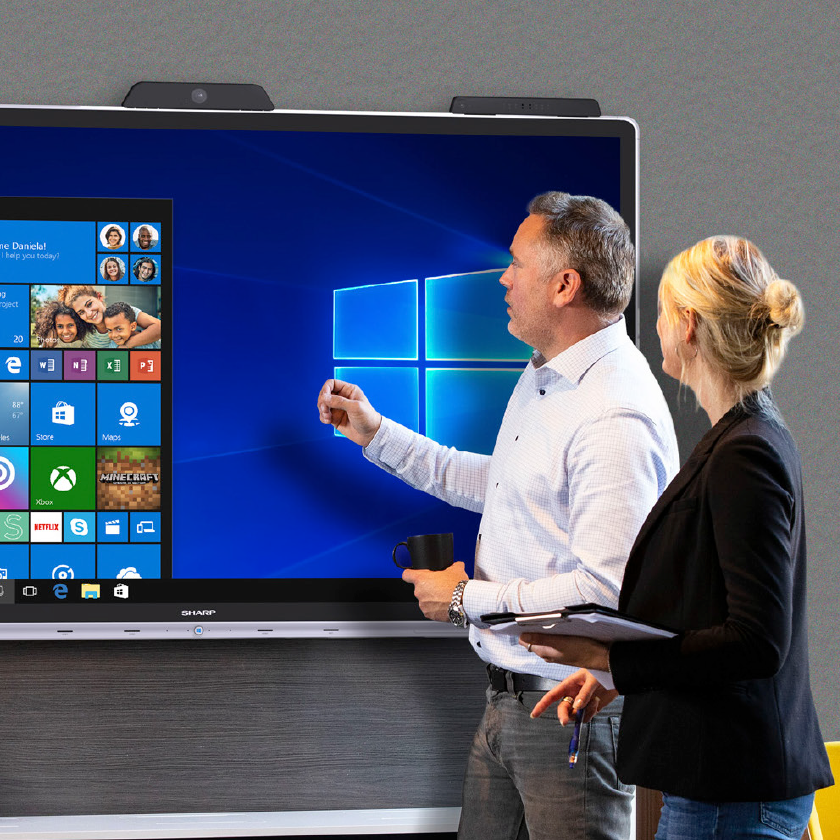
People cannot focus for length of most meetings
An overwhelming majority (83 percent) of UK office employees are unable to concentrate in meetings for over 45 minutes, yet research from Sharp reveals that the average meeting lasts 49 minutes. This finding was supported by 55 percent of those surveyed, who claimed that work meetings are too long. This dissatisfaction appears to be caused by the difficulty in sustaining concentration in long meetings, with only 36 percent of UK employees indicating they are able to concentrate for a full 30 minutes. (more…)

September 10, 2019
Workers worldwide think they could outperform their own bosses
Managers should seriously consider giving their employees the reins for a day to test new research that indicates seven out of 10 employees worldwide (69 percent) say they can do their boss’s job better, despite nearly the same number of workers (71 percent) grading their boss’s competence a B or better.
The Global State of Managers research comes from The Workforce Institute at Kronos Incorporated and Future Workplace, which examined how nearly 3,000 employees in Australia, Canada, France, Germany, India, Mexico, the U.K., and the U.S. would grade their manager’s effectiveness across five factors: communication, competence, empowerment, professional development, and support.
According to the study, employees grade their managers high on competence but nearly fail them when it comes to work-life balance and job coaching. Overall, people feel managers are good at their jobs, with the majority of employees grading bosses an A or B for competence (71 percent) – the highest grade given – and work ethic (70 percent).
Bosses also received high marks (B or better) for their communication skills, people management skills, and ability to handle performance-related issues (all 67 percent). The older the employee, however, the more critical they are of their boss: Baby Boomers1 and Gen Xers grade managers more harshly with a C, D, or F for overall people management skills (37 percent and 38 percent, respectively). Worldwide, the employee-manager connection remains critically important: 70 percent of employees say their relationship with their manager is an extremely or very important factor when deciding to remain at their current job, with 22 percent agreeing it’s somewhat important. Millennial (79 percent) and Gen Z (73 percent) employees feel strongest about the importance of the manager relationship for retention compared with Gen X (66 percent) and Baby Boomer (62 percent) counterparts.
Other findings
- Nearly seven out of 10 people think they can do their boss’s job more effectively.
- While bosses worldwide are well regarded by their employees, these same employees think they could personally manage even more effectively, with younger Millennial (73 percent) and Gen Z (70 percent) employees most confident they could do better.
- Based on grades given of a C, D, or F, at least one in three employees feel their manager could improve at modelling work-life balance (37 percent); their ability to coach for better job performance (37 percent); handling performance-related issues (33 percent); and communication (33 percent).
- For overall people management skills, the majority of workers would “pass” their boss with an A (26 percent), B (37 percent), or C (25 percent); yet 4 percent of employees give a solid F for performance.
- French, German, and U.K. managers graded worst for competence, while Indian and Mexican workers are happiest overall…with one big exception.
- Indian employees are by far the most satisfied with their managers, with at least eight out of 10 grading managers an A or B in every category. Conversely, French, German, and U.K. workers are by far the most pessimistic about manager performance, as those countries ranked in the bottom three in every category surveyed
- Most competent: India (87 percent); Australia (76 percent); Canada (75 percent); Mexico (75 percent); U.S. (71 percent); Germany (62 percent); U.K. (61 percent); and France (59 percent)
- Best communicators: India (90 percent); Mexico (74 percent); Australia (68 percent); Canada (68 percent); U.S. (67 percent); Germany (59 percent); France (58 percent); and the U.K. (56 percent)
- Hardest-working managers: India (81 percent); Australia (75 percent); U.S. (73 percent); Canada (72 percent); Mexico (70 percent); Germany (63 percent); U.K. (62 percent); and France (58 percent)
- Best job coaches: India (83 percent); Mexico (70 percent); U.S. (64 percent); Australia (63 percent); Canada (61 percent); France (56 percent); Germany (55 percent); and the U.K. (51 percent)
- Most adept at handling performance-related issues: India (86 percent); Mexico (73 percent); U.S. (70 percent); Australia (68 percent); Canada (66 percent); Germany (59 percent); U.K. (57 percent); and France (56 percent)
- Role models for work-life balance: India (80 percent); Mexico (70 percent); Canada (65 percent); U.S. (65 percent); Australia (62 percent); France (55 percent); Germany (55 percent); and the U.K. (53 percent)
Differences by sector and nationality
Despite rating their managers No. 1 in all categories, 95 percent of Indian employees still say they could do their boss’s job better all of the time (47 percent) or some of the time (48 percent). This sentiment is followed by 87 percent of Mexican workers and 71 percent of French workers. Canada (61 percent) and U.S. (59 percent) workers feel the least confident that they could do their boss’s job better – yet it’s still more than half of all employees.
Managers in the technology industry are on top overall, scoring highest marks (A or B) in people management (81 percent), communication (75 percent), and modeling work-life balance (70 percent). Professional services managers (e.g. accountants, engineers, lawyers) rank second-best, with 70 percent of employees grading them a B or better for people management and communication. Employees in the technology (77 percent) and finance (70 percent) sectors say they have a strong or very strong relationship with their boss, followed by manufacturing (62 percent); education (61 percent); retail (61 percent); and professional services (61 percent).
There is room for managers to model better work-life balance in frontline industries – i.e. those who must be present to do their jobs – with 53 percent of employees in federal government, 42 percent in healthcare, and 42 percent in retail giving their boss a C or worse.
Regarding pure competence, managers are graded worst – C or lower – by public safety (44 percent); federal government (39 percent); transportation/distribution/logistics (35 percent); and healthcare (34 percent) employees. More than one in three employees give poor marks of a C or worse for their manager’s work ethic in federal government (37 percent); healthcare (34 percent); transportation/distribution/logistics (34 percent); and manufacturing (33 percent).
Image by Pixabay

September 3, 2019
Work-life integration is the new goal for workers
The modern world of work is a stressful one, and the goal to progress in our careers brings on even more pressure. Tight deadlines and demanding workloads are the typical order of the day, but just as important is to have the time to wind down and recharge the batteries. Historically, this has been known as work-life balance.










September 26, 2019
Striking the balance between the office and remote work
by Arran Stewart • Comment, Flexible working, Wellbeing