To provide the best experiences, we use technologies like cookies to store and/or access device information. Consenting to these technologies will allow us to process data such as browsing behaviour or unique IDs on this site. Not consenting or withdrawing consent, may adversely affect certain features and functions.
The technical storage or access is strictly necessary for the legitimate purpose of enabling the use of a specific service explicitly requested by the subscriber or user, or for the sole purpose of carrying out the transmission of a communication over an electronic communications network.
The technical storage or access is necessary for the legitimate purpose of storing preferences that are not requested by the subscriber or user.
The technical storage or access that is used exclusively for statistical purposes.
The technical storage or access that is used exclusively for anonymous statistical purposes. Without a subpoena, voluntary compliance on the part of your Internet Service Provider, or additional records from a third party, information stored or retrieved for this purpose alone cannot usually be used to identify you.
The technical storage or access is required to create user profiles to send advertising, or to track the user on a website or across several websites for similar marketing purposes.








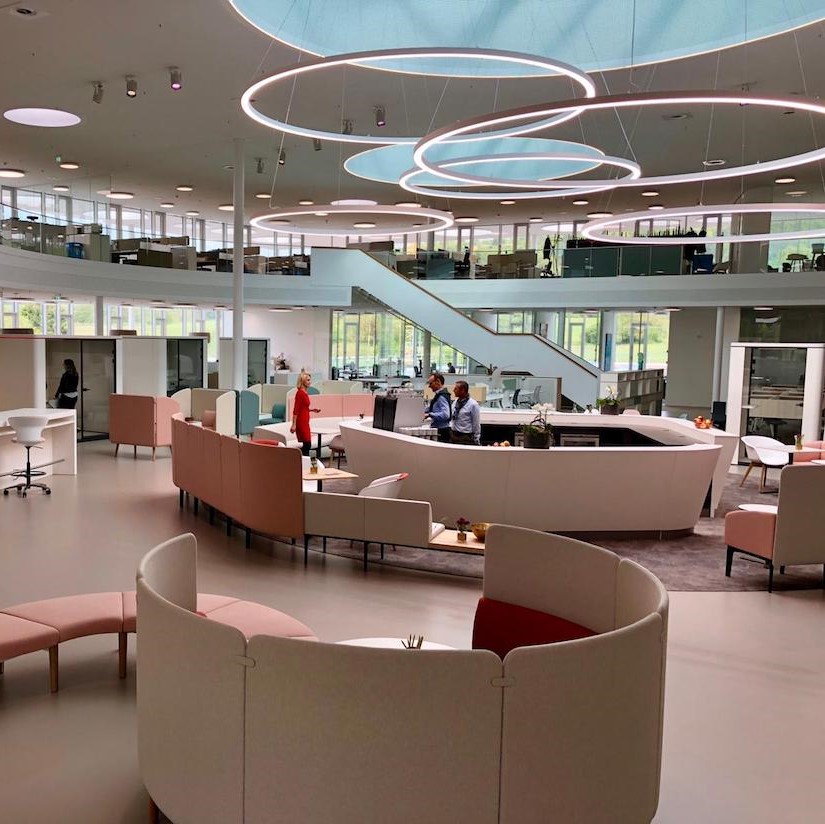
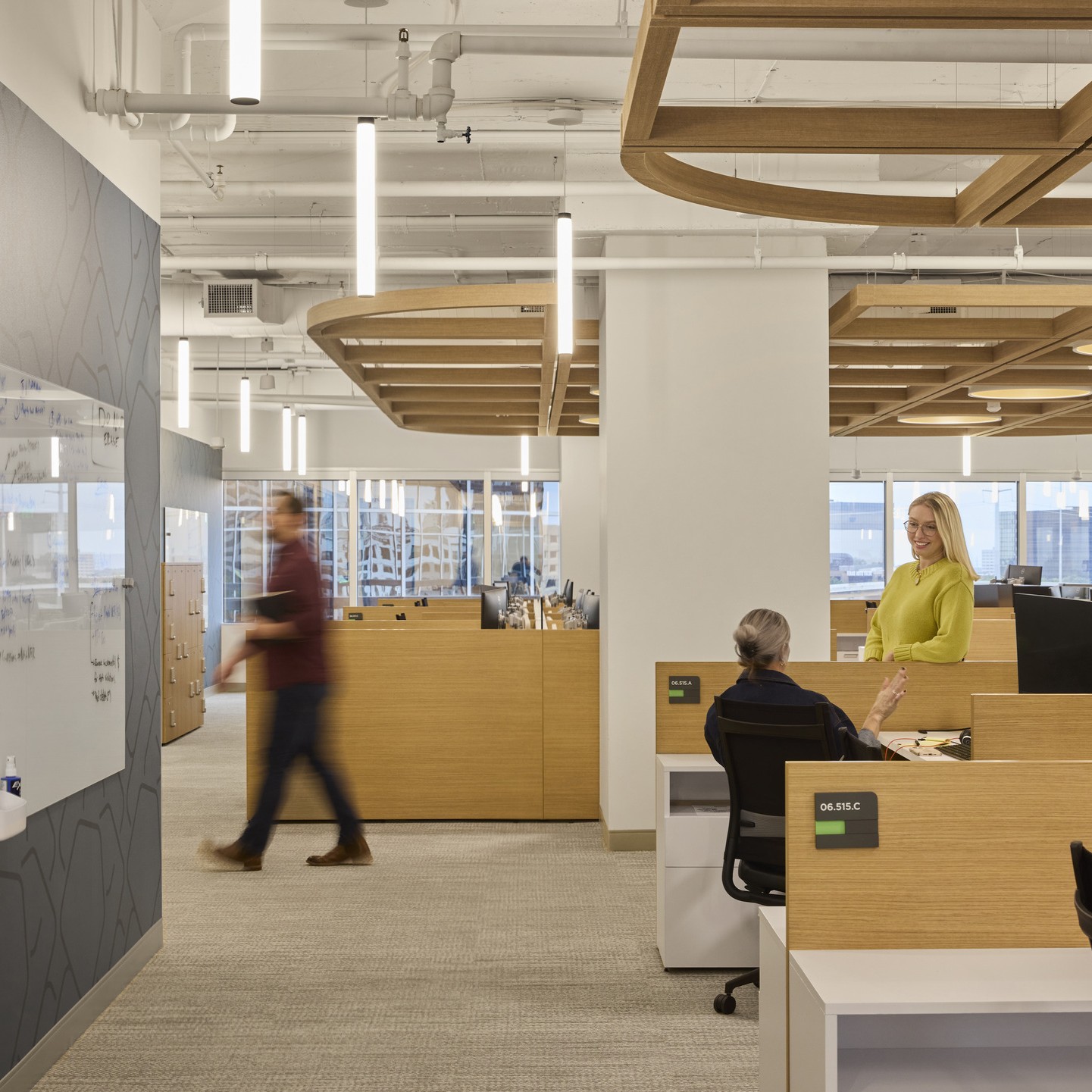 Workplace lighting, visual distractions and opportunities for movement can have a measurable impact on attention among people with inattentive-type ADHD, according to new research from architecture and design firm Corgan and the University of Arkansas. The study examined how environmental factors including light, sound, movement and visual activity affect people with inattentive-type ADHD, with researchers using electroencephalogram (EEG) technology to monitor participants’ brain activity in open workstations and private offices. (more…)














September 18, 2026
Your office may be busy, but is it working?
by Chris Barcus • Comment, Facilities management, Workplace design
Hybrid work has turned office attendance into one of the most watched numbers in the workplace. It is easy to understand why. A booking can be counted. A badge swipe can be counted. A sensor can count bodies in a room. When leaders are making expensive decisions about leases, policy and design, those numbers feel reassuringly solid. The problem is not that the data is wrong. The problem is that we keep asking it to answer a question it cannot answer.
A reservation tells us that somebody intended to come in. A swipe tells us that somebody crossed a doorway. A sensor tells us that a body occupied a zone at a point in time. None of those signals tells us whether the person found the colleague they came to see, whether the room supported the meeting, whether the noise level made concentration impossible, or whether the journey was worth making. That distinction matters because attendance is increasingly being treated as a proxy for workplace performance. It is not. At best, it is the beginning of the measurement chain.
Workplace teams often combine three different layers of evidence as if they were interchangeable. The first is intent, usually captured by a reservation or schedule. The second is presence, captured through access control, Wi-Fi, sensors or observation. The third is outcome: whether the office supported the work people needed to do. Each layer is useful. The mistake is assuming that one proves the next. A booked desk may be a no-show. A badge swipe may represent a short visit. A busy floor can still be a poor place to concentrate. A full meeting room can host a meeting that should have been an email. Measurement becomes more credible when the layers are connected, but the gaps remain visible.
Current US federal guidance is surprisingly clear about this. The General Services Administration describes multiple occupancy methods and notes their limitations. Reservation data can contribute to occupancy reporting, but becomes more useful when combined with turnstile or sensor data. Visual analysis can reveal patterns and valued amenities, but does not capture absolute occupancy. Timecard analysis can infer presence, but is not fully accurate. The practical message is simple: every source sees only part of the workplace.
A crowded office can still be underperforming
Imagine a company with a crowded Tuesday. The dashboard looks healthy. Yet half the people on that floor are on individual video calls, the project team that wanted to work together is scattered across three zones, and two groups are searching for rooms because the ones shown as available are occupied. Attendance is high. The workplace experience is poor.
The reverse can also be true. A quieter floor may be doing exactly what the organization needs. A small group may be using a project room for focused work that unlocks a decision. A new employee may be spending time with a manager. A client workshop may occupy a small portion of the building while creating disproportionate value. Low density does not automatically mean low usefulness.
This is why the language of utilization can become dangerous. It sounds like a verdict, when it is usually a description. It tells us how much of a resource was occupied, not whether the resource supported a valuable result.
Measure the office as part of the work system
A better approach starts by treating the office as part of the work system, not simply a container for employees. The useful questions are more specific. What did people come in to do? Did they have access to the people, spaces and tools that work required? Where did friction appear? What conditions made them more or less likely to return for the same kind of work?
This does not require turning workplace measurement into an endless survey programme. It does require joining operational data with experience evidence. Bookings and presence can show patterns. Short pulse questions, service requests, room conflicts and team-level observations can explain those patterns. The goal is not a single perfect score. It is a chain of evidence that is strong enough to support a decision.
Leesman’s research makes the same broader point from a different direction. Its hybrid-work studies argue that there is no universal recipe and that employee requirements, circumstances and concerns have to be understood. Its more recent work on the power of place focuses on whether the office actually supports experience and performance. Counting attendance without that context reduces a complex workplace to a turnstile.
There is a management implication here too. If an attendance target becomes the headline measure, people will optimize for attendance. They will show up on the required day, book the desk and cross the threshold. If the real aim is connection, learning, collaboration or client work, leaders need to state that aim and measure it more directly.
The number should lead to a better question
Occupancy data is valuable. It can expose peak days, empty zones, room shortages and mismatches between supply and demand. It can help workplace teams test a change instead of arguing from instinct. But it should trigger investigation, not end it.
The next time a dashboard shows that the office was busy, the most useful response is not celebration or alarm. It is curiosity. Busy doing what? Supported by which spaces? Frustrated by what? And would the people who came in choose the same setting again for the same work?
Those questions are harder to fit into a monthly executive scorecard. They are also much closer to the decision leaders believe they are making.