To provide the best experiences, we use technologies like cookies to store and/or access device information. Consenting to these technologies will allow us to process data such as browsing behaviour or unique IDs on this site. Not consenting or withdrawing consent, may adversely affect certain features and functions.
The technical storage or access is strictly necessary for the legitimate purpose of enabling the use of a specific service explicitly requested by the subscriber or user, or for the sole purpose of carrying out the transmission of a communication over an electronic communications network.
The technical storage or access is necessary for the legitimate purpose of storing preferences that are not requested by the subscriber or user.
The technical storage or access that is used exclusively for statistical purposes.
The technical storage or access that is used exclusively for anonymous statistical purposes. Without a subpoena, voluntary compliance on the part of your Internet Service Provider, or additional records from a third party, information stored or retrieved for this purpose alone cannot usually be used to identify you.
The technical storage or access is required to create user profiles to send advertising, or to track the user on a website or across several websites for similar marketing purposes.








 More than 7 in 10 UK employees have pushed through a mental health struggle to avoid taking time off work in the past three months, according to a new report by BetterUp Labs. Over half (59 percent) also reported that they’d had to push through a physical health struggle, suggesting there is widespread hesitation about stepping away from work to take time to recover. The report also claims that over a quarter (26 percent) of respondents have or have had a mental wellbeing condition, with 30 percent of women and 21 percent of men reporting this. (more…)


























March 11, 2022
The much talked about new normal doesn’t exist, but the world has changed in profound ways
by Dr Simon Williams • Cities, Comment, Flexible working, Property, Technology
Work
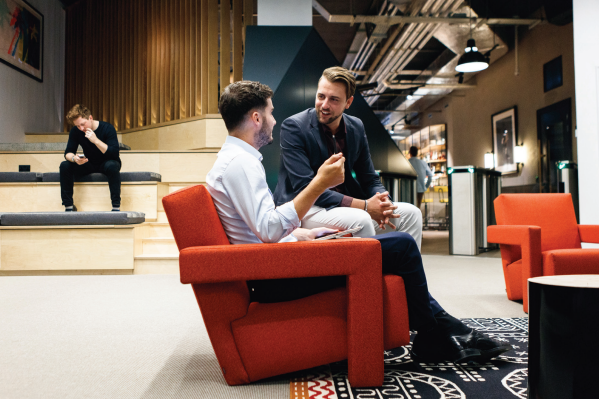
One of the biggest changes predicted during the pandemic was a long-term shift towards home or hybrid working. However, there are already signs that this transition might not be as obvious or complete as expected.
[perfectpullquote align=”right” bordertop=”false” cite=”” link=”” color=”” class=”” size=””]The signs of the transition to hybrid work are not as obvious or complete as expected[/perfectpullquote]
In the UK, the proportion of people working from home at least some of the time increased from 27 percent in 2019 to 37 percent in 2020, before falling to 30 percent in January 2022. Similarly, in the US the proportion working from home declined from 35 percent in May 2020 to 11 percent in December 2021.
One of the main reasons people are going back to the office is employers’ expectations. Many companies are concerned that more permanent home working might affect employees’ team building, creativity and productivity.
But among employees, there’s a greater appetite for hybrid and flexible working. One recent multi-national survey found that whereas roughly one-third of workers had worked at home at least some of the time before the pandemic, roughly half said they want to in the future.
Shopping
The pandemic didn’t create the habit of online shopping, but it makes more of us do it. Did this make us realise we don’t need actual stores anymore?
It doesn’t seem so. Shopping in bricks-and-mortar stores has already started to recover. Recent data on people’s movements, gathered anonymously from mobile devices, shows how in many countries, before omicron hit, travel to retail and recreation spaces was back up to pre-pandemic levels, and is already starting to rebound after omicron.
The rise in online sales has also not been as dramatic or sustained as many predicted. In the UK, online sales made up 20 percent of total retail sales before the pandemic. By February 2021 this had risen to 36 percent, before declining steadily to 25 percent in February 2022.
Travel
One habit that might take longer to recover is our pre-pandemic love of international travel. It has taken a hit around the world, and the sector is still struggling. The UN’s International Civil Aviation Organization projects that international travel in 2022 will still be down by nearly a half compared to 2019.
One British survey conducted last September found that while 80 percent of people were planning on holidaying in the UK in the next year, only around 40 percent were considering going abroad. In comparison, in the 12 months up to July 2019, 64 percent of Brits travelled abroad for a holiday according to one travel industry body.
People’s reluctance to travel has been largely down to concerns over the virus and confusion over travel rules. As worries decline and rules get lifted, we may see a “mini-boom” in holidaymaking.
Socialising
Early in the pandemic, some commentators – including the US chief medical adviser Dr Anthony Fauci – suggested we might never return to shaking hands. I, with my colleague Dr Kimberly Dienes, argued that it was vital these rituals make a comeback, as they have several social, psychological and even biological benefits.
Are social-distancing habits, including meeting fewer people and having less physical contact with those we do, here to stay? For most people, no. Data shows only one-third of people in the UK are still socially distancing regularly, the lowest proportion since the pandemic began.
No new normal
But truly, only time will tell how much the pandemic will have changed our habits. However, bolder predictions – that the pandemic was going to completely and irrevocably change our ways of working, shopping, travelling and socialising – now seem premature and exaggerated. The pandemic has taught us we can work, learn, shop and socialise in different ways, but the question now is whether we still want to.
[perfectpullquote align=”right” bordertop=”false” cite=”” link=”” color=”” class=”” size=””]The pandemic has taught us that we need to connect with others[/perfectpullquote]
Humans have basic needs, such as autonomy, feeling related to others, and feeling effective and competent in what we do. Part of the challenge with home working, for example, is that it simultaneously fulfils one need by giving us greater autonomy but takes away another by making us less connected. Expanding adequately supported, equality-focused, hybrid and flexible working arrangements is perhaps a promising way to meet both needs.
Some people will have acquired a sense of competence, or at least familiarity, with the new ways of doing things during the pandemic and so may wish to keep doing them. In some areas – travelling overseas, for example – it may take longer for our competence, and confidence, in old habits to return. However, many seem to be quite quickly returning to old ways and re-learning how to feel competent at doing things that they did before.
The extent to which we’ll go back to our old ways may also depend on our personality traits, which have been shown to shape our compliance with new behaviour. For example, those more open to new experiences by nature, or more extroverted, may be more eager to travel internationally or socialise in larger groups.
Finally, the pandemic may have served as a reminder of how much we appreciate everyday interactions with others, in shops, restaurants and so on. People may be keen to return to familiar ways that revive this – for example, picking something up in a store on the way home from work. Above all, the pandemic has taught us that we need to connect with others and that there are limits as to how much online communication can replace real, face-to-face interactions.
This article is republished from The Conversation under a Creative Commons license. Read the original article.