Search Results for: culture

The ladder of life, the death of work, the cane toad of property and some other stuff

The ladder of life, the death of work, the cane toad of property and some other stuff

A large and colourful team of people work together to create a human towerWe start with a question. Why hasn’t the gig economy killed traditional work?, asks Greg Rosalsky and goes on to explain what many people have now realised. The answer, as Greg points out, is that the gig economy doesn’t replace traditional work, never has, and the rise of casual work of this kind has primarily been a way for people to deal with a volatile labour market and shrinking real incomes. Offer them the choice of a decent monthly income, benefits and a contract and most of them will take you up on it.



(more…)

Workplace art can draw the distinction between branding and corporate identity

Workplace art can draw the distinction between branding and corporate identity 0

One of the many traps that lies in wait for unwary organisations is to confuse corporate identity with their brand. The visual aspects of an identity may reflect the firm’s personality and values, and a change may go in hand in hand with the development of a new strategic direction or culture, but a mismatch can be jarring if the stakeholder perception of the organisation does not marry up with its branding. (more…)

Mind launches toolkit to promote better wellbeing in the built environment

Mind launches toolkit to promote better wellbeing in the built environment

A new toolkit is online at the Mental Health at Work website. This UK-wide initiative allows all types of employers and employees to access free tools, advice and information – all in one place. The construction toolkit includes resources from a range of expert organisations. The resources include tips on how to start the conversation on mental health, mental health first aid training and five steps to building a positive and supportive culture in construction. Mind invited colleagues from Building Mental Health to put together this toolkit of resources. (more…)

Against metrics: how measuring performance by numbers backfires

Against metrics: how measuring performance by numbers backfires

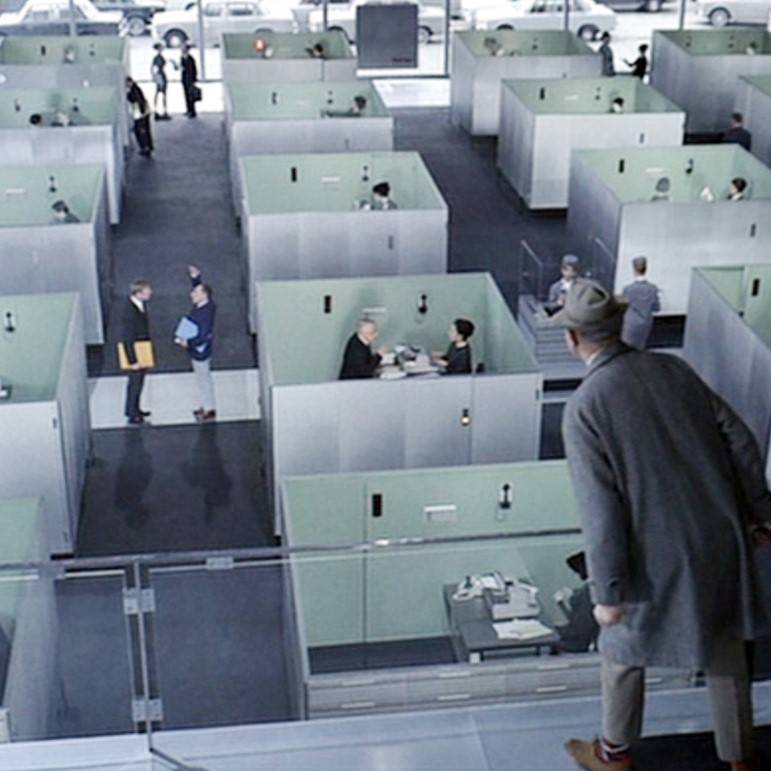
A still from Jacques Tati's film playtime as the protagonist looks out over cubicles in an officeMore and more companies, government agencies, educational institutions and philanthropic organisations are today in the grip of a new phenomenon. I’ve termed it ‘metric fixation’. The key components of metric fixation are the belief that it is possible – and desirable – to replace professional judgment (acquired through personal experience and talent) with numerical indicators of comparative performance based upon standardised data (metrics); and that the best way to motivate people within these organisations is by attaching rewards and penalties to their measured performance. (more…)

Smartphone addiction is driven by need to connect, but means we make bad choices

Smartphone addiction is driven by need to connect, but means we make bad choices

Two new studies published in the Journal Frontiers in Psychology explore our complex relationships with smartphones. The first study from Canadian researchers, concludes that our addiction to smartphones is a real phenomenon but one that is rooted in a primal desire to connect with other people, suggesting that smartphone addiction is best described as hyper-social, rather than anti-social. However, the second study led by academics in Brazil claims that a pronounced preoccupation with smartphones can lead to poorer decision making.

(more…)

Government lacks the know-how to help disabled people get into work

Government lacks the know-how to help disabled people get into work

disabled people working in an office and smilingThe Department for Work Pensions has limited evidence of what works when it comes to supporting disabled people to work, according to the National Audit Office (NAO) in a report published today. The number of disabled­­ people in work has risen by 930,000 (31 percent) in the last five years, but this has not been matched by a reduction in the number of disabled people who are out of work. The NAO found that the government’s headline goal of getting one million more disabled people into work from 2017 to 2027 cannot be used to measure the success of its efforts. The Department itself recognises that this measure cannot be linked directly to any specific government policy or programme. Broader factors, such as more people who are already in work reporting a disability, and rising employment rates, have a significant effect on the measure. It therefore lacks a target for which it is willing to be held to account. (more…)

CIPD report finds employers can do more for women going through the menopause

CIPD report finds employers can do more for women going through the menopause

CIPD: employers need to do more to help women going through the menopauseThe majority of working women experiencing the menopause say it has a negative impact on them at work, finds a new survey from the CIPD. The research found that three out of five (59 percent) working women between the ages of 45 and 55 who are experiencing menopause symptoms were finding it impacted them at work. In response, the CIPD has launched free guidance on managing the menopause at work to help break the silence surrounding the topic. (more…)

UK gets new £5 million climate change research centre

UK gets new £5 million climate change research centre

Cardiff University has been selected as the main hub for a £5 million research centre to explore how we can live differently to achieve the rapid and far-reaching emissions cuts required to address climate change. A collaboration between Cardiff, Manchester, York and East Anglia Universities, and charity Climate Outreach, the Centre for Climate Change and Social Transformations (CAST) will work closely with industry, local/national governments, and charities to tackle climate change. It is funded by the Economic and Social Research Council. (more…)

Interiors are not enough to win the war for talent

Interiors are not enough to win the war for talent

I often refer to Google and Facebook in my blog, due to their influence on workplace design. Many consider them to be workplace interior’s holy grail. But today’s big employers are competing with one another on a much broader set of principles. Cool interiors alone just won’t cut it. Zürich, like many European cities is home to a large number of global brands, with bustling financial services and tech sectors. I regularly hear of people with multiple job offers taking a job with a lower salary, rather than accepting a role in a company that doesn’t reflect their ideals. This decision can be influenced by office design and facilities, career development options, corporate culture and much more. (more…)

Feeling appreciated and the quality of workplace both key to employee happiness

Feeling appreciated and the quality of workplace both key to employee happiness

The quality of the workplace has a powerful effect on the levels of happiness of staff, with nearly half of respondents (49 percent) to a recent survey stating that having a great office environment is important to their happiness at work, but according to the figures, only a quarter (25 percent) say a good workplace environment is a current positive about their work. The survey from Peldon Rose also found that less than half (45 percent) of employees actually feel appreciated at work and only two-thirds (67 percent) report feeling happy. Yet the majority of workers (80 percent) who took part, believe that feeling appreciated is most important to their happiness at work – ahead of salary (58 percent) and feeling trusted (55 percent).

(more…)

When exactly did busyness become a sign of status?

When exactly did busyness become a sign of status?

When exactly did “busyness” become a status? At work, in our personal lives and online, the competition to “live our best lives” and “hustle harder” is being taken to the extreme. Neuroscientists refer to busyness as a state of “cognitive overload.” This state can hinder our productivity, as well as our abilities to think clearly, plan and control our emotions. In the early 1990s, John Maynard Keynes predicted that, by 2028, living conditions would improve so much that the working day would shrink to three or four hours. However, it is now 2019 and we are busier than ever.

(more…)

Majority of British workers prepared to turn down job without flexible working option

Majority of British workers prepared to turn down job without flexible working option

A new survey from IWG claims that UK businesses without a flexible working policy risk losing out on top talent. IWG’s Global Workplace Survey claims that 80 percent of workers in the UK would choose a job which offered flexible working over a job that didn’t and that 73 percent think that flexible working has become ‘the new normal’.

(more…)