




Search Results for: culture

Employers welcome multi-generational workforce but worry about increased risk of conflict

Employers welcome multi-generational workforce but worry about increased risk of conflict

Employers welcome multi-generational workforce but worry about increased risk of conflictImproved living standards, deflating pension pots and legal protection against age discrimination have all helped to nudge up the retirement age. The result is that for the first time since the Industrial Revolution five generations of employees are now working side by side. According to a new survey, two thirds of organisations (66 per cent) say that an age diverse workforce helped the company to have a more comprehensive skillset and knowledge base and more than seven in ten (71 per cent) felt that a multi-generational workforce brought contrasting views to their organisation. However, in the YouGov survey of middle market businesses commissioned by RSM, four in ten companies (41 per cent) said that a multi-generational workforce also increased the risk of conflict in the workplace. (more…)


Why a Google office simply does not work for everybody

Why a Google office simply does not work for everybody 0

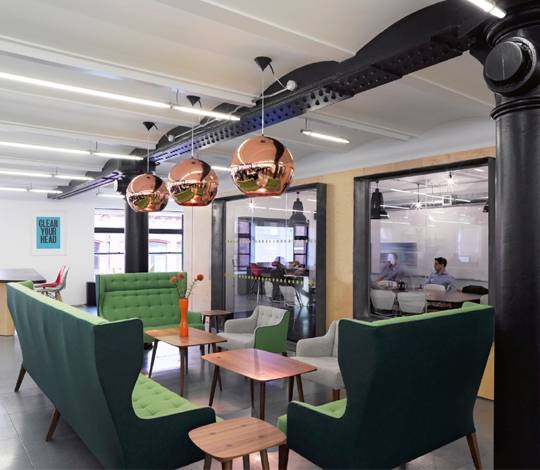
The open plan office versus closed debate rages on, and rather than running out of steam in the face of all of the evidence and reasoned argument put forward one one side or the other by many industry thought-leaders, it seems to have nine lives. Those grand and ground-breaking  new offices occupied by the world’s tech giants seem to be particularly popular examples of why highly open and transparent workplaces do, or don’t work, especially those headline-grabbing offices created around the world by Google. This public debate has led to some very interesting and insightful discussions in various forums (to which I have contributed), inspiring me to synthesise the key themes into four reasons why a Google office is not necessarily the right type of office for your organisation. Many thanks in particular are due to David Rostie and Kay Sargent for their valuable online contributions to the debates which inspired this article.

(more…)

Over a third of staff say employers fail to invest in next-generation workplace technology

Over a third of staff say employers fail to invest in next-generation workplace technology

Over a third of staff say employers fail to invest in next-generation workplace technologyThe majority of employees are disappointed with their company’s lack of investment in technology, and despite the fact three quarters (76 percent) want to request flexible working – almost half still don’t have the option of working more flexibly, a new report from a technology company claims. According to the survey by technology company Ingram Micro Cloud UK, in collaboration with technology company Microsoft, despite the fact that Millennials and Centennials are often thought to be the driving force behind changing workplace practices – and are often derided in popular discourse for having unreasonable and unrealistic expectations – the calls for change are coming from all segments of the workforce. However, 85 percent of Millennials admit to procuring their own workplace technologies such as instant messaging, Skype, file hosting and sharing tools (all available from Ingram Micro Cloud) that aren’t supported or provided by their employer, which raises major security issues, acco.



(more…)

Why you should definitely stand in meetings (and not care what others think about it)

Why you should definitely stand in meetings (and not care what others think about it)

People who stand in meetings may enjoy a number of health benefits, but it can also make them feel self-conscious, anxious about how others perceive them, and disengaged from the meeting. These findings, taken from our recent study, suggest that efforts to encourage office workers to sit less and move more must acknowledge the realities of the workplace that conspire to keep people chained to their seats. Sitting has been linked to adverse health outcomes, including increased risk of obesity, heart disease, some cancers, and poorer mental health. While some evidence suggests that the harms of sitting can be offset by at least one daily hour of moderate physical activity, this seems an unrealistic target. (more…)

Companies need to capitalise more on enthusiasm for data amongst the workforce

Companies need to capitalise more on enthusiasm for data amongst the workforce

Companies need to capitalise more on enthusiasm for data amongst the workforceA major global report has revealed a lack of confidence in data is limiting corporate success in the emerging era of robotics and automation. The global research launched by Qlik, has revealed an escalating skills gap preventing business decision-makers asking the right questions of data and machines. Despite McKinsey reporting that up to 800 million global workers will lose their jobs by 2030 as a result of automation and robotics, and Gartner hailing data literacy at the must-have skill in the workplace, most business decision-makers (76 percent) lack confidence in their ability to read, work, analyse and argue with data. The highest level of doubt in data skills can be found among European executives (83 percent), followed by those in APAC (80 percent) and the US (67 percent). According to the report, as organisations look to be data driven, those employees who can read, work, analyse and argue with data will be able to contribute more to their roles and organisations and employers need to capitalise on this enthusiasm to drive the programme for data literacy.
(more…)

Ten demonstrable truths about the workplace you may not know

Ten demonstrable truths about the workplace you may not know

workplace designThe science of the workplace has gained a lot of interest over the last few years, highlighting recurring patterns of human behaviour as well as how organisational behaviour relates to office design. In theory, knowledge from this growing body of research could be used to inform design. In practice, this is rarely the case. A survey of 420 architects and designers highlighted a large gap between research and practice: while 80 percent of respondents agreed that more evidence was needed on the impact of design, 68 percent admitted they never reviewed literature and 71 percent said they never engaged in any sort of post-occupancy evaluation. Only 5 percent undertake a formal POE and just 1 percent do so in a rigorous fashion. Not a single practitioner reported a report on the occupied scheme, despite its importance in understanding the impact of a design.

(more…)

New era ahead for corporate real estate strategy, claims CBRE report

New era ahead for corporate real estate strategy, claims CBRE report

The period to 2040 will bring profound and far-reaching changes to corporate real estate portfolios according to CBRE. The new report Portfolio 2040, claims to approach the issue from a portfolio perspective, examining how business, buildings and perhaps even cities themselves, might look in 20 years’ time. One of the key drivers for change is identified as pervasive availability, and creative use of very high-volume data and the growth of AI, enabling companies to adapt almost instantaneously to external change and offer increasingly personalised solutions. Rapid and fluid specialisation, either temporary or permanent, will characterise most businesses and real estate will need to reflect this by being increasingly flexible, multipurpose and rapidly adaptable.

(more…)

The self-employed enjoy higher levels of wellbeing and happiness, but work still needed

The self-employed enjoy higher levels of wellbeing and happiness, but work still needed

Policymakers and business leaders must work to improve wellbeing among the self-employed, a new report by the Centre for Research on Self-Employment (CRSE), has said. Instead of exploring self-employed wellbeing through the conventional prism of economic success, the report, The Way to Wellbeing, adopts a new approach. It considers people’s overall life satisfaction, based on their subjective assessments of various aspects of their lives – including jobs, income, health, family life and leisure. The report found that wellbeing was higher among self-employed people by using subjective assessments of different aspects of their lives. This is the first time a major report of its kind has taken a holistic view of wellbeing – looking at jobs, health, family life and leisure – to build an overall picture of life satisfaction, rather than just using a narrow measure of economic success.

(more…)

Location of workplace most important factor in attracting UK job seekers

Location of workplace most important factor in attracting UK job seekers

The most attractive factor for UK job seekers when choosing a new employer is the location, claims the latest Global Talent Monitor report from Gartner. The report warns that employers are facing some challenges in retention as just 27.2 percent of UK employees in 1Q18 reported a high intention to stay with the organisation, down 5.5 percent from the same period last year. The UK had the fourth largest decrease after France, Singapore and Germany and those that are at the highest risk of leaving are those aged between 18-29 and 30-39 who have completed an MBA. The biggest attraction-drivers for UK job seekers are location (53.5 percent), vacation (43 percent), work-life balance (41.9 percent), camaraderie (41.4 percent) and produce or service quality (41.4 percent). (more…)

UK employers aim to accelerate digital innovation, despite some cultural resistance

UK employers aim to accelerate digital innovation, despite some cultural resistance

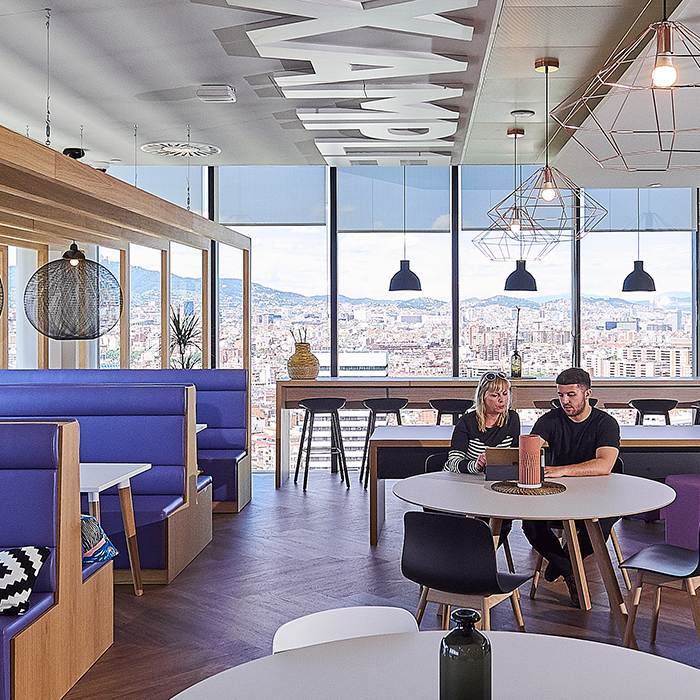
UK employers aim to accelerate digital innovation, despite some cultural resistanceThe way to measure an employer’s speed of innovation includes how they find talent, their appraisal process, how employees recommend the organisation they work for to others, and how much employees collaborate, claims a new European study by Cornerstone OnDemand and IDC. “Future Culture: Building a Culture of Innovation in the Age of Digital Transformation” explores the relationship between European organisations’ speed of innovation and talent management, with the research showing that firms with a steady stream of new products and services are more likely to have an ongoing feedback process with employees, rather than an annual performance review, while organisations with a slower rate of innovation often use coaching and mentoring to develop employees.


(more…)

The hype surrounding wellbeing concepts can blind us to their true value

The hype surrounding wellbeing concepts can blind us to their true value

Digital detox. Does the phrase make you roll your eyes or grab your attention? Lately, you’d be forgiven for thinking that the idea of switching off from technology, particularly your smart phone (if people still call them that as they are so ubiquitous) has become a media fad. A litmus test for this might be how much air time BBC R2 give the subject. Over the past few weeks it has figured a lot, particularly Chris Evans referencing it in a Japanese themed week and a Friday morning interview with the neuroscientist Dr Jack Lewis who shared his tops tips for a digital detox. No doubt the Daily mail is jumping on the bandwagon as well.

(more…)

Four key points to consider when creating a digital workplace

Four key points to consider when creating a digital workplace

As the use of digital technologies and data to create new value propositions and operating models becomes more commonplace, workplaces across the world are being affected across sectors, from manufacturing to local government. Almost all areas have been touched by the megatrend, whether from own initiatives or to keep up with competitors. However, Arthur D. Little’s Digital Transformation Study reports that almost 80 percent of companies surveyed were only “digitally adaptive”, with digital efforts limited to products and services at best, and no comprehensive approach to adapting their mind-sets. To help traditional organizations adapt sufficiently to compete with digitally minded start-ups, we have identified four key questions to consider when developing digitalization strategies and the creation of a fully digital workplace.

(more…)