Search Results for: culture

The effects of workplace change may not be the ones we expect

The effects of workplace change may not be the ones we expect

There’s a scene in the 1986 horror movie The Fly in which Seth Brundle (Jeff Goldblum) persuades the reporter Veronica Quaife (Geena Davis) to try two steaks, one of which Brundle has just sent between two teleportation pods in an effort to work out why the pods can’t process organic matter, including the organic matter that had recently belonged to a very unfortunate baboon. (more…)

Four-day working week can improve wellbeing and reduce social inequality

Four-day working week can improve wellbeing and reduce social inequality

four day working weekResearch from the University of Kent has shown how a national four-day working week can positively impact workers and their families’ wellbeing, improve social cohesion and reduce social inequality. In a paper published by the Journal of Social Policy, Professor Heejung Chung from Kent’s School of Social Policy, Sociology and Social Research discusses how a shorter working week can help tackle issues by giving workers the ‘right to time’, shifting a balance between work and non-work activities in daily life. (more…)


Half of large office occupiers plan to rethink their property requirements

Half of large office occupiers plan to rethink their property requirements

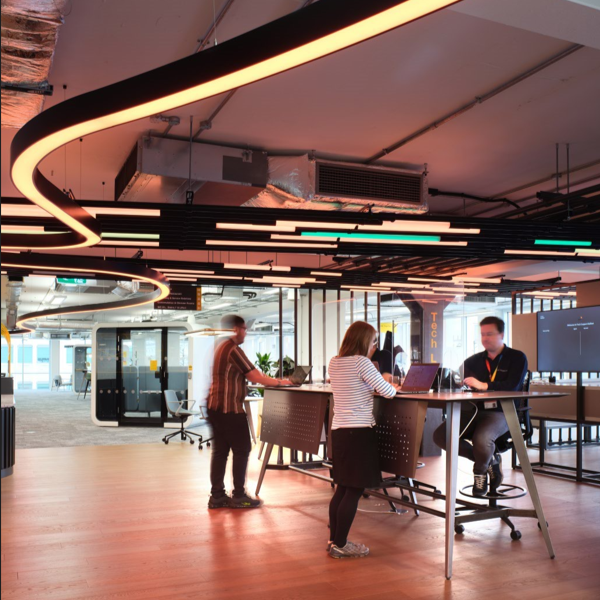
PWC officeLarger office occupiers are getting to grips with the fallout following the pandemic and are now reassessing their office property needs, according to a new YouGov survey commissioned by law firm Irwin Mitchell. The survey of over 500 office property decision makers shows that nearly half (46 percent) of large businesses and (39 percent) of medium sized companies plan to rethink their office space- whether by upsizing, downsizing, or relocating. The survey shows that one in five large businesses plan to increase their existing office space, with the same proportion looking to reduce space and 5 percent to relocate. In addition, 11 percent are looking to reconfigure their existing space. While 37 percent plan to stay the same. (more…)

The cargo cult of modern office design

The cargo cult of modern office design


The cargo cult of modern office designThe idea of the cargo cult derives from anthropological observations made about the behaviour of societies that encounter more technologically advanced societies. In particular it is rooted in those rituals and objects created by Pacific islanders in an attempt to attract modern goods and technology and generally earn favour with people who they thought could prevent terrible events. (more…)

Firms mark the cards of employees who go mute or turn cameras off in remote meetings

Firms mark the cards of employees who go mute or turn cameras off in remote meetings

mute remote meetingsNearly all executives (96 percent) agree that primarily remote workers are disadvantaged compared to those who work primarily in the office, according to a poll of 200 executives at large US firms, commissioned by Vyopta. However, 92 percent of respondents also believe employees who are less engaged, either frequently on mute or don’t turn on their camera during remote meetings, probably don’t have a long-term future at their company. (more…)

Structural and cultural change are what we need to escape the wellbeing rut

Structural and cultural change are what we need to escape the wellbeing rut

wellbeing at workWellbeing has been one of the largest challenges to the UK workforce over the last several years. A recent study by the Mental Health Foundation and the London School of Economics and Political Science (LSE), states that mental health problems cost the UK economy at least £117.9 billion every year – around 5 percent of the UK’s GDP. Companies recognise the urgency to help: British employers planned to increase spending on employee mental health and wellbeing by 18 percent from 2021 to 2022. But the long and short of the issue is that this progress is being outpaced by accelerating burnout rates among workers. (more…)

Hybrid working burnout is inevitable, say third of workers

Hybrid working burnout is inevitable, say third of workers

hybrid working burnoutOver one in three (36 percent) UK workers believe burnout is an inevitable part of their career, according to new data based on 2,000 UK knowledge workers. The figure, which rises to 41 percent of managers was noted by UK workers as a natural part of career progression by those who had experienced it. UK employees are feeling isolated at home when part of a hybrid working culture and they’re struggling to balance priorities and establish clear boundaries. (more…)

Wellbeing and mental health drop down business agenda, despite COVID fallout

Wellbeing and mental health drop down business agenda, despite COVID fallout

wellbeing at workWellbeing and mental health are beginning to slip down the business agenda, a new report from the CIPD and Simplyhealth claims, despite the fact that organisations are still dealing with the fallout from COVID-19 and it remains an on-going concern for workers.  The Health and Wellbeing at Work 2022 report suggests that the number of HR professionals who think that wellbeing is on the agenda of senior leaders has fallen from 75 percent to 70 percent in the past year. There has also been a drop in the proportion of HR professionals who think senior leaders encourage a focus on mental wellbeing through their actions and behaviours, falling from 48 percent in 2021 to 42 percent in 2022. (more…)

Firms must do more to earn the commute of hybrid workers

Firms must do more to earn the commute of hybrid workers

hybrid work office designSteelcase has released a new global research report which reveals that outdated offices are no longer conducive to employees’ shifting needs for greater control, comfort, and privacy. The study found that if a workplace was made more in tune with shifting expectations, staff were more engaged, productive, connected to their organisation’s culture and less likely to leave.  The Steelcase report, The New Era of Hybrid Work, surveyed nearly 5,000 workers in 11 countries. The findings reveal that whilst 87 percent of respondents now spend at least some of their time working from the office as the threat of the pandemic recedes, six in ten (58 percent) prefer working from home. One of the most appealing attributes of a home for two-thirds (65 percent) of UK employees is that they have a dedicated space for work. Whereas in the office, the majority (59 percent) have desks in open areas, with minimal privacy. (more…)

Making sense of an uncertain but energetic return to some sort of normal

Making sense of an uncertain but energetic return to some sort of normal

The first Omnirama event on the 23rd of March launched the series exploring different factors challenging the world of work in a time of prevailing  uncertainty. Underlying Ominirama’s raison d’etre is that recent events have turned the status quo on its head with some major structural and systemic changes taking place. Nobody seems to have any clear idea of how to deal with this enormous transformation in the ways we work  All the playbooks and all the guidance that we have all relied upon for so many years have now gone out the window. (more…)
A burst of technological innovation is reshaping the future of work

A burst of technological innovation is reshaping the future of work

future of workEven as we begin to glimpse the light at the end of the tunnel of the pandemic, evidence suggests that many workers want to carry over the working flexibility that the pandemic afforded into the post-pandemic world and a new future of work. Namely, employees are wanting to adopt a ‘mixed’ working style – spending time both working in the workplace, enjoying the office’s many benefits, as well as spending some time during the week working from home. A YouGov poll suggests that close to 40 percent of employees wish to continue to work from home some of the time post-pandemic – a fact that is supported by CIPD research. (more…)
Co-living ideas explored in Davidson Prize longlist

Co-living ideas explored in Davidson Prize longlist

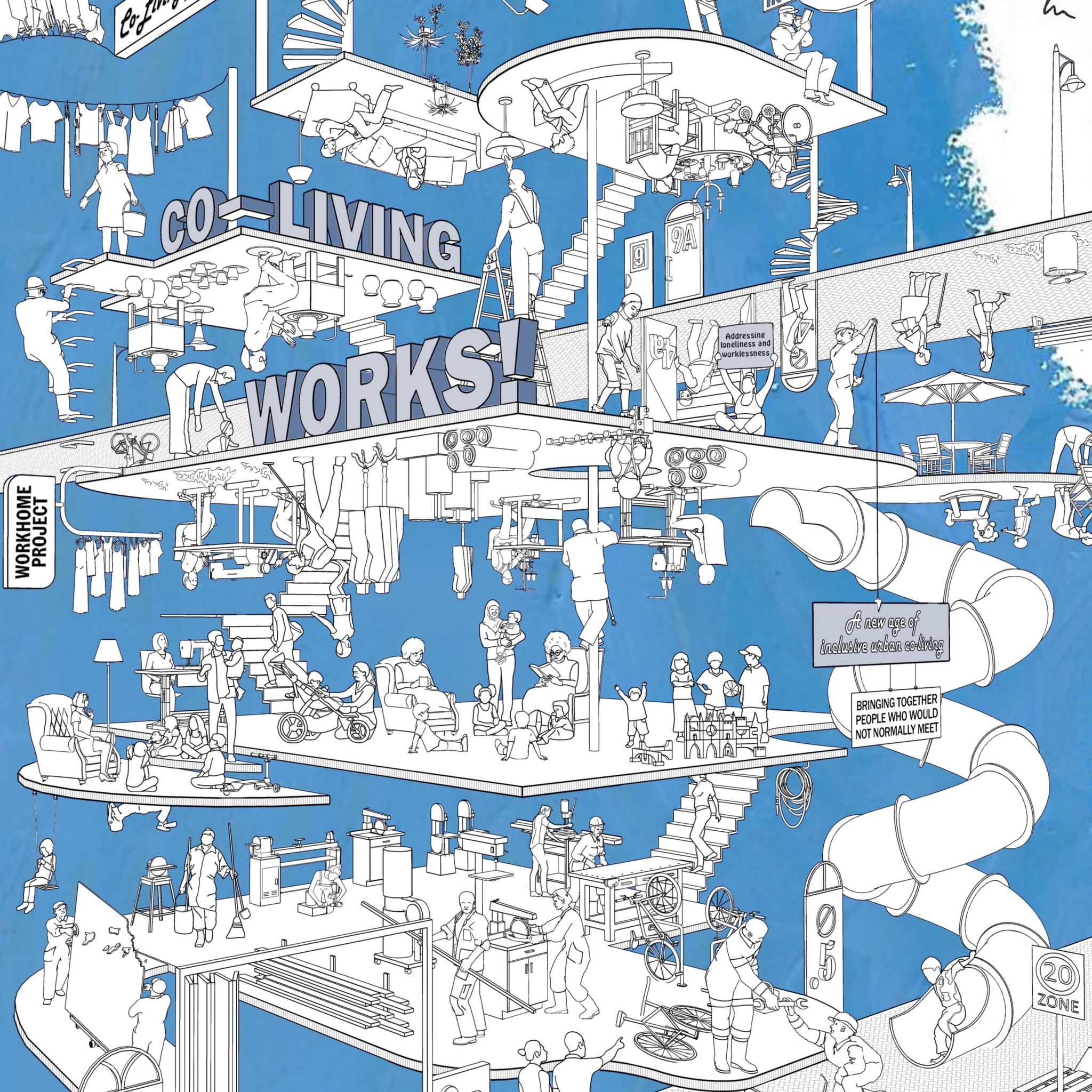
co-living worksThe judges of the 2022 Davidson Prize have selected a longlist of 14 teams. Responding to this year’s theme of Co-Living – A New Future, the longlisted teams represent diverse and exciting collaborative approaches to transforming the architecture of the home. The Davidson Prize is a design ideas and communication prize established in 2021 in memory of architectural visualisation pioneer Alan Davidson. Following the success of the inaugural Prize last year, in 2022 teams made up of architects working collaboratively with other disciplines were asked to consider whether current notions of home in the UK are keeping step with the 21st century. (more…)