June 20, 2017
The workplace experience will define how real estate enables business transformation 0
 JLL has today launched ‘Workplace powered by Human Experience’, a new global report series and accompanying tool, the ‘Human Experience model’, looking at how workplace experience can help businesses thrive in the new world of work. Findings of the report, which is part of JLL’s recently launched Future of Work research programme, are based on consultations with decision makers at 40 corporations around the world and the results of a separate, anonymous survey of more than 7,300 employees working for companies with more than 100 members of staff. The survey covered 12 countries and the respondents were aged between 18 and 65 years. Countries where employees were surveyed: Australia, China, France, Germany, India, Italy, Japan, the Netherlands, South Africa, Spain, the UK and the US.
 Most FMs would tell you that the state of the workplace toilets is often one of the main determinants by occupants on how well the facilities department is doing its job. So it’s disturbing to learn that according to a new survey a significant number of employees have cause to complain about the state of their workplace toilet facilities. The research, carried out by the Association of Plumbing & Heating Contractors claims that 16.5 percent of people are unhappy at work due to the condition of their employer’s toilets which is having a negative impact on their levels of engagement. Their research found 43.8 percent of the people surveyed felt their workplace toilets needed to be better maintained. And when asked if their workplace toilets require updating or refurbishing, 44.4 percent said they did. London seemingly has the worst workplace toilets with 50.9 percent of workers surveyed believing they need to be better maintained and require refurbishing.







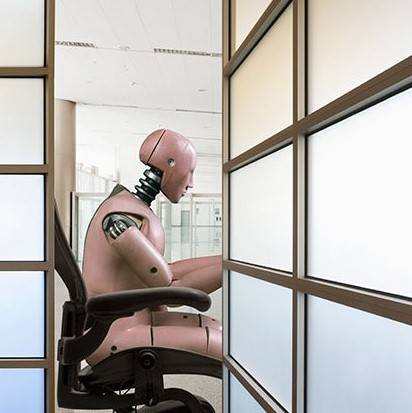
 Very few organisations are ready to manage a workforce where the latest technologies and people work side by side. Just 13 percent of UK companies are ready to respond to digital disruption and create “the organisation of the future”; despite 88 per cent believing this has become a priority. This is according to the 2017 Deloitte Global Human Capital Trends survey, which tracks the top trends shaping the agenda for HR and business leaders. However, while UK companies believe they are ill-prepared for the change brought by digital disruption, this has not stopped many of them from embracing disruptive technologies. 42 per cent report that they have adopted robotics, cognitive and artificial intelligence (AI) technologies within all or parts of their workforce. Another 42 per cent are running pilots in certain areas of their organisation. But only 16 per cent say they are ready to manage a workforce with people, robots and AI working side by side.


 Nearly three quarters of European employees would consider career opportunities abroad, with Germany voted the most desirable place to work claims a new study of nearly 10,000 working adults across Europe. According to research by ADP which looked at how employees feel about the future of work, international competitiveness and talent management, European employees have a strong appetite for international work, as almost three quarters (74 percent) would consider other countries for career opportunities. At 21 percent, Germany tops the list of most popular places to relocate, with the United Kingdom (15 percent) and France (12 percent) in second and third place; with North America surprisingly coming in much further down the list in 12th place. Despite their popularity, Germany, the UK and France aren’t particularly strong in any of the areas measured in the survey, such as skills and development, flexible working options and stress in the workplace.