To provide the best experiences, we use technologies like cookies to store and/or access device information. Consenting to these technologies will allow us to process data such as browsing behaviour or unique IDs on this site. Not consenting or withdrawing consent, may adversely affect certain features and functions.
The technical storage or access is strictly necessary for the legitimate purpose of enabling the use of a specific service explicitly requested by the subscriber or user, or for the sole purpose of carrying out the transmission of a communication over an electronic communications network.
The technical storage or access is necessary for the legitimate purpose of storing preferences that are not requested by the subscriber or user.
The technical storage or access that is used exclusively for statistical purposes.
The technical storage or access that is used exclusively for anonymous statistical purposes. Without a subpoena, voluntary compliance on the part of your Internet Service Provider, or additional records from a third party, information stored or retrieved for this purpose alone cannot usually be used to identify you.
The technical storage or access is required to create user profiles to send advertising, or to track the user on a website or across several websites for similar marketing purposes.







 Around 30 percent of businesses have seen an increase in the number of staff taking time off for mental health reasons, according to a survey conducted by business organisation British Chambers of Commerce, and insurer Aviva. One in three (33 percent) business leaders have also noticed an increase in the length of time that staff are taking off due to mental health issues.


 As fresh graduates from generation Z, i.e. those born between the mid 1990’s and 2000 are enter the workplace, new research from Perkbox claims that over 1 in 3 (36 percent) admit that the workplace perks are one of the most important deciding factors on whether to accept a new job or not. These post-millennials are also the group most likely (32 percent) to prefer smaller benefits that they can enjoy on a more frequent basis, all-year-round, over one annual event, such as a Christmas party. The top three workplace perks most popular amongst Generation Z included simple benefits, such as receiving a day’s annual leave on your birthday (86 percent), followed by free coffee and hot drinks (85 percent), and flexi-hours (83 percent). Despite this, Generation Z feel less deserving of workplace benefits than co-workers born pre-1995, with fewer than half (38 percent) believing they should benefit from such offerings – which is less than any other age group.
 A significant number (37 per cent) of workers (11 million people) in the UK worry their job will change for the worse and 23 per cent (7 million people) are concerned that their current job may no longer be needed, claims a survey into the impact of automation over the next decade. In the survey, carried out to mark the launch of a new Commission on Workers and Technology chaired by Yvette Cooper MP, workers were 73 per cent confident they can adapt to technological change and update their skill if automation affects their job and over half think (53 per cent) are optimistic that technology change will be good for their working lives.
 A quarter (25 percent) of businesses currently employ staff from the EU but half (50 percent) of business leaders say they would be put off employing someone from the EU after the immigration laws change a new survey has claimed. A quarter (25 percent) are also concerned the recruitment process will become lengthier, and almost a fifth (19 percent) believe it will become more costly. The study by Blacks Solicitors also found business leaders in the UK don’t feel confident in communicating the forthcoming changes to employees’ rights during Brexit. A quarter (23 percent) revealed they feel underprepared, and a further 61 percent say they are worried about leaving the EU.


 New research has revealed the top 15 cities worldwide that are best for remote working and Prague is on top, with London ranked as the 5th best city in the world for remote workers. Inspired by the top 15 cities listed in InterNation’s Expat City Ranking Report, Powwownow analysed the cost of living, average monthly salary, internet speed, price of coffee, and cost of public transport in different places across the world. Cities were individually scored on each factor and ranked by the total number of points, to calculate the top 15 cities around the world. Calculating an overall ranking for each city, Prague was revealed to be the best city worldwide for remote workers.
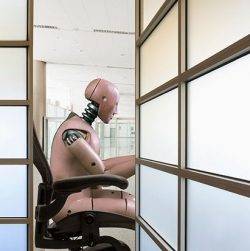 Fears of robots taking workers’ jobs appear to have lessened over the last year, a new report has suggested. Research from Perkbox and SEMrush examined fears of robots at work according to online searches from January 2015 to June 2018 in the UK and found that in just one year, from 2015 to 2016 the phrase ‘will robots take my job?’ increased from zero to 1,600 average monthly searches. In 2017, the phrase was searched 197,800 times/monthly on average. In 2018 so far, the average has dropped but it remains relatively high regardless (57,833 searches). According to online searches with keyword ‘robots’ and ‘work,’ people are gradually becoming more concerned about what jobs robots will replace first. The phrase ‘what jobs will be replaced by robots? was rarely searched in 2015. However, in 2016-17 the number rose from 200 searches/monthly on average (2016) to 2,400 on average in 2017 (a 1,100 percent increase).