Search Results for: flex

It’s essential to design flexibility into an office

The design of offices and the furniture that fills them matters because of what it tells us about how we work, how organisations function and even what is happening in the economy. If you want to know what’s going on, take a look at the places we work and the things with which we surround ourselves and how they change over time.

Because the way we work changes so quickly, buildings need to have flexibility built into them so that they meet our needs today but anticipate what we will need tomorrow. In his book How Buildings Learn, Stewart Brand outlines the process whereby buildings evolve over time to meet the changing needs of their occupants. He describes each building as consisting of six layers, each of which functions on a different timescale. These range from the site itself which has a life cycle measured in centuries, through to the building (decades), interior fit out (years), technology (months), to stuff (days). The effectiveness of a workplace design will depend on how well it resolves the tensions that exist between these layers of the building.

In terms of our workplaces, the ability to respond to change is perhaps the most important facet of an effective design. Creating this level of responsiveness is described in the Facilities Design and Management Handbook by its author Eric Teichholz as ‘the basic driver of the facilities management workload.’

While the nature of work has already changed in many ways, the pace of change has increased even more dramatically over recent years. So the challenge for designers and facilities managers is how best to manage change, keep costs down and provide a flexible home for the organisation. Successful management of change is a good thing, an agent of growth and commercial success. Change handled badly can hamstring an organisation.

The standard answer to the challenge is to build flexibility into the building. At the property management level, this may mean a change in contractual terms, notably in the length of leases, and the provision of lease breaks.

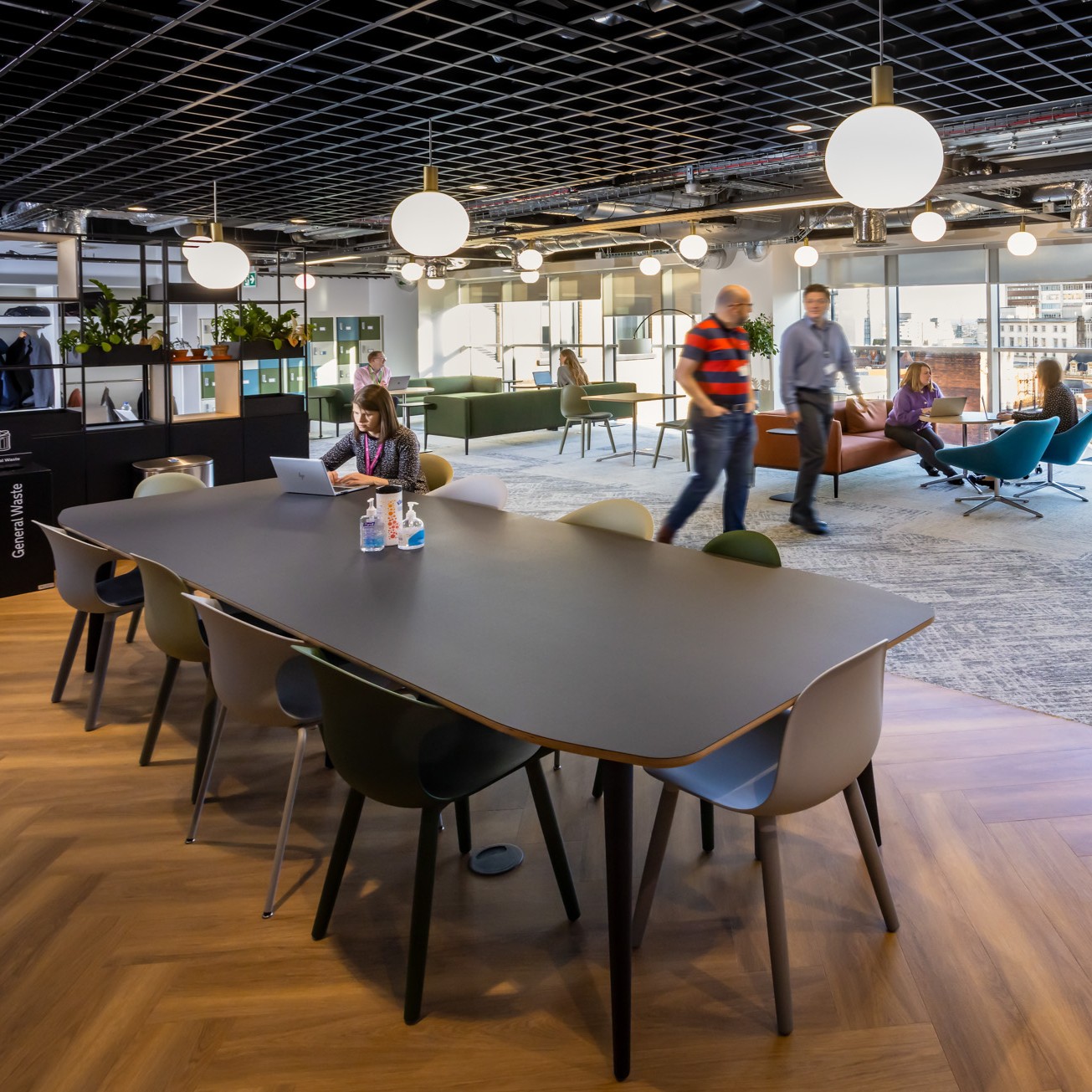
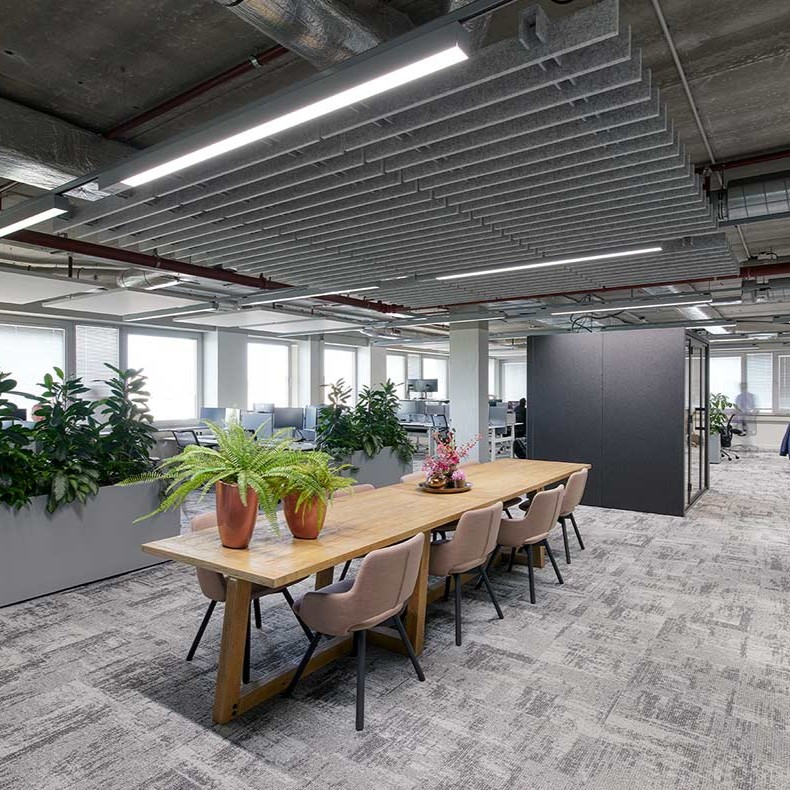
Varying levels of flexibility must also be apparent through the rest of the building in terms of its design and management. If we take an idealised view of the modern office as a flexible, social space for a peripatetic, democratised and technologically literate workforce, the solution lies in an increased use of desk sharing, drop in zones, break out space and other forms of multi-functional workspaces. In many offices, individual workspace is already being rapidly replaced by other types of space, quiet rooms and collaborative areas.

Flexibility must be hardwired into the building at a macro-level. Not only must floorplates be capable of accepting a wide range of work styles and planning models, servicing must be appropriate and anticipate change. That doesn’t mean just in terms of technology and telecoms but also basic human needs such as having enough toilets to deal with changing occupational densities. It also means having a HVAC specification that can deal with the changing needs associated with different numbers of people and different types of equipment.

Elements of the interior that were once considered static are also having to offer far larger degrees of flexibility including, furniture, lighting, storage and partitions. This issue of flexibility has become more important within interior design. Interior elements should now define space, portray corporate identity, comply with legislation and act as an aid in wayfinding. They must do all this and be able to adapt as the organisation changes.

We may not always know exactly what the future holds, but we can work today to be ready for it.

Hourly movement breaks offer best balance between wellbeing and productivity, study finds

Hourly movement breaks offer best balance between wellbeing and productivity, study finds

Taking five-minute movement breaks every hour offers the best balance between improving wellbeing and maintaining work performance, according to a large new study published in the British Journal of Sports MedicinTaking five-minute movement breaks every hour offers the best balance between improving wellbeing and maintaining work performance, according to a large new study published in the British Journal of Sports Medicine. Researchers found that regular walking breaks throughout the working day reduced fatigue, improved mood and increased work engagement without negatively affecting productivity. The findings suggest that hourly movement breaks may be a practical way for employers to help reduce the health risks associated with prolonged sitting. (more…)

Remote work linked to mental health concerns in major US study

Remote work linked to mental health concerns in major US study

A major new study has suggested that the rapid growth of remote work since the pandemic has played a significant role in rising levels of social isolation and poor mental health among workersA major new study has suggested that the rapid growth of remote work since the pandemic has played a significant role in rising levels of social isolation and poor mental health among workers, although researchers stress that the findings relate primarily to fully remote work rather than hybrid arrangements. The research, published in the journal Science, analysed data from five nationally representative surveys covering almost 590,000 US workers between 2011 and 2024. According to the authors, the expansion of remote work may account for around one third of the increase in mental distress recorded over that period. (more…)

Fathers who work from home fear ‘return to office’ rules could force them to quit, study claims

Fathers who work from home fear ‘return to office’ rules could force them to quit, study claims

More than one in six fathers who currently work from home say they would quit their job if required to return to the office full-timeMore than one in six fathers who currently work from home say they would quit their job if required to return to the office full-time, according to new research from King’s College London, which suggests employers risk losing experienced staff if they tighten office attendance policies. The report, When Fathers Work from Home, from the King’s Global Institute for Women’s Leadership, argues that remote working has become an important part of family life for many fathers, but warns that workplace cultures continue to discourage men from making full use of flexible working arrangements. (more…)

People are increasingly concerned that their job roles are becoming irrelevant

People are increasingly concerned that their job roles are becoming irrelevant

A new report from Arden University suggests that while many UK workers recognise the growing pace of change in the workplace, only around half are actively developing new skills to keep up with new and emerging job rolesA new report from Arden University suggests that while many UK workers recognise the growing pace of change in the workplace, only around half are actively developing new skills to keep up with new and emerging job roles. The survey of 2,000 UK employees found that 58 percent believe their industry is changing faster than before, yet only 51 percent said they are currently engaged in upskilling. The findings have been released as part of Arden University’s Future of Work and Learning Report. (more…)

Tales from the built environment: some reflections on the conference circuit 

Tales from the built environment: some reflections on the conference circuit 

The built environment sector, like many other sectors, spends a great deal of time talking to itself. So what is it saying right now?The stories we tell ourselves can be powerful. They shape how we see reality, whether they’re true or not. The trouble is that the ones which endure are rarely the most helpful. Here’s a familiar story: every industry is privately convinced that its image problem is uniquely severe. This leads to a lot of navel-gazing and going round in circles. Often, however, they’re grappling with versions of the same challenge: trying to explain their value to people outside the room. I saw this play out at two recent conferences related to the built environment: the UK Real Estate Infrastructure & Investment Forum (UKREiiF) in May and IWFM Live last week. (more…)

Narcissistic leaders are more likely to oppose remote work, study suggests

Narcissistic leaders are more likely to oppose remote work, study suggests

business leaders with stronger narcissistic tendencies are significantly more likely to resist remote work and hybrid working arrangements because they see them as a threat to their power and statusNow, we don’t usually want to fan the dying embers of the tedious, endless RTO v WFH conversation, but this is a potentially interesting addition to consider. According to a new study from researchers at the Wharton School at the University of Pennsylvania, business leaders with stronger narcissistic tendencies are significantly more likely to resist remote and hybrid working arrangements because they see them as a threat to their power and status. Published in the journal Organizational Behavior and Human Decision Processes, the study suggests that opposition to remote work may not be driven solely by concerns about productivity, collaboration or organisational performance. Instead, it may also stem from leaders’ personal motivations and psychological needs. (more…)

Remote work linked to rising isolation and poorer mental health, study finds

Remote work linked to rising isolation and poorer mental health, study finds

The rapid growth of remote work since the Covid-19 pandemic has contributed to increased social isolation and worsening mental health among workers, according to a major new studyThe rapid growth of remote work since the Covid-19 pandemic has contributed to increased social isolation and worsening mental health among workers, according to a major new study published in the journal Science. Researchers from the Federal Reserve Bank of New York, the University of Virginia and Harvard University analysed data from five nationally representative surveys covering nearly 590,000 American workers between 2011 and 2024. Their findings suggest that the shift towards home working may account for around one third of the rise in mental distress recorded in the United States since the pandemic. (more…)

Is being back in the office making you desk bound?

Is being back in the office making you desk bound?

According to the British Medical Bulletin, UK office workers spend up to three quarters of their day sittingMost UK offices were not designed with movement in mind. They were designed to fit as many people as possible into a given space, keep overheads manageable and ensure everyone had somewhere to plug in a laptop. According to the British Medical Bulletin, UK office workers spend up to three quarters of their day sitting. Scientific Reports puts it more precisely, between 68 percent and 82 percent of the working day is spent seated, the highest proportion of any occupation. (more…)

People impressed by corporate bullshit tend to make worse decisions

People impressed by corporate bullshit tend to make worse decisions

Employees who respond positively to management jargon and corporate buzzwords may be less effective at analytical thinking and workplace decision-makingEmployees who respond positively to management jargon and corporate buzzwords may be less effective at analytical thinking and workplace decision-making, according to new research from Cornell University. The study, published in the journal Personality and Individual Differences, examined how office workers reacted to what researchers describe as “corporate bullshit” – abstract, jargon-heavy language that sounds impressive but often lacks clear meaning. (more…)

Government report warns of ‘economic catastrophe’ as young people struggle with mental health

Government report warns of ‘economic catastrophe’ as young people struggle with mental health

Former health secretary Alan Milburn has warned that Britain risks a “generational, societal and economic catastrophe” unless employers and government adapt to rising levels of poor mental health among young peopleFormer health secretary Alan Milburn has warned that Britain risks a “generational, societal and economic catastrophe” unless employers and government adapt to rising levels of poor mental health among young people. An interim review led by Milburn into the growing number of 16 to 24-year-olds not in education, employment or training argues that businesses will need to provide greater flexibility, pastoral care and mental health support to what he describes as an “anxious generation”. (more…)

Corporate real estate strategy will be defined by resilience now, report suggests

Corporate real estate strategy will be defined by resilience now, report suggests

Resilience, not scale or speed, will define the next phase of corporate real estate strategy across EMEAResilience, not scale or speed, will define the next phase of corporate real estate strategy across EMEA, as occupiers face a convergence of pressures reshaping how and where they operate. A new report from Colliers, Building Resilience: 5 Megatrends Redefining Corporate Real Estate, identifies five long-term megatrends – AI-enabled workforces, demographic shifts, energy scarcity, climate risk and a shifting global order – that are fundamentally changing how organisations choose locations, design workplaces and manage risk. While the full impact will play out over time, many companies remain underprepared for the scale of disruption. (more…)