








May 17, 2018
Bosses warned about major leadership changes in a tech-driven economy
 With companies holding ever greater amounts of data and facing heightened scrutiny through social media, employers need to consider the wider implications of their business decisions. This was the message of the President of the Chartered Management Institute (CMI), who has warned business leaders and students in Birmingham of the challenges facing bosses in the rapidly evolving tech and data-driven economy. Speaking at the annual MacLaren Memorial Lecture at Aston University, Bruce Carnegie-Brown told the 200-strong audience that the digital revolution is having a transformative effect on the priorities of business leaders, which pose new management challenges. “The growth of social media has made an invaluable contribution in democratising the control of information, he said by, “increasing transparency through universalising access to data and doing it in real time”. Carnegie-Brown, who is also the chairman of Lloyd’s of London, added: “With information more accessible than ever before, those that own or collect data find themselves with huge amounts of power – both social and commercial. But with great power comes great responsibility and balancing these two forces is the greatest leadership challenge of today’s generation of business leaders.”





 Organisations are failing to get the basics right when it comes to providing the digital and virtual systems that support employees in their roles, despite an evolving technological landscape and rise in flexible working, a new report has claimed. Data released by Leesman analyses how organisations can better support employees by offering the technology tools and infrastructure that enable people to work in a flexible way. In Deloitte’s 2018 Tech Trends report issued at the beginning of 2018, there was a heightened focus on how disruptive technologies will help businesses achieve larger strategic and operational goals and drive greater value. It predicted that within the next two years, more companies will embrace the emerging ‘no-collar workforce’ trend by redesigning jobs and reimagining how work gets done in a hybrid human-and-machine environment. However, Leesman’s findings show that, as of yet, organisations are failing to get the digital basics right. According to its latest dataset (Q1 2018) 23 percent do not agree that they have the technology tools and infrastructure that enable them to work in different locations across the office or from different locations outside of the office.


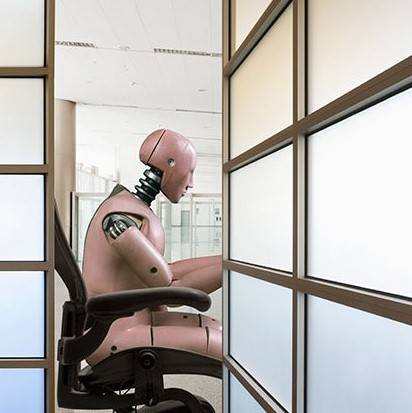
 Robots will not as feared steal people’s jobs and will eventually improve productivity, but they will undercut workers’ contribution sufficiently to depress their wages. According to the third report in Barclays Impact Series, titled
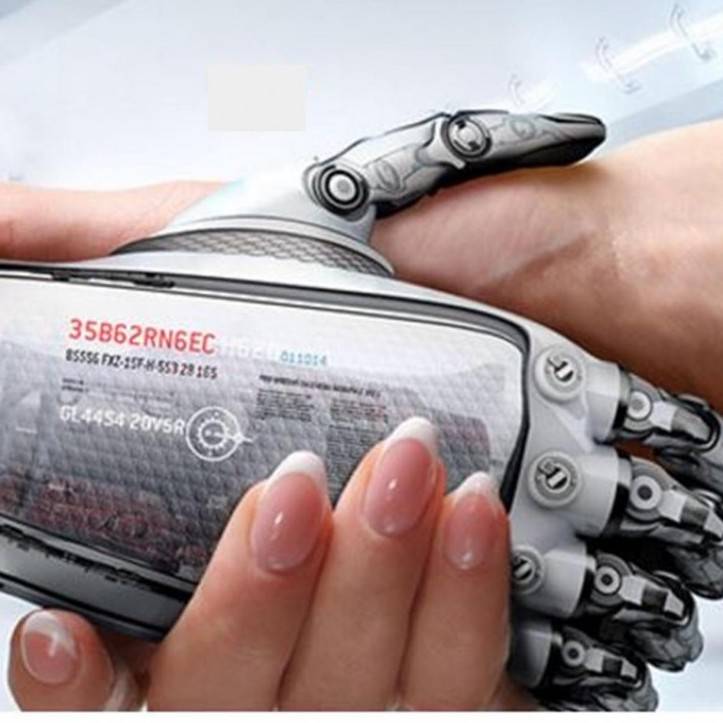
 Over half (52 percent) of workers in a new poll have admitted looking for a new job because of frustrations over what they see as outdated ways of thinking around work practices and automation at their current company. The









April 9, 2018
How the UK car industry is driving the future of workplace design
by Paul Dunn • Comment, Workplace design
(more…)