Search Results for: learning

Performance-based pay linked to employee mental-health problems, study suggests

Performance-based pay linked to employee mental-health problems, study suggests

In what its authors claim is the first big-data study combining objective medical and compensation records with demographics, researchers at Washington University in St. Louis and Aarhus University in Denmark discovered once a company switches to a pay-for-performance process, the number of employees using anxiety and depression medication increased by 5.7 percent over an existing base rate of 5.2 percent. (more…)



Time to unlearn the time management system you learned at school

Time to unlearn the time management system you learned at school

Picture a workplace where everyone follows rigorous to-do lists. Employees are told what to do, how long to spend on it, and in what order to tackle their projects. Then, picture a workplace where there are no to-do lists, no project deadlines, and no estimations of how long projects will take. Employees tackle work in the order they choose, when they feel like doing it. Which workplace do you think will be more successful?

(more…)

When exactly did busyness become a sign of status?

When exactly did busyness become a sign of status?

When exactly did “busyness” become a status? At work, in our personal lives and online, the competition to “live our best lives” and “hustle harder” is being taken to the extreme. Neuroscientists refer to busyness as a state of “cognitive overload.” This state can hinder our productivity, as well as our abilities to think clearly, plan and control our emotions. In the early 1990s, John Maynard Keynes predicted that, by 2028, living conditions would improve so much that the working day would shrink to three or four hours. However, it is now 2019 and we are busier than ever.

(more…)

How artificial intelligence changes occupant experience

How artificial intelligence changes occupant experience

If a robot received a signal that you had entered the building, it might bring you a fresh cup of coffee just as you reach your desk. If the front door recognised your face, it might unlock itself for you without requiring you to use a fob to gain access. If your desk knew you had left for the day, it might offer itself to a colleague who is looking for a quiet workspace. Throughout history, the interaction of humans with technology has been pretty much one-sided. We turn our technologies on and off, operate and guide them in their tasks, and use our senses to monitor their functioning and detect anomalies.

(more…)

Management skills are the key to solving the productivity puzzle

Management skills are the key to solving the productivity puzzle

New research from the Chartered Management Institute (CMI) claims that recently trained managers use on average 50 percent more of the structured management practices associated with increased labour productivity than those not trained within the last 12 months. The research, involving 940 managers, revealed that managers who received management training in 2018 used an average of 6 management practices, compared to an average of 4 practices for those who had received no management training over the same period. The impact of recent training on management practices can be seen across businesses of all sizes. (more…)

The negative entropy of workplace design and management

The negative entropy of workplace design and management

Immediately after the Workplace Trends Summit in London last October, Ian Ellison of 3edges and I retired to a side room to record an interview for a podcast over a glass of red wine. The main objective was to try to piece together a coherent summary of what we’d seen that day. Ian assures me the podcast (his are invariably excellent) will appear very soon, but I thought it would be worth exploring a theory I formed and rambled on about in our conversation ahead of the next Summit set to take place next week.

(more…)

Neither bosses nor staff feel confident about future UK business environment

Neither bosses nor staff feel confident about future UK business environment

Two new reports published this week, show a lack of confidence amongst employers and employees within the UK business environment. The latest data in Gartner’s Global Talent Monitor report shows employee confidence in near-term business conditions and long-term economic prospects reaching an index score of 55.6 for the last quarter of 2018, a decline of 7.5 percent from an index score of 60.09 in 3Q18. These results follow a worldwide trend that has seen global business confidence sink to its lowest point since the fourth quarter of 2017. Meanwhile a survey of business leaders in the UK by management consultancy Lane4 found that bosses do not feel prepared to lead through future challenges like artificial intelligence and political volatility. (more…)

Many leaders lack the skills needed to manage in the digital age

Many leaders lack the skills needed to manage in the digital age

A study conducted by The Oxford Group (registration) claims that companies are struggling to adapt to a digital workplace as leaders lack the critical digital skills they need to transform the organisation. Whilst 96 percent of respondents said the onus is on leaders to drive the adoption of new technologies and 94 percent believe it’s important for leaders to challenge traditional ways of thinking, only a third (33 percent) of leaders feel well prepared to lead their business. Gaps in leaders’ digital skill-sets are having a major impact on their ability to transform; 41 percent say that a lack of digital expertise makes decision-making more difficult, and 30 percent say it has prevented their team from innovating.

(more…)

A workplace chatbot might soon be one of your new best friends

A workplace chatbot might soon be one of your new best friends

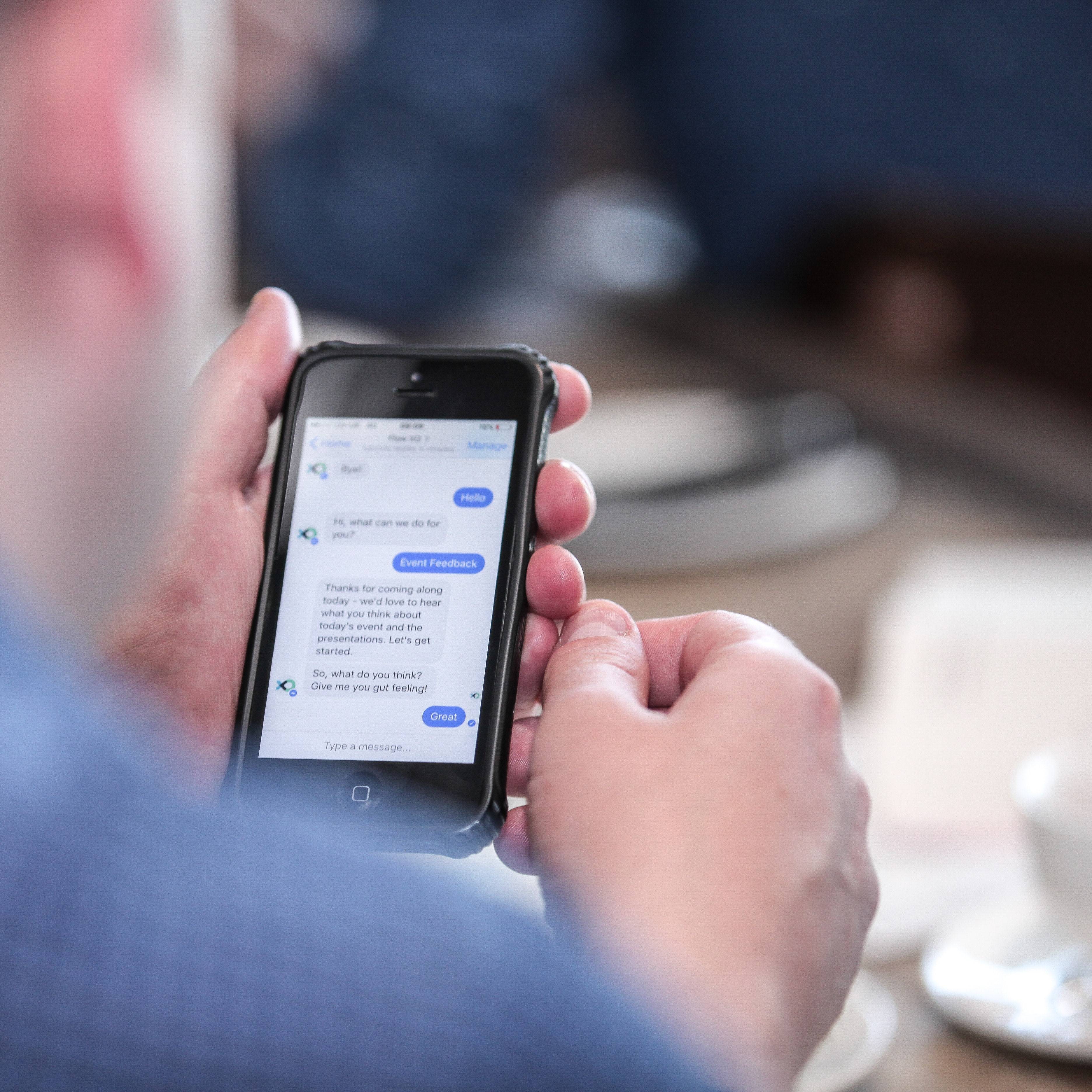
chatbot on smartphoneIf you’ve ever wished you could delegate certain routine tasks to an assistant, then a chatbot could be just what you need. Staff working for Unilever will soon be able to get HR advice from Una, a new member of staff who will be available worldwide and at any time of day. Una is a chatbot, capable of conversing with employees in 106 countries, using 32 languages, Unilever’s Keith Williams told a conference last year . Unilever employees can contact Una through Skype for Business and complete tasks such as getting information about benefits, claiming for healthcare or selling shares. It saves time poring over FAQs or filling-in forms, and it frees HR staff for more complex queries. (more…)

It’s not a skills gap, it’s a diversity gap

It’s not a skills gap, it’s a diversity gap

As digital transformation impacts organisations in every industry, the workplace as we know it is evolving fast. For IT leaders, the accelerated rate of technological change means the pressure is on to deliver, manage and secure new platforms. But the wider ramifications of digitalisation projects are proving profound, leaving business executives facing a dilemma. (more…)

Digitisation and culture of uncertainty lead employees to seek stability

Digitisation and culture of uncertainty lead employees to seek stability

Impact of digitisation on the workplace lead employees to seek stabilityJob security is the top reason employees in the UK joined their company, and also the main reason they stay, according to Mercer’s 2019 Global Talent Trends study. With close to one in three employees  being concerned that AI and automation will replace their job, senior managers are also worried about the effects of digitisation, with nearly three-quarters (71 percent) of executives in the UK predicting t significant disruption in the next three years, compared to 23 percent in 2018. Mercer’s global findings reveal a similar story finding that as executives focus on making their organisations “future-fit”, significant human capital risks – including the ability to close the skills gap and overcome employee change fatigue – can impede transformation progress. Addressing these concerns is paramount, given that less than one in three executives rate their company’s ability to mitigate the effect on employees as very effective.
(more…)

A four day week, people-watching at work, the art of AI and some other stuff

A four day week, people-watching at work, the art of AI and some other stuff

While the recent Finnish pilot of universal basic income had mixed results, a trial of the other most talked about solution to our problem with work – the four day week – has been reported as far more promising. A New Zealand financial services firm called Perpetual Guardian switched its 240 staff from a five-day to a four-day week last November and maintained their pay. The results (registration) included a 20 percent rise in productivity and improved staff wellbeing and engagement.

(more…)