






January 30, 2018
Harnessing serendipity in the workplace is about more than facilitating the unexpected
 What if your company had a great and more frequent ability to discover more valuable things than those for which it were usually looking? How would you then begin to describe your company’s overall level of awareness and sagacity? Does it make your company ’feel lucky’? Inspiring questions and understanding serendipity might give some answers to these and other questions. One of the challenges in answering them lies in the nebulous idea of serendipity in the first place. In many respects the idea of serendipity carries with it a mystical undercurrent and even researchers do not agree about a precise definition. However, serendipity is never a ’happy accident’, it’s much, much more than that. The key elements in the process of serendipity include: 1) a prepared mind 2) an unexpected event, encounter, result or contradiction 3) insight and 4) value creation. Not only is serendipity a process, but it is also a quality of mind.


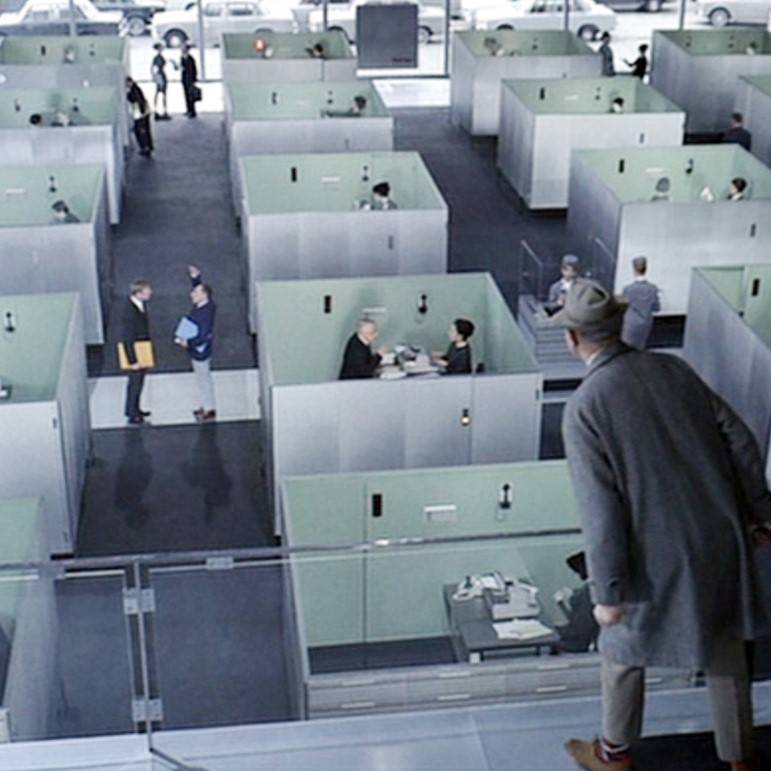




 Three in 10 business professionals think most of their meetings are pointless and nearly half (48 percent) of UK business people admit to having dozed off in a meeting claims global research by Barco ClickShare. The study revealed the true extent of our shared dislike for business meetings, which many respondents believe are poorly run at best or, at worst, completely pointless. Nearly a third of respondents globally said they found less than half of their meetings to be useful, while 30 percent also said they had dozed off in a meeting before. The UK, in fact, led the way in the asleep-in-meeting stakes, with nearly half (48 percent) of all UK respondents saying they’d fallen asleep in meetings. Checking emails and social media during meetings was also extremely common and another indication of disengagement and distraction. Over 70 percent of people said they regularly checked emails during meetings, while 37 percent access social media.


 Half of SMEs (50 percent) questioned in a new survey have changed the way that they recruit their staff as a result of Brexit. The Albion Growth Report 2017 of more than 1,000 SMEs suggests that for businesses which have changed their strategy as a result of Brexit, 15 percent have decreased recruitment resources, 10 percent have begun recruiting in different ways and 9 percent have made redundancies. A difficulty in finding skilled staff is one of the biggest barriers to growth, behind broader political uncertainty and cash flow, which the research claims could lead to a potential war for talent which is likely to become more intense in the post-Brexit environment. By contrast, SMEs view difficulty in finding unskilled staff as the least significant barrier to growth. The report finds that nearly two thirds (65 percent) of SMEs believe their business lacks expertise. More than a quarter (26 percent) of businesses lack marketing talent, followed by business planning (19 percent), IT (17 percent), and software developers and technology specialists (17 percent). Despite critical skills deficits, only a third of SMEs (33 percent) are currently hiring new employees.







February 5, 2018
Developing a cultured nose for what makes workplace design great
by Steve Brewer • Comment, Workplace design
(more…)