Search Results for: office design

What the UK regional divide can teach us about the way we design offices

Mind the GapIn the BBC documentary Mind the Gap, Evan Davis asks why London has an economy that is larger than and different to those of other UK cities, but also getting bigger and more differentiated. One of the main reasons he finds for this is something called agglomeration; the more skilled people you can put within physical reach of each other in an environment, the more productive and economically successful that environment will become.The problem for the UK is that not only is London of a different magnitude to its other cities, it does not comply with something called Zipf’s Law which states that in a typical country the largest city will be around twice the size of the second largest, around three times the size of the next largest and four times the size of the fourth largest and so on. It shouldn’t be taken too literally but it does illustrate the important economic principle of agglomeration and explains why there is such a widening divide in the UK economy.

(more…)

A Silicon Valley office that embraces classic design to create its buzz

A Silicon Valley office that embraces classic design to create its buzz

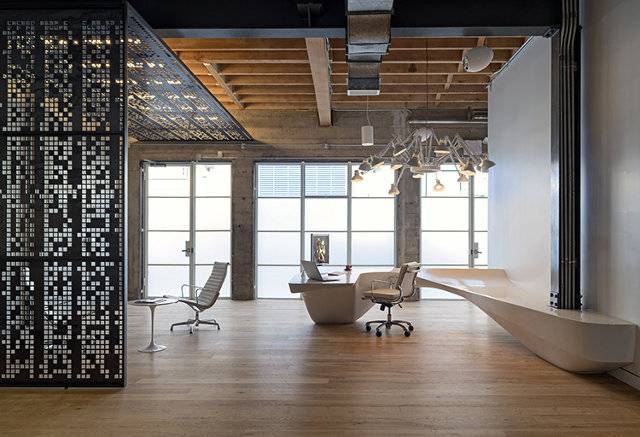
3026372-inline-oplusa-giantpixel0098It is now common for tech and media businesses to take inspiration for the design of their offices from their local Wacky Warehouse, with treehouses, slides, acid coloured cushions, chairs, play areas and other sub-juvenilia thrown into the building in the name of both ‘fun’ and an assumption that the Gen Y employees they are so patronisingly fixated on are only recently off the teat. Meanwhile some are clearly drawn back to the more sober, rational and classic styles that have long attracted corporations, especially in the US. There is something familiar about an HQ like that designed for San Francisco based software developers Giant  Pixel by Studio O+A which evidently harks back to the era of modernism and post war futurism associated with architect/designers like Eero Saarinen.

(more…)

Personalised design and office plants proven to boost wellness and performance

Personalised design coupled with office plants boost well-being at workAllowing staff to make design decisions in a workspace enhanced with office plants can increase wellbeing and wellness by as much as 47 per cent, increase creativity by 45 per cent and increase productivity by 38 per cent, new research has revealed. Visitors at this year’s Chelsea Flower Show were challenged to take part in the study which measured their creativity, happiness and productivity as they experienced a range of different workspace designs. The findings, which would be expected to translate to a significant increase in business profitability, confront the popular belief that plants and art are an unnecessary or even wasteful element of the business environment. Results from this and related scientific investigations indicate that across all measures of psychological comfort and business performance, the managerially popular flexible, controlled, lean office, is consistently inferior to a space enriched by the design decisions of people who work there.

(more…)

It’s sunny side up for office furniture designs at this year’s Neocon

Landing “sunny side up” in Chicago is always a pleasure. While we’re here for work, the city has so many additional benefits for the seasoned international business traveller including a deep-rooted jazz culture, a beach, restaurant service to die for and – the reason we were there in the first place – the Neocon expo, amongst other things an exhibition of the finest new American and international office furniture trends which takes place every year at the enormous Merchandise Mart in the centre of Chicago (above). Quite a lot “snapped my celery” this year, and while, under normal circumstances I find the Milan furniture fair is the front-runner in terms of defining trends while the rest of the world slowly catches up, This year it was refreshing to see Neocon marking those trends right on the button.

(more…)

It’s essential to design flexibility into an office

The design of offices and the furniture that fills them matters because of what it tells us about how we work, how organisations function and even what is happening in the economy. If you want to know what’s going on, take a look at the places we work and the things with which we surround ourselves and how they change over time.

Because the way we work changes so quickly, buildings need to have flexibility built into them so that they meet our needs today but anticipate what we will need tomorrow. In his book How Buildings Learn, Stewart Brand outlines the process whereby buildings evolve over time to meet the changing needs of their occupants. He describes each building as consisting of six layers, each of which functions on a different timescale. These range from the site itself which has a life cycle measured in centuries, through to the building (decades), interior fit out (years), technology (months), to stuff (days). The effectiveness of a workplace design will depend on how well it resolves the tensions that exist between these layers of the building.

In terms of our workplaces, the ability to respond to change is perhaps the most important facet of an effective design. Creating this level of responsiveness is described in the Facilities Design and Management Handbook by its author Eric Teichholz as ‘the basic driver of the facilities management workload.’

While the nature of work has already changed in many ways, the pace of change has increased even more dramatically over recent years. So the challenge for designers and facilities managers is how best to manage change, keep costs down and provide a flexible home for the organisation. Successful management of change is a good thing, an agent of growth and commercial success. Change handled badly can hamstring an organisation.

The standard answer to the challenge is to build flexibility into the building. At the property management level, this may mean a change in contractual terms, notably in the length of leases, and the provision of lease breaks.

Varying levels of flexibility must also be apparent through the rest of the building in terms of its design and management. If we take an idealised view of the modern office as a flexible, social space for a peripatetic, democratised and technologically literate workforce, the solution lies in an increased use of desk sharing, drop in zones, break out space and other forms of multi-functional workspaces. In many offices, individual workspace is already being rapidly replaced by other types of space, quiet rooms and collaborative areas.

Flexibility must be hardwired into the building at a macro-level. Not only must floorplates be capable of accepting a wide range of work styles and planning models, servicing must be appropriate and anticipate change. That doesn’t mean just in terms of technology and telecoms but also basic human needs such as having enough toilets to deal with changing occupational densities. It also means having a HVAC specification that can deal with the changing needs associated with different numbers of people and different types of equipment.

Elements of the interior that were once considered static are also having to offer far larger degrees of flexibility including, furniture, lighting, storage and partitions. This issue of flexibility has become more important within interior design. Interior elements should now define space, portray corporate identity, comply with legislation and act as an aid in wayfinding. They must do all this and be able to adapt as the organisation changes.

We may not always know exactly what the future holds, but we can work today to be ready for it.

Memories of the Office Age 

Memories of the Office Age 

memories of the office ageOriginally published in November 2021. No author uses the built environment like J G Ballard. In his 1975 novel High-Rise, the eponymous structure is both a way of isolating the group of people who live and compete inside it and a metaphor for their personal isolation and inner struggles. Over the course of three months, the building’s services begin to fail. The 2,000 people within, detached from external realities in the 40-storey building, confronted with their true selves and those of their neighbours, descend into selfishness and – ultimately – savagery.  (more…)

How the 21st Century office was born in post war Europe

How the 21st Century office was born in post war Europe

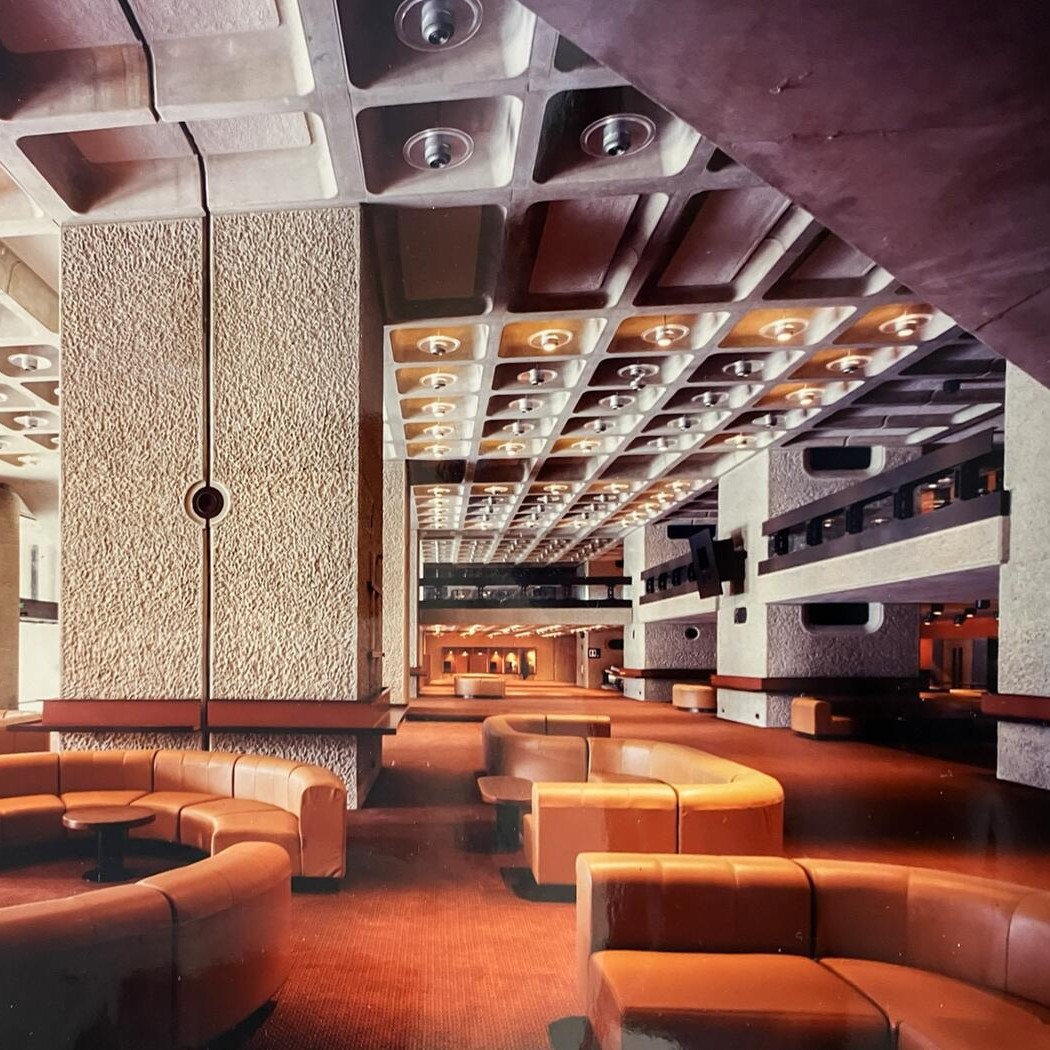
Central Beheer Building There was a curious addition to a 2016 report on the Top 10 Technologies Driving the Digital Workplace from tech researchers Gartner. It wasn’t a technology at all but rather a slightly obscure office design concept that originated in Hamburg in the late 1950s, but which tells us a lot about how we work in the 21st Century office, according to Gartner. Its history lies with the German consulting firm Quickborner. Led by the brothers Eberhard and Wolfgang Schnelle, the firm applied the egalitarian principles of the post war world and rejection of the scientific management theories that had created the familiar factory-like rows of desks that had come to dominate open plan offices to create something more in tune with the new age.

(more…)

RIBA CEO to deliver opening address at the Sustainable Design Forum 2026

RIBA CEO to deliver opening address at the Sustainable Design Forum 2026

The Sustainable Design Collective (SDC) has announced that Dr Valerie Vaughan-Dick MBE, Chief Executive Officer of the Royal Institute of British Architects (RIBA), will deliver the opening address at the Sustainable Design Forum 2026The Sustainable Design Collective (SDC) has announced that Dr Valerie Vaughan-Dick MBE, Chief Executive Officer of the Royal Institute of British Architects (RIBA), will deliver the opening address at the Sustainable Design Forum 2026. Dr Vaughan-Dick, appointed CEO in January 2023, brings extensive experience in leadership, regeneration and organisational transformation. She is the first woman to hold the role, and among the first from a more diverse leadership background, reflecting a broader shift towards greater inclusivity within the profession. (more…)

Traditional open plan offices linked to higher risk of workplace bullying, study claims

Traditional open plan offices linked to higher risk of workplace bullying, study claims

Employees working in traditional open plan offices are significantly more likely to experience workplace bullying than those in private or smaller shared spaces, according to new research published in the journal Occupational Health Science.Employees working in traditional open plan offices are significantly more likely to experience workplace bullying than those in private or smaller shared spaces, according to new research published in the journal Occupational Health Science. The study, based on a nationally representative sample of 3,307 workers in Sweden, examined whether office design influences the likelihood of negative interpersonal behaviour at work. Researchers found that employees in open plan environments faced a higher risk of bullying even after accounting for factors such as personality, demographics and working patterns. (more…)

Zoning Inzio’s new office with intelligent flooring choices

Zoning Inzio’s new office with intelligent flooring choices

Leading the office design, Blueprint Interiors collaborated with experts from flooring manufacturer and global leader in sustainability, Interface.  When Inizio, the healthcare services provider, relocated to its 18,000 sq. ft premises in Ashby-de-la-Zouch, Leicestershire, it needed a workspace that would reflect its growth ambitions while promoting employee wellbeing. Offering a full range of services, from strategy to medical communications, Inizio helps healthcare brands connect with customers and patients through tailored solutions. To extend that same commitment to its employees, the company has now created a workspace that not only supports its people’s working patterns but protects the planet too. (more…)

Rebuilding belonging: how offices can overcome loneliness  

Rebuilding belonging: how offices can overcome loneliness  

In the coming weeks it will be six years since the UK entered lockdown and working life changed overnight. While much has stabilised, the impact of the pandemic still shapes how people experience work, particularly when it comes to connection and belonging. Loneliness is widely recognised as a growing societal issue and government data shows that around a quarter of adults in Great Britain report feeling lonely at least some of the time, rising significantly among younger age groups. Hybrid working has not created this challenge but it has highlighted that for many people the workplace was a consistent source of social interaction. (more…)

Designing for new work: lighting and acoustics shape Atelier drü’s new studio

Designing for new work: lighting and acoustics shape Atelier drü’s new studio

TRILUX has delivered a lighting solution for the new offices of Swiss architecture practice Atelier drü in Flums, in the canton of St. Gallen. Designed as a collaborative “New Work” environmentTRILUX has delivered a lighting solution for the new offices of Swiss architecture practice Atelier drü in Flums, in the canton of St. Gallen. Designed as a collaborative “New Work” environment, the project combines exposed concrete architecture with minimalist interior design, placing lighting and acoustics at the centre of the workplace concept. The office design features large concrete surfaces, modern furnishings, and integrated ceiling elements to create a balanced working environment where interior design, lighting and spatial planning work together to support comfort and collaboration. (more…)