Search Results for: organisations

 It is possible to balance the positives and negatives of stress at work

 It is possible to balance the positives and negatives of stress at work

It’s important to know the difference between helpful and unhelpful stress and what this means for employers looking to improve workforce wellbeingStress is an inevitable part of everyday life, and our bodies are hard-wired to respond to it. However, it’s clear stress takes a regular, negative toll on organisations across the country. Last year, 17 million days were lost due to stress, depression or anxiety, which accounted for 51 percent of all work-related ill health cases and 55 percent of all working days lost due to ill health. Poor mental health costs employers between £1,205 and £1,560 per employee, per year. Some of the main causes of stress in the workplace include mounting workload pressures, increased responsibilities, and a perceived lack of support from senior management. (more…)

‘People insight deficit’ puts firms’ reputations at risk

‘People insight deficit’ puts firms’ reputations at risk

New research from the CIPD exploring the quality of UK working lives suggests there has been a negative shift in how people think about and value their work. People insightThe CIPD is urging business leaders to have board-level HR representation or input to ensure there is the necessary expertise and ‘people insight’ to develop positive corporate cultures and manage workforce risks such as sexual harassment. This is the unsurprising message in a new report from the CIPD ‘The value of people expertise on corporate boards’. It claims just a quarter (25 percent) of FTSE 350 firms have a board member (both executive and non-executive) with an HR background, while only 2 percent have an HR director as an executive board member. (more…)


UK government plans to parachute AI experts into departments to ‘turbocharge’ productivity

UK government plans to parachute AI experts into departments to ‘turbocharge’ productivity

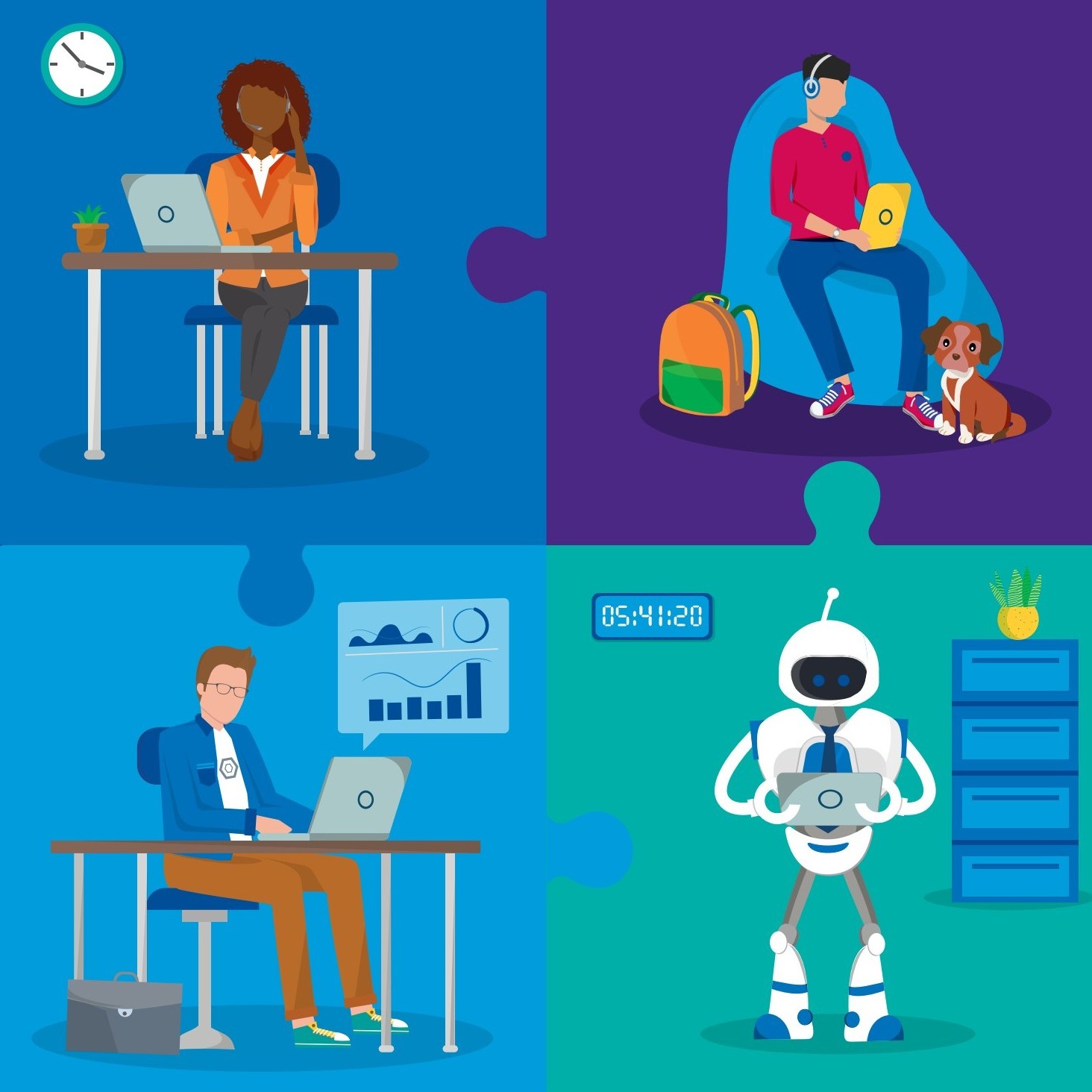
So-called 'digital gurus' from the private sector will be 'parachuted' into government departments as part of radical plans to 'turbocharge' the technological and AI skills of civil servantsSo-called ‘digital gurus’ from the private sector will be ‘parachuted’ into government departments as part of radical plans to ‘turbocharge’ the technological skills of civil servants, Cabinet Office Minister Jeremy Quin has announced. Delivering a speech at the think tank Policy Exchange, Minister Quin set out a number of measures which he claims will drive forward the government’s plans to harness innovation and technology including AI to make Whitehall run more efficiently.

(more…)

CIPD says HR professionals should ‘lean in’ to artificial intelligence

CIPD says HR professionals should ‘lean in’ to artificial intelligence

HR and artificial intelligenceThe swift rise of generative artificial intelligence and its potential impact in the workplace puts people professionals at the heart of understanding how this fast-evolving technology can be responsibly used, and the business impact it may have, according to the CIPD.  To support this change, the trade body has launched a new guide, Preparing your Organisation for AI Use, which stresses the importance of people professionals creating clear policies on the use of easily accessible, web-based generative AI tools such as ChatGPT and Google Bard.  (more…)

We need better evidence to help protect people at work

We need better evidence to help protect people at work

Understanding what works to protect people at work needs better use of evidenceWe make decisions at work every day and for those in complex roles or in fast-changing situations, it can feel like a continuous process. In business, of course, the choices we make can have a significant impact on the bottom line and, more importantly, our people, the environment and the communities we’re operating in. With so much riding on what we choose to do, our decision-making processes must be designed to maximise our chances of successful outcomes. This is especially so when our decisions involve how to protect people at work so can be literally a matter of life or death. (more…)

To boost productivity in the UK, we need to think big and different

To boost productivity in the UK, we need to think big and different

olicymakers, businesses, and society must recognise the importance of productivity and collaborate to implement the necessary reforms and initiatives to unlock the country's full economic potentialThe decline in UK productivity since the Great Recession of 2008/2009 has been a matter of concern for business leaders, policymakers, and economists alike. Despite hopes that the pandemic would act as a catalyst for transformation and boost productivity, recent figures from the Office for National Statistics (ONS) show that the UK still lags behind several other G7 economies. (more…)

Generations in the workplace: setting the record straight

Generations in the workplace: setting the record straight

A middle aged man and a younger male colleague sit in comfortable chairs having a conversation to illustrate a conversation between generations of workersIf there were an algorithm to create a word cloud in response to searches for ‘What millennials want in the workplace?’, you’d expect to see Google spew out terms such as ‘flexibility’, ‘meaning’, ‘fairness’, ‘equality’, ‘inclusivity’, ‘opportunity’, ‘connections’, ‘socialising’ and ‘experience’. Do the same with ‘Gen Z’ replacing ‘millennials’ and – guess what – you’ll see the exact same word cloud, although perhaps in a different colour and order so you don’t think it’s based on the same homogeneous assumptions about younger generations. (more…)

While most people feel they belong at work, many also complain about being silenced

While most people feel they belong at work, many also complain about being silenced

Although two thirds of people feel a sense of belonging in the workplace, half also think they are unable to share their opinions freely at workAlthough two thirds of people feel a sense of belonging in the workplace, half also think they are unable to share their opinions freely at work, according to a a new poll of 4,500 individuals working for large organisations around the world and commissioned by facilities management firm ISS. While the poll found that 69 percent of workers do feel a sense of belonging at work, it also discovered that feelings of not belonging were linked to “decreased productivity, worsened mental health and an increased risk of employee turnover”. (more…)

Improved support for menopause could help women stay in work

Improved support for menopause could help women stay in work

more than half (54 percent) feel it would be difficult for them to raise issues, including menopause, with their employersWomen in the UK are urging politicians and business leaders to take steps that help them remain productive in the workforce for longer, as research shows more than half (54 percent) feel it would be difficult for them to raise issues, including menopause, with their employers and three fifths would also feel uncomfortable bringing up health and wellbeing issues with a male manager. (more…)

Members of European Parliament back charter to ‘revolutionise workplace wellbeing’

Members of European Parliament back charter to ‘revolutionise workplace wellbeing’

The Future Workforce Alliance (FWA), a consortium of policymakers, researchers and firms such as Zoom and Remote, has launched the European Charter for Digital Workplace WellbeingMembers of the European Parliament have backed a new charter from a consortium of organisations that sets out to ‘revolutionise workforce policy’. The Future Workforce Alliance (FWA), a consortium of policymakers, researchers and firms such as Zoom and Remote, has launched the European Charter for Digital Workplace Wellbeing and claims that the step by MEPs signals the beginning of the life/work revolution and solidification of workers’ rights in the face of  what it refers to as ‘return to office lobbying’. (more…)

Two in five people are working extra hours as cost-of-living crisis bites

Two in five people are working extra hours as cost-of-living crisis bites

A new poll suggests that the continuing cost-of-living crisis is now affecting a greater proportion of employeesA new poll suggests that the continuing cost-of-living crisis is now affecting a greater proportion of employees, with more people working extra hours, more struggling to buy food or pay their bills, and fewer being able to afford to take sick days, compared to mid-2022. HR software provider Ciphr surveyed 1,000 employees across the UK about their experiences of rising living costs in 2023, and any actions they’ve taken, or have considered taking, because of financial pressures. (more…)

‘Performative work’ is holding back productivity, poll claims

‘Performative work’ is holding back productivity, poll claims

A new  poll from Slack claims that a focus on performative work, rather than impact, is holding back UK businessesA new  poll from Slack claims that a focus on performative work, rather than impact, is holding back UK businesses; leading to them falling behind the likes of Germany, France, India and Singapore when it comes to adopting, and gaining, the efficiency benefits of technological advances in AI and automation. Based on findings from 2,000 desk workers in the UK, only 21 percent say their company is using AI tools to improve productivity, compared to 75 percent in India, 35 percent in Singapore, 29 percent in Germany and 23 percent in France. Meanwhile, 37 percent of UK workers say their productivity is measured on visibility (i.e. hours spent in the office or online). As a result, almost one third (30 percent) of the average day is lost to performative work that doesn’t contribute to company goals, but is simply done to appear productive. (more…)