Search Results for: pay ratio

Businesses told to consider the interests of workers and other stakeholders in new code

Businesses told to consider the interests of workers and other stakeholders in new code

The Financial Reporting Council (FRC) has published its new Corporate Governance Code in a bid to improve trust in UK business. The new Code will remain on the “comply or explain” basis mandatory for which it has been criticised in the past, but has been broadly welcomed by industry bodies. The code sets out a number of recommendations aimed at improving culture and trust in business, of which it suggests at least one be applied. They include having a director appointed from the workforce, a formal workforce advisory panel and a designated non-executive director. The Code will apply to accounting periods from January 2019 and is applicable to all companies with a premium listing.


(more…)

London’s poor connectivity is holding back commercial property occupiers

London’s poor connectivity is holding back commercial property occupiers

Connectivity is more than just broadband speeds and 4G coverage. New research from property consultancy Cluttons claims to reveal the impact it has on everything from the properties we choose to live in, to the places where we can work and our overall happiness both at home and in the office. The research suggests that London is lagging behind other national and global hubs when it comes to good connectivity in both residential and commercial property, failing our needs both as residents and businesses.

(more…)

A beauty industry veteran makes the case for corporate wellness

A beauty industry veteran makes the case for corporate wellness

Wellness is a term that today transcends the consumer and business worlds, but it is so much more than a buzzword.  Today, the wellbeing of employees is essential for organisations to flourish, so much so that the term has in many ways replaced ‘productivity’ as the way to measure the success of an organisation. Both the beauty and workplace design sectors are very personal areas of high emotional involvement. There is a very real and physical contact with these products — in beauty, women are particularly (and increasingly men too) engaged in developing a customised routine because it gives them a sense of happiness, wellbeing and identity.

(more…)

Fathers Day offers a chance to ponder the disadvantages faced by many working dads

Fathers Day offers a chance to ponder the disadvantages faced by many working dads

Father’s Day – a day when fathers up and down the UK are supposed to feel valued – whether it’s hand print cards from their 2-year old, a pair of socks from their teenager or BBQ accessories from their fully-grown son or daughter. Fathers looking to the government for an offering will be disappointed. Its response to the Women & Equalities Select Committee’s excellent recommendations on fathers and the workplace is the equivalent of a nicely wrapped box with very little in it. For self-employed fathers, the box appears to be empty.

(more…)

Women and younger people are transforming the UK’s freelance economy

Women and younger people are transforming the UK’s freelance economy

The workforce is changing as more people swap the security of a 9-to-5 job for the flexibility of freelancing, with key demographics and industries leading the self-employed sector, according to a new study from Instant Offices. ‘Millennials’ and UK workers facing significant lifestyle changes, such as motherhood, or nearing retirement, and are looking for more flexible ways to work. According to the Association of Independent Professionals and the Self-Employed (IPSE), the self-employed sector now includes approximately 4.8 million people, with freelancers comprising 42 percent of that population and 6 percent of the UK workforce as a whole. The IPSE reports that in 2016, freelancers contributed £119 billion to the national economy. This was up from £109 billion in 2015 and experts are predicting that this number will only continue to grow in the years to come.

(more…)

Artificial intelligence, robots and automation set to transform the office environment

Artificial intelligence, robots and automation set to transform the office environment

In today’s highly digital landscape, tools like AI and machine learning were developed to significantly improve productivity in the workplace. But despite their existence, many companies still trail behind in terms of integrating AI in their office environments. In fact, an article on Workplace Insight previously noted that over a quarter of employers fail to provide staff with digital and flexible tools. Though it is predicted that the next couple of years will see businesses adapt to a human-and-machine environment, organisations still have a lot of catching up to do in terms of digital basics.

(more…)

Optimal workplace productivity gains could add £39.8 billion to British and Irish economies

Optimal workplace productivity gains could add £39.8 billion to British and Irish economies

The United Kingdom could reshape its economic future and unlock its share of £39.8 billion in untapped GDP if organisations were to ‘optimise their workplaces’, according to a new study by Ricoh and Oxford Economics, titled The Economy of People (registration required). The UK could achieve a 1.8 percent increase in GDP, equal to £36.8 billion, which could pay for the cost of Brexit twice with change to spare. Similarly, the Irish economy could expand by 1.0 percent, or £3 billion, if businesses commit to creating the optimal office. The findings from The Economy of People are based on forecasts of how productivity in various industries will improve, if investment in workplaces makes them optimal for those that work there and their employers. Surveys and interviews were conducted with employees and executives to uncover how workplace elements, such as culture, physical workspace and technology affect performance and productivity.

(more…)

No surprises in new report on future workplace trends

No surprises in new report on future workplace trends

The latest Global Workplace Trends report from Sodexo focuses on the ‘workplace experience’ and how it affects levels of engagement, wellbeing and corporate performance. It’s an undemanding study that sets out seven trends covering familiar themes in a familiar way, even though the authors claim it offers ‘fresh insights’. As well as the idea of ‘experience’, it touches on ideas about the intersections of digital and physical space and the implications for people and organisations as well as the workplace professions. It uses the standard vocabulary, various buzzwords and the usual presuppositions to look at the impact of Millennials, AI, the sharing economy and so on. The visuals are the usual parade of smiling, diverse – but no unattractive, disabled and old – hipsters sharing screens and being creative in sun-dappled interiors. Sauce it with some virtue signals and it’s job done.

(more…)

Report sets out business case for health and wellbeing in green buildings

Report sets out business case for health and wellbeing in green buildings

The World Green Building Council has launched a new report highlighting what it suggests are the tangible economic benefits of green buildings and the improved levels of occupant satisfaction when companies implement new health, wellbeing and productivity features in existing green structures. Doing Right by Planet and People: The Business Case for Health and Wellbeing in Green Building presents case studies of 11 facilities around the globe that have one or more green certifications including LEED, Green Star and BREEAM. The report evaluates health and wellbeing features that were integrated into the facilities, such as enhanced fresh air ventilation, acoustic privacy, increase of daylight penetration and use of biophilic design elements such as green walls and extensive indoor plants.

(more…)

Poor company culture is costing the UK economy £23.6 billion per year

Poor company culture is costing the UK economy £23.6 billion per year

A new report claims that a third of people (34 percent) who leave their job, do so because of perceived poor company culture. The report, authored by breatheHR claims the associated cost of bad company culture is around £23.6 billion per year. The survey of 2,500 people analysed in The Culture Economy, also suggests that well over half of SME leaders (60 percent) consider company culture as a ‘nice to have’ in their business.This mindset has a number of knock-on effects. According to the Chartered Management Institute, effective leadership could improve Britain’s productivity by 23 percent. However, with over half (53 percent) of employees surveyed who distrust their senior management, thinking their bosses ‘didn’t appear to know what they were doing’, there is some work to be done.

(more…)

HMRC signs for Manchester HQ as part of nationwide programme of lettings

HMRC signs for Manchester HQ as part of nationwide programme of lettings

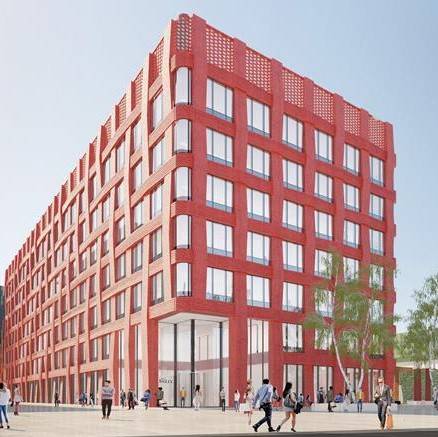
HMRC has completed a 25 year letting of 157,153 sq ft at the English Cities Fund’s New Bailey development in Greater Manchester. HMRC will take over the whole of the seven storey 3 New Bailey development with staff moving in from 2022. The move is part of a nationwide programme of lettings in major cities to deliver HMRC services at local level, overseen by the Government Property Unit. There have already been announcement of new HMRC hubs in Cardiff, Edinburgh, Leeds and Birmingham. The New Bailey move will form the initial phase of the HMRC Manchester Regional Centre. Additional capacity for around 2,500 staff working in the city will be retained at Trinity Bridge House as a transitional site until 2027/8, when the second phase of the regional centre is expected to open. (more…)

A growing number of employers are driving demand for independent professionals

A growing number of employers are driving demand for independent professionals

A new industrial revolution is underway, with almost every organisation on the frontline. Executive leaders, notably HR Directors, are grappling with what this means for the structure and design of their companies and the composition of their people. Changing business models, new technologies to access people, skills and capabilities, are common threads, with widespread implications for workplaces. With more people working remotely, flexi-time and on contract, designing workspaces, for instance, has become more challenging. Economic challenges impact every business and reduce appetite for investment, notably in permanent full-time staff. But scratch below the shared surface and every situation is different.

(more…)