





Search Results for: pay ratio

Millennial workers value variety over job security and tenure

Millennial workers value variety over job security and tenure 0

Millennial 'job hopping'Employers may continuously be looking at ways to engage staff to ensure they still loyal to the organisation, but according to new research it seems they needn’t bother. Over one third (37 percent) of US workers — regardless of their satisfaction level — are seriously considering leaving their organizations, up from 33 percent of the workforce who were considering leaving in 2011. According to Mercer’s latest Inside Employees’ Mind research, which surveyed 3,000 people representing a complete cross-section of the US workforce, nearly one out of two employees who said they are very satisfied with their organizations and their jobs (45 percent and 42 percent, respectively) are still looking to leave. And perhaps unsurprisingly, it’s the Millennial workers who seem to value accelerated career paths and diversity (in the workplace and the work itself) over job security and tenure.

(more…)

The worldwide demographic timebomb is transforming the workplace

The worldwide demographic timebomb is transforming the workplace 0

older-workers-in-demand-810x540There are a number of reasons why we shouldn’t be drawn into blindly accepting the narrative about Generation Y’s impact on the workplace. It seems the most important is also the least talked about. It is that the workforce is actually ageing in the world’s leading economies. While it may be true that 27 is middle -aged for employees at technology companies, for pretty much everybody else, shifting demographics, longer lives, improving health, falling pensions and changing personal preferences are likely to mean they stay in the workforce for longer. This is true in both the UK and US, where Millennials may make up the largest demographic grouping in the workplace but are still in a minority within an increasingly diverse workforce. The dynamics of these changes are playing out in different ways in different countries, but the forces are essentially universal.

(more…)

Shared office ruling could cost Scottish firms millions more in rates

Shared office ruling could cost Scottish firms millions more in rates 0

GlasgowLarge firms that occupy several separate floors in a prime office may need to pay tens of thousands of pounds more in rates, property managers have been warned. The decision by the UK Supreme Court on business rates in shared office buildings will lead to higher fees for many businesses in Scotland, according to commercial property experts at Colliers International. The firm says that the case of Woolway Valuation Office v Mazars, in which the Supreme Court held that businesses occupying space across several floors should pay separate rates for each, will lead to changes in valuations across the country that will cost firms millions of pounds. Up until now, such arrangements were charged as a “single occupation” and benefited from economies of scale. Paying for two separate sets of rates is likely to be more expensive, and the court decision even allows for the changes to be implemented retrospectively.



(more…)

Three quarters of US workers avoid the office to get important work done

Three quarters of US workers avoid the office to get important work done 0

Office

Three quarters (76 percent) of US workers surveyed by online job site FlexJobs say that when they need to get important work done, they avoid the office completely. Of over 2,600 respondents, 50 percent reported that their home is their location of choice to be most productive on important work-related projects. Another 12 percent said they would choose a coffee shop, coworking space, library, or other place besides the office. Fourteen percent would choose the office but only outside standard hours, leaving less than a quarter who prefer the actual office during regular working hours as a place to complete important work. The main reasons for fleeing the corporate embrace were to avoid interruptions from colleagues (cited by 76 percent), escape distractions (74 percent), evade office politics (71 percent), reduce the stress of commuting (68 percent) and work in more comfortable surroundings (65 percent).

(more…)

Special edition of Ergonomics in Design focuses on sedentary work

Special edition of Ergonomics in Design focuses on sedentary work 0

ergonomics and muffin topsThe Human Factors and Ergonomics Society (HFES) has published a special edition of its in-house journal dedicated to the much discussed topics of sedentary working and the need for us to get out of our seats. You’ll have to pay for it however, although individual sections are available for a one off cost. HFES claims to be the  world’s largest scientific association for human factors and ergonomics professionals, with more than 4,800 members worldwide. The July issue of their journal Ergonomics in Design looks at the range of ailments associated with sedentary working, including obesity, heart disease and diabetes, weighs up what can be done to change the way people work, as well as the benefits and possible downsides to the most commonly suggested solutions, including sit-stand workstations, alternative seating designs and – God help us – treadmill desks.

(more…)

More evidence of people’s growing inability to simply go on holiday

More evidence of people’s growing inability to simply go on holiday 0

HolidaysIf you’re reading this on holiday this week, don’t. Life’s too short. Go jump in the pool or something…. For everybody else, a slew of surveys have been published over the last few weeks that confirm something that we may already know;  we are finding it increasingly hard to forget about work, even during our supposed time off and many people are forgoing holidays altogether, although not necessarily because they’ve forgotten about the off switch on their smartphone. We reported recently on one of these, from the Institute for Leadership and Management, but three more have passed over our desks over recent days. With the usual caveat about vested interests, the studies, from the TUC, alldayPA and public sector members club CSMA all confirm not only how prevalent this form of presenteeism is, but also how harmful it can be to ourselves and employers.

(more…)

Female bosses enhance workforce engagement and motivation

Female bosses enhance workforce engagement and motivation

Female bossesAs businesses begin to ease out of recession they are starting to feel more confident in the economy and look at how they can increase spend. But while companies adjust to their new found growth they must ensure that their employees are reassured that they have a voice and, more importantly, are listened to. At Pure, we’ve recently taken a look at the wider impact which employee engagement can have on businesses big and small using an analysis of some key research. This included some illuminating data on gender roles, which included the fact that employees who work for a female manager are 6 percent more engaged, on average, than those who work for a male manager; female employees who work for a female manager are the most engaged, at 35 percent and male employees who work for a male manager are the least engaged, at 25 percent.

(more…)

Workers of all ages want employers that commit to digital progress

Workers of all ages want employers that commit to digital progress

Workers of all generations demand more digital savvy employersEmployees across all age groups want to work for businesses committed to digital progress, and companies that are slow to embrace digital technology will not thrive and are more likely to lose talent, according to a new global report. Strategy, Not Technology, Drives Digital Transformation from MIT Sloan Management Review and Deloitte Digital is based on findings from the fourth annual global survey of more than 4,800 business executives across 27 industries and 129 countries. It suggests the ability to digitally transform and reimagine a business is determined in large part by establishing a clear digital strategy, supported by leaders who foster a culture that can change and reinvent their organizations. People want to work for digitally maturing organizations, with nearly 80 percent of respondents preferring to work for a digitally enabled company or digital leader. This sentiment crossed all age groups nearly equally, from 22 to 60.

(more…)

Free Wi-Fi for agile workers is not quite as free as you’d like to think

Free Wi-Fi for agile workers is not quite as free as you’d like to think

Free Wi-FiOne of the underlying drivers of agile working is supposedly the availability of ubiquitous free Wi-Fi. Yet according to new research, free Internet access may cost quite a bit more than firms might think. The study from Rethink Technology Research, Enterprise Apps Tech and iPass claims that North American and European business travellers spent at least £855 million in connectivity charges while on the road last year. The report, based on data from around 78 million business trips, includes the costs of 3G and 4G roaming data and paid Wi-FI connections that would have been cheaper of paid for in advance. The report is particularly critical of the practice of offering business users free Wi-FI with deliberately slow connection speeds to encourage them to pay for faster connections. It also highlights the well publicised problems of data security.

(more…)

Three ways in which the business case for green building design is moving on

Three ways in which the business case for green building design is moving on

ODD 02The case for sustainable building design used to be based on two straightforward principles. The first was that buildings had to offer up some sustainable features to comply with the ethical standards of their occupiers. The second was that there was some financial benefit. Often these principles went hand in hand, especially when it came to issues such as energy efficiency. They remain the foundations of the idea of green building design and are applicable across a range of building accreditations such as BREEAM as well as standards relating to specific products and policies. Over the past couple of years, however, we have become increasingly aware of other drivers that might make us all re-evaluate how we approach sustainability. These drivers are based on a more sophisticated understanding of green building design and the benefits for all of those involved.

(more…)

Is the environment now a non-issue for building occupiers and managers?

Is the environment now a non-issue for building occupiers and managers?

This week, I took part in a series of debates in London and Manchester. The discussions, led by Rob Kirkbride of the US workplace design trade journal Monday Morning Quarterback, focused on workplace trends in North America and Europe, based on the issues that dominated the recent Neocon show in Chicago. This in turn is based on the premise that what suppliers talk about when they present their products in public reflects what their clients are saying to them. However, one subject we didn’t cover in any detail was the environment, because nobody was talking about it very much at Neocon. Indeed nobody seems to talk about it very much at exhibitions anywhere these days. While few would deny that sustainability is an important subject, could it be that it is now something of a non-issue for building occupiers and their suppliers?

(more…)

Long distance commuting, agile working and dinosaur extinction in the UAE

Long distance commuting, agile working and dinosaur extinction in the UAE

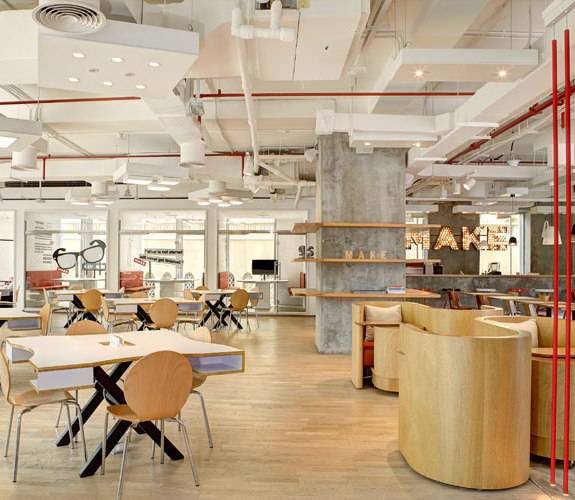
Make DubaiIn Dubai, there are no suburban dinosaurs; those large-scale, single purpose office buildings that ignore the agile realities of modern working life. In the western world, these giants evolved on business parks, driven by the perceived benefits of having office workers agglomerated in order to achieve efficiency of communication and dissemination. The business practices and technologies that underpinned these buildings have evolved and improved and many are in the process of being re-purposed. Things happen on a grander scale in the Middle East where the mantra is “if the land-use doesn’t fit the land, make more land.” Here, the patterns of work and place have evolved differently from the west, and at a much faster pace with creeping tides of development spreading rapidly out from the small centres of traditional trade and commerce to vast tracts of new development.

(more…)