






January 18, 2022
Cities need to open themselves up to Nature, report claims
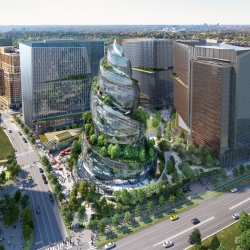 Cities contribute 80 percent to global GDP – but they also account for 75 percent of global greenhouse gas emissions. Integrating nature-positive solutions can help protect cities from growing risks associated with extreme weather while driving sustainable economic growth, according to a new study from the World Economic Forum. In collaboration with the Alexander von Humboldt Institute and Government of Colombia, WEF’s BiodiverCities by 2030 Initiative published a report addressing the urgency of cities’ untenable relationship with nature. The Initiative’s goal is to reverse this existential global threat and move forward with a plan that will result in cities and nature co-existing in harmony by the end of the decade. (more…)
 Remote working swiftly evolved from a stopgap lockdown solution into a globally successful workstyle – and it’s set to stay. According to research quoted by
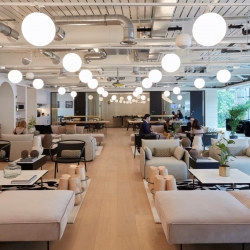 Members of flexible workspace provider
 While the debate about working from home versus working in the office continues, should the real conversation focus on the implications for a typical knowledge worker? ‘Knowledge work’ is a term that dates back over sixty years. It’s said to be first coined by Peter Drucker in his 1958 book The Landmarks of Tomorrow. The business guru went on to talk about knowledge workers in a later book, The Effective Executive, in 1966. He defined them as ‘high-level workers who apply theoretical and analytical knowledge acquired through formal training, to develop products and services’.
 The last 18 months have seen unprecedented change. Covid-19 has forced people to re-evaluate every aspect of their lives, including their career. As a result, we’ve seen a surge in workers taking charge of their careers and leaving their jobs as part of the so-called Great Resignation. Recent data from the


 Decades of declining change in the UK labour market has reduced the risk of damaging job losses, but also limited opportunities for pay-enhancing job moves, according to
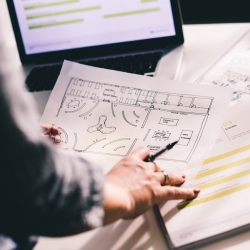 The events of the last 18 months have given us a once in a generation opportunity to reinvent work. Our generation can create a discontinuity between the assumptions of the past and the opportunities of the future. To capitalise on these opportunities though we have to dispense with the assumptions we hold about work and the places where work takes place, including many of the assumptions we hold about hybrid working. We have to re-examine the purpose of the office and what form it might conceivably take in the future before we can decide if it has any place in our plans.

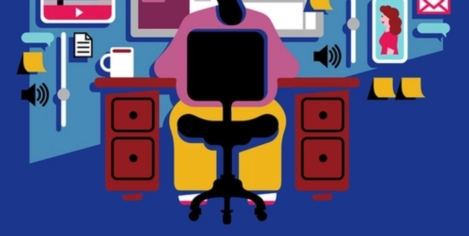
 After nearly two turbulent years, which for many knowledge workers have been dominated by a ground-hog day like existence, people are looking for change. This is only natural as workers around the world are re-evaluating their priorities, reigniting their passions, or simply looking for something new. This has led to a mini-exodus from businesses, which is now being dubbed the ‘
 The 4th January was the first working day of 2022 for many employees, but due to ongoing working from home restrictions the majority will not be attending their usual workplaces. According to the latest research from the Institute of Workplace and Facilities Management (







January 17, 2022
Is your office worth the journey it takes to get to it?
by Despina Katsikakis • Comment, Flexible working, Property