Search Results for: people

AI could increase the relevance of the physical workplace, Gensler report suggests

AI could increase the relevance of the physical workplace, Gensler report suggests

Workers who regularly use artificial intelligence are spending less time working alone and more time learning and socialising with colleagues, suggesting that the spread of AI could increase rather than diminish the importance of the physical workplaceWorkers who regularly use artificial intelligence are spending less time working alone and more time learning and socialising with colleagues, suggesting that the spread of AI could increase rather than diminish the importance of the physical workplace. Gensler’s Global Workplace Survey 2026 found that 30 per cent of workers regularly use AI tools in both their professional and personal lives, a group the architecture and design firm describes as “AI power users”. A further 36 per cent are classed as late adopters who rarely or never use AI. (more…)


Productivity gains from workplace AI mean little if they erase professional judgment

Productivity gains from workplace AI mean little if they erase professional judgment

Speed can become a dangerous proxy for the value of workplace AI when leaders stop asking what happened to the judgment behind the work.The strongest case for workplace AI rarely begins with a dramatic breakthrough. It begins with ordinary time savings: a report drafted faster, a plan assembled in minutes or a first pass produced without the usual blank-page delay. Those gains matter. Yet speed can become a dangerous proxy for value when leaders stop asking what happened to the judgment behind the work. (more…)

Hubflow acquires 37 Lombard Street as it expands London office portfolio

Hubflow acquires 37 Lombard Street as it expands London office portfolio

Flexible workspace provider Hubflow has acquired the freehold of its 37 Lombard Street site in the City of London as part of a strategy to combine workspace operations with ownership of the properties it occupies. The company has also confirmed plans to open more than 25,000 sq ft of additional flexible workspace across two central London locations, at 60 New Broad Street and 71 Queen Victoria Street, next month. Hubflow said the acquisition of 37 Lombard Street represents the next stage of its London office expansion strategy and a move towards an owner-operator model that differs from the lease-based approach adopted by many flexible workspace providers. (more…)

Barbican Centre launches search for furniture designer as part of £231m renewal

Barbican Centre launches search for furniture designer as part of £231m renewal

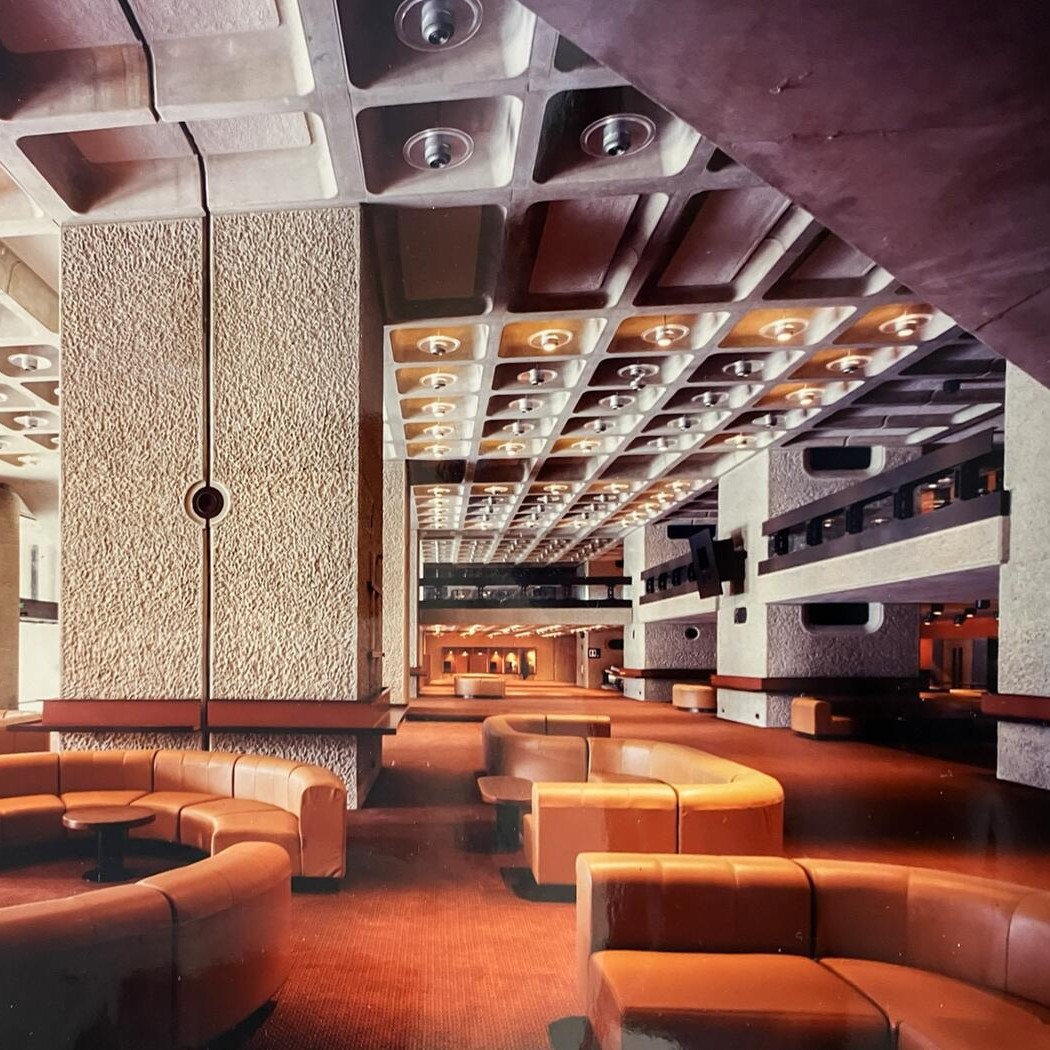
The Barbican Centre has launched an international search for a designer or design team to develop a new furniture strategy for its public spacesThe Barbican Centre has launched an international search for a designer or design team to develop a new furniture strategy for its public spaces as part of its £231 million renewal programme. The commission will involve creating a bespoke range of up to 500 pieces for the Grade II-listed arts centre, alongside identifying opportunities to reuse existing furniture and introduce suitable off-the-shelf products. The appointment is expected to run from 2026 to 2029.

The competition is open to designers and teams based anywhere in the world, with proposals due by 28 August. A shortlist is expected to proceed to a full tender process in September, with an appointment planned for November. The new furniture will be used throughout the Barbican’s public spaces and could include armchairs, sofas, coffee tables, bar stools, communal benches with parasols and stackable chairs for larger events. Accessibility, flexibility and sustainability will be central to the brief.

The work will cover areas including the Lakeside, Sculpture Court and Learning Spaces, as well as redesigned foyers being developed by Allies and Morrison and Asif Khan Studio.

The Barbican said recent audience feedback, inclusive design work and co-design with visitors had highlighted a need for furniture that was more welcoming, cohesive, accessible and adaptable to the range of activities taking place across the centre.

Furniture has played a significant role in the Barbican’s identity since it opened in 1982. Designer Robin Day produced bespoke seating, sofas, chairs and tables specifically for the building, although much of the original furniture has since been replaced.

Philippa Simpson, chief operating officer at the Barbican Centre, said furniture had always helped shape how people experienced the building. “We’re looking for a designer or design team to create objects of quality and comfort, that respond to the Barbican’s extraordinary architecture and artistic purpose,” she said. “We want these new designs to accommodate the remarkable range of activities that take place in our spaces, ensuring every single visitor knows they are welcome.”

Alex Watt, architect at Asif Khan Studio, said the commission offered an opportunity to extend the design thinking being applied to the centre’s foyers, while retaining the character of the original architecture.

The furniture project forms part of the wider Barbican Renewal programme, which is intended to conserve and upgrade the building ahead of its 50th anniversary while improving its accessibility, sustainability and suitability for future use. The centre receives more than 30,000 visitors on an average day.

Image: The Barbican Archive

The ERP innovations worth paying attention to right now

The ERP innovations worth paying attention to right now

The businesses treating ERP selection purely as a procurement decision are missing most of the story.Ask a finance director what their ERP system does and most will describe what it used to do: hold the ledger, run payroll, generate the month-end report nobody reads until something in it is wrong. That description is going stale fast. The systems running underneath most mid-sized and large businesses are changing shape, and the change matters well beyond the finance department. It touches headcount planning, office layout, training pipelines, and how quickly a business can respond when the market shifts under it. (more…)

A beacon of hope in an uncertain world. Works magazine 20 digital edition is here for you

A beacon of hope in an uncertain world. Works magazine 20 digital edition is here for you

The digital edition of issue 20 of Works magazine is now available for you to read here.  The new issue explores a workplace sector that is becoming increasingly confident about its future, even as it navigates rapid technological, social and economic change. The latest edition brings together major workplace projects, design debates and industry commentary that point to a common theme: the enduring value of connection, community and shared experience in an age of uncertainty. (more…)

How MSPs are shaping the future of the digital workplace

How MSPs are shaping the future of the digital workplace

Here’s why businesses are increasingly turning to outside experts for AI support and what to expect of the digital workplace as those experts modernize their service offerings in response.According to JLL’s 2026 Future of Work Survey, most C-suite and corporate real estate leaders now expect AI to redesign roles and grow headcount rather than reduce it. While this is likely a relief for those who previously worried about AI making their roles obsolete, it also creates new pressure on organisations to integrate AI into their operations. This pressure is increasing the demand across the board for managed service providers (MSPs). At the same time, it is increasing the scope of responsibilities modern MSPs are now expected to offer. Here’s why businesses are increasingly turning to outside experts for AI support and what to expect of the digital workplace as those experts modernize their service offerings in response. (more…)

Giving employees a say over office art may boost wellbeing and job satisfaction, review suggests

Giving employees a say over office art may boost wellbeing and job satisfaction, review suggests

visual office art can have a positive effect on employees' psychological wellbeing and workplace experience, with the greatest benefits seen when workers are able to choose or position artwork themselves.Giving employees more control over the artwork displayed in their workplace could improve wellbeing, job satisfaction and engagement, according to a new systematic review from researchers at the University of Roehampton. The review, published in Psychology of Aesthetics, Creativity, and the Arts, found evidence that visual office art can have a positive effect on employees’ psychological wellbeing and workplace experience, with the greatest benefits seen when workers are able to choose or position artwork themselves. (more…)

As hybrid working resets the office’s purpose, its small rituals carry more weight

As hybrid working resets the office’s purpose, its small rituals carry more weight

Hybrid working has changed the arrangement. Many employees can now complete focused work elsewhere, often without a commute or the interruptions of a busy workplace. A trip to the office therefore needs to offer something beyond access to a desk and a screen.The question of what the office is for has become harder to answer. For much of its history, the office had a clear practical role. It was where the people, information and equipment needed for work were located. Attendance was largely assumed, and the working week developed around that shared presence. Hybrid working has changed the arrangement. Many employees can now complete focused work elsewhere, often without a commute or the interruptions of a busy workplace. A trip to the office therefore needs to offer something beyond access to a desk and a screen. (more…)

Resilience: the expanding global mandate for facility management

Resilience: the expanding global mandate for facility management

Throughout this decade, global challenges have shined a spotlight on the facility management (FM) industry and its professionals like never before.Throughout this decade, global challenges have shined a spotlight on the facility management (FM) industry and its professionals like never before. From pandemics to climate events and geopolitical instability, these challenges have tested organizations in unprecedented ways. While many debated the meaning of  terms like “the new normal,” facility managers demonstrated competence, strategic planning and decisive leadership to keep their organizations and people moving forward. From the C-suite to workers and visitors, organizations have become acutely aware of  FM’s influence as critical enablers  to ensure organizational, environmental and personal health. (more…)

UK architects arrive at AI ‘tipping point’ – and a new existential crisis

UK architects arrive at AI ‘tipping point’ – and a new existential crisis

Most architects don't think AI improves the quality of their work, and have become more pessimistic about their future as well as the long term impact on the profession as the tech reduces the number of entry level rolesThe Royal Institute of British Architects (RIBA) has published the results of the third survey among its members into attitudes towards, and usage of Artificial Intelligence (AI).?It outlines how artificial intelligence (AI) adoption has changed, how its use has developed and how design professionals view the AI-influenced future. The poll found that while adoption is widespread, most respondents don’t think AI improves the quality of their work, and have become more pessimistic about their future as well as the long term impact on the profession as the tech reduces the number of entry level roles. (more…)

Are we designing workplaces around evidence or assumption?

Are we designing workplaces around evidence or assumption?

People no longer use workplaces in the same way every day, every week or every season, yet many of the decisions shaping the future of our workplaces still assume that they do.A sudden, intense summer heatwave does more than test a building’s cooling systems; it exposes just how difficult workplace management has become across Europe. During these spikes, employees rethink their commute, meeting rooms fill and empty at different times, quieter corners suddenly become more attractive places to work, and facilities teams work hard to keep buildings comfortable while managing rising energy demands. While these changes may only last a few days, they serve as a useful reminder that workplaces are far more dynamic than we often give them credit for. People no longer use offices in the same way every day, every week or every season, yet many of the decisions shaping the future of our workplaces still assume that they do. (more…)