To provide the best experiences, we use technologies like cookies to store and/or access device information. Consenting to these technologies will allow us to process data such as browsing behaviour or unique IDs on this site. Not consenting or withdrawing consent, may adversely affect certain features and functions.
The technical storage or access is strictly necessary for the legitimate purpose of enabling the use of a specific service explicitly requested by the subscriber or user, or for the sole purpose of carrying out the transmission of a communication over an electronic communications network.
The technical storage or access is necessary for the legitimate purpose of storing preferences that are not requested by the subscriber or user.
The technical storage or access that is used exclusively for statistical purposes.
The technical storage or access that is used exclusively for anonymous statistical purposes. Without a subpoena, voluntary compliance on the part of your Internet Service Provider, or additional records from a third party, information stored or retrieved for this purpose alone cannot usually be used to identify you.
The technical storage or access is required to create user profiles to send advertising, or to track the user on a website or across several websites for similar marketing purposes.







 A brace of new reports sets out to identify the challenges organisations set themselves by inhabiting dated offices and how modern office design principles could address them. According to the Meeting Expectations report, released by K2 Space, workplace productivity is being impeded as a direct result of dated office design. The second study from Saracen Interiors focuses more on the role of office design as a recruitment tool. The reports follow the recent publication of a major report on similar themes from Worktech Academy and Fourfront Group.
 Over a quarter of businesses plan to hire temporary or contract staff in the next 12 months to help plug skills shortages created by digitalisation as more than half of CEOs are concerned about a lack of digital skills within their organisation. This is according to the Robert Half 2019 Salary Guide which argues that technology is reshaping businesses; with two in five UK organisations (38 percent) considering digitalisation as the main evolving force in the workplace today. This shift has created demand for a new set of skills, such as DevOps, data visualisation, data management and analytics. While softer skills such as resilience, adaptability and critical thinking remain key characteristics in potential employees, a third (31 percent) of employers state that a candidate’s technical skillset is their most important consideration when making a new hire. Around 1.6 million1 (28 percent) UK businesses plan to hire temporary or contract staff in the next twelve months, to combat the lack available talent required, which is creating a critical skills gaps in the workplace.
 A sudden reversal in the growth in the number of both EU and non-EU migrants in employment in the UK could hit employer plans to take on more staff and worsen skills and labour shortages, according to the latest quarterly Labour Market Outlook from the CIPD and The Adecco Group. While the net employment balance – a measure of the difference between the proportion of employers who expect to increase staff levels and those who expect to decrease staff levels – has remained extremely positive at +22 (compared to +23 in Q3 2018), among employers which currently have vacancies, seven in ten (70 percent) report that at least some of their vacancies are proving hard-to-fill, higher than in Summer 2018 (66 percent) and Spring 2018 (61 percent).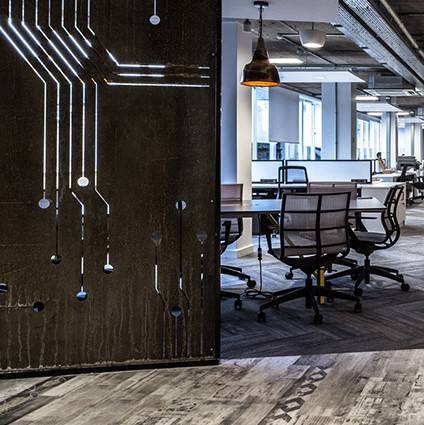

 Two-fifths of job-seekers are being hired into new roles only to discover they have the wrong soft skills for the job. This means over half are leaving companies because their personality or work style didn’t fit, claims news research published by HireVue. The 53 percent of those who had left for this reason saying the format of the hiring process had prevented them from discovering the mismatch earlier. While four-fifths (82 percent) of candidates are confident in their ability to articulate their soft skills and personality traits in an interview, many doubt that pre-hire assessments can showcase these important attributes.
 The new northern home of the BBC is giving London a run for its money when it comes to siting offices for the UK’s top tech talent, with Manchester leading the way, according to
 More than half of CEOs (53 percent) admit they can’t find candidates with the necessary skills to help them navigate an increasingly digitalised business landscape a new survey from Robert Half has claimed. These include data analysis and digital skills, as well as softer skills such as resilience, adaptability to change and critical thinking. This means that nearly five million UK SMEs, the equivalent to four out of every five (82 percent) small and medium-sized companies, are struggling to attract the skills they need. As a result, many are being forced to offer salary packages higher than originally expected to recruit the right talent.

 Almost two thirds (64 percent) of SME employees believe that companies should make a positive contribution to society, while half of all UK workers (50 percent) would be discouraged from working for an organisation with no interest in community or ethical goals. According to The Future Workforce from Unum and independent researcher The Future Laboratory this emphasis on a company’s ethical credentials comes in the wake of a movement towards greater awareness of global issues, which has led to demands for more transparency in how organisations do business and less tolerance of unethical corporate behaviour. As a result, an ethical employer can be an important factor when it comes to deciding whether to join or stay with an organisation –In addition, The Future Workforce report found that just under a third (30 percent) of UK workers believe that companies who are not participating in any civic or ethical contributions should be fined.









October 16, 2018
Law firms are finally embracing the agile workplace
by Simon Pole • Comment, Workplace design
(more…)