





Search Results for: sustain

Research reveals the main reasons why people still go to work when ill

Research reveals the main reasons why people still go to work when ill 0

High job demands, stress and job insecurity are among the main reasons why people go to work when they are ill and should probably stay home, according to new research from the University of East Anglia. The study sets out to improve understanding of the key causes of employees going to work when sick, which is known as one of the main forms of presenteeism, and to help make managers more aware of the existence of the phenomenon, what triggers the behaviour and what can be done to improve employees’ health and productivity. A key finding of the study, published yesterday in the Journal of Occupational Health Psychology, is that presenteeism not only stems from ill health and stress, but from raised motivation, for example high job satisfaction and a strong sense of commitment to the organisation. This may motivate people to ‘go the extra-mile’, causing them to work more intensively, even when sick.

(more…)

Design for performance study looks to improve energy performance

Design for performance study looks to improve energy performance 0

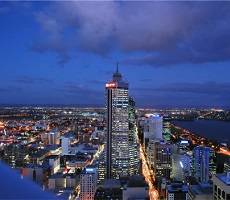
Central Park Perth

Developers, owners and occupiers of buildings might expect that compliance with regulations will produce a building that is energy efficient in operation and well on its way towards the 2020 nearly-zero energy target mandated by a European Directive. In practice, the actual performance of most buildings falls well short of the design intent – the so-called performance gap. In Australia, this chronic problem has been eliminated for new office building projects in which clients and their teams sign up to – and then follow – a “Commitment Agreement” protocol to design, construct and manage their buildings to achieve agreed levels of actual in-use performance. Now with the backing of the Better Buildings Partnership, a four month study to develop a prototype UK scheme which embraces Australia’s ‘design for performance’ approach has been launched by a team led by Verco and including BSRIA, Arup and UBT.

(more…)

Women should sit on third of all FTSE boards by 2020, says Davies report

Women should sit on third of all FTSE boards by 2020, says Davies report 0

Women_at_workAll FTSE 350 boards should have 33 percent female representation by 2020, a five year investigation of gender equality has concluded. The recommendations were made by Lord Davies in his final report on Women on Boards which began looking into the obstacles preventing many women from reaching senior positions back in February 2011. Earlier this year the UK’s FTSE 100 reached a milestone of 25 percent of board positions being filled by women – the target set by Lord Davies in 2011. Although there are more women on FTSE 350 boards than ever before, with representation of women more than doubling since 2011 – the latest report proposes a series of recommendations including the voluntary target of 33 percent representation of women on FSTE 350 boards, and the creation of an independent steering body to help create momentum to ensure a voluntary business-led approach is continued for a further five year period.

(more…)

UK firms turn to flexible working and wellbeing to bridge productivity gap

UK firms turn to flexible working and wellbeing to bridge productivity gap 0

flexible working womanIt’s not just larger organisations and governments that are having to grapple with the UK’s persistent ‘productivity puzzle’ but also smaller businesses who are increasingly turning to flexible working and other people centric initiatives to address the problem. That is one of the main findings of a new report from trade association Group Risk Development (GRiD).  According to their survey, nearly a quarter of employers (23 percent) believe productivity is an issue facing their business.  According to the office for National Statistics (ONS) this is a common problem across the entire UK economy as output per hour is stubbornly around 20 percent below the average for all G7 economies. This is the widest gap ever recorded and, according to GRiD is driving employers to seek ways of addressing their own shortfall with flexible working and wellbeing initiatives as well as investment in new equipment and technology.

(more…)

Study links green building design to higher cognitive performance

Study links green building design to higher cognitive performance 0

Green building

People who work in well-ventilated offices with below-average levels of indoor pollutants and carbon dioxide have significantly higher cognitive functioning scores in crucial areas such as responding to a crisis or developing strategy than those who work in offices with typical levels. That is the headline finding of a new study from the Harvard T.H. Chan School of Public Health’s Center for Health and the Global Environment, SUNY Upstate Medical University, and Syracuse University published this week in the journal Environmental Health Perspectives.The researchers looked at people’s experiences in “green” vs. “non-green” buildings in a double-blind study. The findings suggest that the indoor environments in which many people work daily could be adversely affecting cognitive function-and that, conversely, improved air quality could greatly increase the cognitive function performance of workers.

(more…)

An updated green building standard designed to meet wider business objectives

An updated green building standard designed to meet wider business objectives 0

CaptureThe publication in September 2015 of the revised ISO 14001 Global Environmental Management Standard has been heralded as a move that will “shift business focus on the environment from compliance with regulations and direct operations, to placing the environment at the heart of thinking and strategy.” This will assist businesses around the world to respond to increasing global sustainability challenges and ensure long-term business success. Currently there are over 300,000 organisations worldwide that are certified to the ISO 14001 Standard, first published in 1996. According to the Institute of Environmental Management and Assessment, (IEMA) ISO 14001 is the second most used standard companies employ to manage their performance globally, with 171 countries now represented. Its popularity as a management tool has been linked to both improved financial and environmental performance.

(more…)

Workspace shortage as office to residential rights made permanent

Workspace shortage as office to residential rights made permanent 0

workplace designThe British Council for Offices (BCO) has warned that the UK needs to avoid a free-for-all following the government’s announcement it is to make permanent the relaxation of planning rules on the conversion of office to residential properties. According to recent BCO research, changes to the Permitted Development Right for office to residential conversion led to over 6 million sq ft of office space in England being converted to residential use in 2014. Some of the most concentrated commercial property markets have been significantly affected by this. In London, office to residential conversions are now occurring at a faster pace than ever before with 2.7 million sq feet of office space lost to residential conversions since May 2013. London Assembly Member Nicky Gavron questioned the decision to extend the scheme saying that it will reduce the availability of affordable workspace required by start-ups and small businesses in the capital.

(more…)

Civic centre named best workplace in the UK by the BCO

Civic centre named best workplace in the UK by the BCO 0

Building: Keynsham Council Offices Location: Keynsham Architect: AHR

Keynsham Civic Centre & One Stop Shop in Keynsham, near Bath, has been named the Best of the Best workplace in the country at the British Council for Offices’ (BCO) annual Awards. The office was recognised as the Best Corporate Workplace in the UK, topping a list of six other award winners recognised for excellence in office space. The building provides an environmentally sustainable, low maintenance and flexible workspace, whilst acting as a catalyst for the regeneration of the town. As a workplace for the local council, the judges praised the building’s impressive use of natural light to create an ‘uplifting workspace’ as well as the design of the office floors which lend themselves toward flexibility and encourage collaborative working. The team behind the building was also commended for conducting a thorough and impressive stakeholder engagement process, from the inception of the project through to completion.

(more…)

US sees biggest jump in working from home since 2008, claims study

US sees biggest jump in working from home since 2008, claims study 0

working from homeAccording to an analysis of the just-released 2014 American Community Survey (ACS) conducted by GlobalWorkplaceAnalytics.com, approximately 3.7 million US employees (2.5 percent of the workforce) called home their primary place of work in 2014. This represents a 6.5 percent increase and the largest year over year growth in the number of people working from home since before the recession. The ACS data is based on a nationwide survey of answers to the question “What was your primary means of travel to work during the survey week—’Worked at Home’ is one of the choices. The count only includes those who work at home at least half of the time. According to Global Workplace Analytics far more people work at home on a less frequent basis and many work in “third places” such as coffee shops, co-working facilities, libraries, and just about anywhere there’s an internet connection.

(more…)

Fifth of employers not productive enough to afford Living Wage warns CIPD

Fifth of employers not productive enough to afford Living Wage warns CIPD 0

productivyAlthough the UK has experienced two years of solid economic growth, a fifth (21 percent) of organisations are still stuck in survival mode and aren’t making the necessary investments in equipment or people to boost their productivity a new report from the CIPD has revealed. A further 29 percent of employers are failing to get the right balance between investment in their workforce and investment in technology and equipment. Investing in Productivity found a clear link between an organisation’s mindset and its approach to investment, which could help to explain the UK’s poor productivity performance in recent years. The CIPD’s chief economist Mark Beatson warns that too many businesses are being held back by an ‘ambition ceiling’ which is preventing them from making the productivity gains needed to achieve business growth and implement the new National Living Wage without risk of job cuts.

(more…)

Weighing up the pros and cons of the BREEAM environmental standard

Weighing up the pros and cons of the BREEAM environmental standard 0

EnvironmentFor some years there has been a growing awareness of the need to improve the environmental performance of buildings. This is closely linked to both the Government’s own international commitments to reduce carbon emissions by 80 percent over the next 35 years and the need of organisations to act ethically and cut costs while they’re about it. Buildings are important in this regard because of their impact on the environment (and the bottom line). According to The Carbon Trust, buildings produce around 37 percent of the UK’s total carbon emissions, 40 percent of it from commercial buildings.This is commendable stuff but the real problems arise when it comes to meeting such laudable goals in practice. We are learning all the time about how to achieve the best results and we are helped in that with the availability of a number of increasingly sophisticated building environmental standards.

(more…)

Powering positive change theme for World Green Building Week 2015

Powering positive change theme for World Green Building Week 2015 0

Green building week 2015The theme of this year’s World Green Building Week which runs from 21–25 September is Powering Positive Change. The week brings together Green Building Councils from around the world to create a public conversation about the role buildings play in a sustainable future. Hundreds of events worldwide with the aim of demonstrating global diversity and a collective mission to create sustainable built environments. This is achieved through a variety of activities – including workshops and panel discussions, exhibits and building tours. There are over 30 events in the UK and you can view a calendar of them here. The flagship International Climate Negotiations 2015: Catalysing Action on Buildings will look forward to the international climate negotiations in Paris (COP), and the role which the construction and property sector can play in delivering carbon cuts and supporting national commitments.