




Search Results for: workplace

Connected Realities theme will explore the fusion of physical and digital workplaces at the 2026 Workspace Design Show
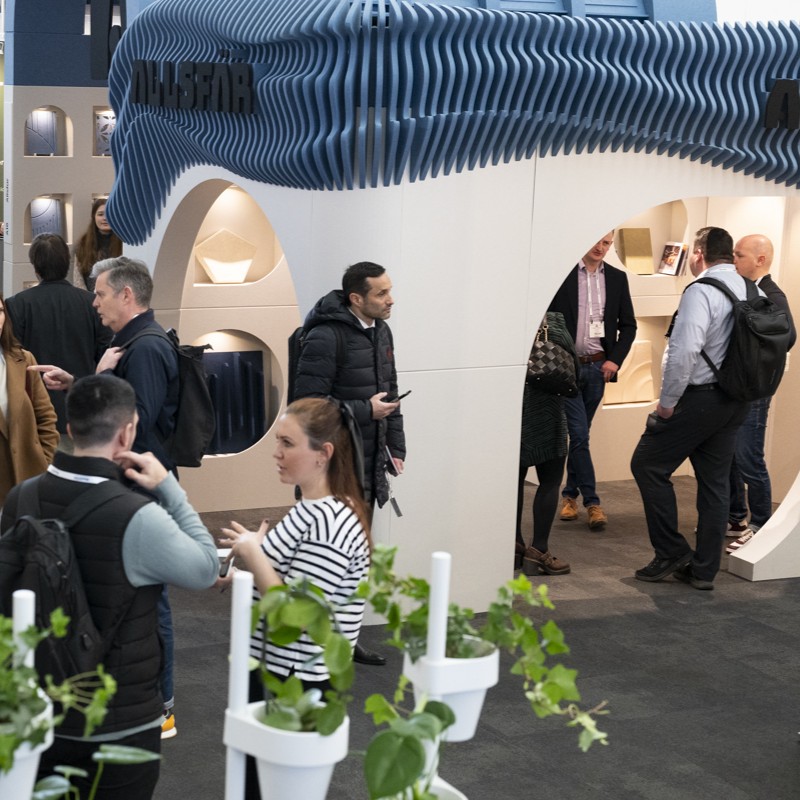
Connected Realities theme will explore the fusion of physical and digital workplaces at the 2026 Workspace Design Show

The 2026 edition of the Workspace Design Show in London will explore how the boundaries between physical and digital workplaces are becoming increasingly blurredThe 2026 edition of the Workspace Design Show in London will explore how the boundaries between physical and digital workplaces are becoming increasingly blurred. The event, taking place at the Business Design Centre on 25–26 February 2026, will centre around the theme Connected Realities, which examines how technology and design combine to create more responsive and human work environments. According to the organisers, the show will focus on how hybrid working models, immersive technologies and smart environments are influencing workplace design. (more…)


The real reason why your workplace strategy isn’t working

The real reason why your workplace strategy isn’t working

In a world where how we work keeps evolving, it’s worth stepping back to ask: What are you about as an organisation? Not your product. Not your structure. Your purpose. Your direction. Your why. What are you ultimately trying to achieve as an organisation and why? What’s the bigger outcome you’re working toward? How do you want your people, your customers, your industry to be different because you exist? These aren’t just philosophical questions. They’re practical ones because your answers shape everything including your strategy, your team structures and your culture.  It also shapes a seemingly straightforward question on your workplace strategy. (more…)

Adoption of workplace AI is inconsistent and riddled with contradictions

Adoption of workplace AI is inconsistent and riddled with contradictions

New research claims to reveal the significant divides in how organisations are adopting artificial intelligence, with some reporting positive outcomes and others citing fear, risk and job losses.New research claims to reveal the significant divides in how organisations are adopting artificial intelligence, with some reporting positive outcomes and others citing fear, risk and job losses. The study, carried out by The Adaptavist Group as part of its latest Digital Etiquette: Unlocking the AI Gates report, surveyed 900 professionals responsible for introducing and onboarding workplace AI in the UK, US, Canada and Germany. It found a sharp split between the 42 percent of respondents who believe their company’s AI claims are over-inflated and the 36 percent who do not. (more…)

Workers voice concerns over AI in the workplace, think it makes them less intelligent

Workers voice concerns over AI in the workplace, think it makes them less intelligent

There is growing unease among employees about the impact of AI on their working lives, with many reporting fears of skill loss, job security and reduced human interaction.A new survey claims to highlight growing unease among employees about the impact of artificial intelligence on their working lives, with many reporting fears of skill loss, job insecurity and reduced human interaction, as well as brain rot. The research, carried out by Howdy in August 2025 among 1,007 full-time workers aged 19 to 77, found that while the majority are already using AI tools in some form, significant numbers are questioning the consequences. Around one in four believe they risk losing critical abilities through over-reliance on artificial intelligence, while a fifth said the technology already makes them less capable. A smaller group, around 10 percent, said they now rely entirely on AI to perform their jobs. (more…)

Return to office policies now more common, but raise people’s expectation of better workplaces

Return to office policies now more common, but raise people’s expectation of better workplaces

The news that Microsoft has introduced a formal hybrid working policy has sparked the usual pointless to and fro on social media about return to office policies, but it would seem for a growing number of firms and their employees, the debate is overThe news that Microsoft has introduced a formal hybrid working policy has sparked the usual pointless to and fro on social media about return to office policies, but it would seem for a growing number of firms and their employees, the debate is over. According to new global research from JLL, 72 percent of employees now view attendance requirements in a positive light, but this shift comes with heightened expectations for workplace quality, flexibility and wellbeing. (more…)

A third of employees are quietly sabotaging workplace AI

A third of employees are quietly sabotaging workplace AI

A survey by Writer and Workplace Intelligence found that 31 percent of staff admitted to behaviour that could be classed as sabotage. of workplace AINearly one in three employees are undermining their organisation’s use of generative AI, according to a new report. A survey by Writer and Workplace Intelligence suggests that 31 percent of staff admitted to behaviour that could be classed as sabotage. of workplace AI. This includes entering sensitive company information into unapproved tools, using software not sanctioned by employers, or failing to report security breaches. Around one in ten said they had gone further, deliberately lowering the quality of their work, tampering with performance metrics, or refusing to use AI altogether. (more…)

Redefining the modern workplace: flexibility, zoning, and employee wellbeing

Redefining the modern workplace: flexibility, zoning, and employee wellbeing

The modern workplace is evolving faster than ever. Traditional layouts of rows of desks and enclosed cubicles are giving way to offices designed around flexibility, collaboration, and employee wellbeingThe modern workplace is evolving faster than ever. Traditional layouts of rows of desks and enclosed cubicles are giving way to offices designed around flexibility, collaboration, and employee wellbeing. For organisations seeking to stay ahead, the key lies in thoughtful workspace zoning—creating adaptable environments that respond to how people actually work today. One of the most significant trends shaping office design is flexibility. Work patterns have changed: teams collaborate in bursts, focus deeply in concentrated periods, and switch between in-person and digital modes throughout the day. Workspaces that can transform to meet these changing needs without major disruption are becoming essential. Mobile partitions and modular systems allow offices to create temporary or permanent zones that can adapt in real time, supporting a mix of focused work, collaboration, and social interaction. (more…)

The power of play: how pool and table tennis can transform the workplace

The power of play: how pool and table tennis can transform the workplace

While workplace wellness programmes and flexible policies have their place, one of the most simple and effective interventions is often overlooked: playWorkplaces are under growing pressure to support both productivity and well-being. Hybrid schedules, long desk hours and rising stress levels mean organisations are rethinking what the office should provide. While wellness programmes and flexible policies have their place, one of the most simple and effective interventions is often overlooked: play. Games like pool and table tennis may once have been dismissed as gimmicks, but today they are increasingly recognised as part of a serious workplace strategy. Far from being distractions, they support movement, collaboration, mental health and focus – all of which are critical in a modern knowledge economy. (more…)

Workplace as a third space: why good coffee and good WiFi still matter

Workplace as a third space: why good coffee and good WiFi still matter

What do people want from their workplace? Good coffee and reliable WiFi are far more important than yoo might thinkThe office is no longer just a default location. Hybrid work has made it one option among many. At home, people have their own desk, their own music, their own kitchen. If the workplace is going to tempt them out, it needs something more than a chair and a meeting room. Fast WiFi and genuinely good coffee can change more about people’s experiences than you might expect. People might not talk about them much, but they notice when they are missing. Both influence how the day flows. When the internet is quick and the coffee is worth getting up for, the office starts to feel different. It becomes somewhere you do not just have to be, but somewhere you don’t mind spending time. (more…)

How mentorship and community shape the future of workplace design

How mentorship and community shape the future of workplace design

It is the network of support, mentors, and peers that helps translate a passion for workplace design into long-term impactWhen it comes to interior design, technical skill and creativity are only part of what shapes a designer’s path. Equally important is the network of support, mentors, and peers that help translate a passion for workplace design into long-term impact. For me, this supportive network has been especially meaningful as I began to define my own design values and areas of interest, particularly in the evolving field of workplace design. (more…)

Poorly designed and managed workplaces costing the UK over £70 billion a year, report claims

Poorly designed and managed workplaces costing the UK over £70 billion a year, report claims

A new report suggests that the quality of workplace environments could have a significant impact on the UK’s economic performance.A new report suggests that the quality of workplace environments could have a significant impact on the UK’s economic performance. According to a new report published by facilities management company MITIE, ineffective workspaces may be costing the economy up to £71.4 billion in GDP each year. The study claims to highlight how various physical and environmental workplace factors can affect employee productivity. (more…)

Office utilisation reaches equilibrium, and demands a rethink of workplace strategy

Office utilisation reaches equilibrium, and demands a rethink of workplace strategy

The British Council for Offices (BCO) has published a new report which claims that while office utilisation rates have stabilised, there has been a fundamental shift in how offices are usedThe British Council for Offices (BCO) has published a new report which claims that while office utilisation rates have stabilised, there has been a fundamental shift in how offices are used, with major implications for developers, investors and occupiers. The report, authored by Nigel Oseland of Workplace Unlimited, shows that the long-standing benchmark of 80 percent office utilisation is no longer fit for purpose. Post-pandemic data suggests a more realistic, but nevertheless conservative, figure of 66 percent equating to an effective density of 15 sq. m per occupant, up from the previous 12.5 sq. m. This recalibration reflects a maturing flexible working model that empowers organisations to right-size their space, reduce waste and enhance employee experience. With high-profile organisations in financial services and the public sector under the spotlight for space misalignment, the report offers timely, evidence-based guidance for the sector. (more…)