






January 5, 2018
Automation will impact low paid jobs first because of the living wage, report claims
 The development of the living wage coupled with the growing automation of tasks could create a perfect storm that prices a growing number of people out of the jobs markets, a report from the Institute of Fiscal Studies claims. The authors suggest that one of the unintended consequences of the increase of the rate to £8.50 by 2020 could be that people in low paid work could find themselves in competition for jobs with robots and artificial intelligence. The report concludes that there will be a tipping point at which human labour becomes economically unviable, although it does not predict when that will occur.
December 28, 2017
Automation will benefit the economy but many people could lose out
Around a third of all jobs in the UK are vulnerable to the introduction of robots, automation and artificial intelligence and the government must intervene to manage the transition and stop new technology driving up wage inequality, a report from the Institute for Public Policy Research (IPPR) claims. Although the report suggests that the tech will have a generally beneficial impact on the economy, it warns that lower-skilled jobs are far more likely to be phased out over the coming decades, and only higher-skilled workers would generally be able to command higher wages.
December 5, 2017
Up to 800 million jobs will be displaced by automation over next 13 years, claims McKinsey report
Up to 800 million workers worldwide may find their jobs disrupted and displaced by robots and automation by 2030, around a fifth of the global labour force, according to a new report covering 46 nations and over 800 occupations carried out by McKinsey & Co. The report claims that all countries and nearly all roles will be affected to some degree. Even at the lower end of the forecast, 400 million workers could still find themselves displaced by automation and would need to find new jobs over the next 13 years. According to the study, only 5 percent of job roles consist of activities that can be fully automated. However, in about 60 percent of occupations, at least one-third of the constituent activities can be automated, implying substantial workplace transformations and changes for all workers.
November 23, 2017
Support of gender diversity charter to widen digital and tech talent pool
As we reported yesterday there are gender as well as economic imbalances which could cause long term problems for the tech sector. While there is a looming digital skills gap – with the UK needing one million more tech workers by 2020, just one in ten females are currently taking A-level computer studies. Currently only 17 percent of the tech/ICT workforce in the UK are female, well below the 47 percent of women in the workforce overall. To help address the issue, the Tech Talent Charter is a commitment by organisations (including Nationwide, BBC, HP, Monster and Cancer Research) to a set of pledges designed to increase gender diversity in the UK tech workforce. These pledges include inclusive recruitment processes and contributing company employment and diversity data anonymously to be published publically annually. Following yesterday’s budget, the Tech Talent Charter is announcing today that it has received Government funding as it welcomes its 90th signatory.
November 22, 2017
Address gender and economic barriers to tech revolution says BT
Young people from less privileged backgrounds and females face greater barriers to joining the tech revolution, a new report suggests. Tech know-how: The new way to get ahead for the next generation, from BT and Accenture could boost the next generation’s tech skills and help charge social mobility and economic growth. The study found individuals with higher levels of tech know-how earn more as their career progresses, with a ‘tech literacy wage premium’ of £10,000 per year. The implied salary increase if people develop their skills could add approximately £11 billion to UK GDP by 2022. However, young people whose parents have higher levels of education are 26 percent more likely to see themselves as ‘expert’ or ‘creative’ users of tech in the next five years; and those whose parents fall into the top two education levels expect to earn salaries that are 19 percent higher than the bottom two. The report also highlighted a stark gender divide as young men receive 46 percent more encouragement from parents and teachers to build their tech skills than their female counterparts, and are 17 percent more likely to report having had sufficient training at school.
November 20, 2017
Nearly a quarter of UK employees admit to being unproductive at work
Almost a quarter (23 percent) of UK employees rate themselves as ‘unproductive’ at work, equating to seven million of the nation’s total workforce. Perceived productivity slips even further amongst Generation Z employees. When asked to rate their productivity out of ten, with ten being the highest possible number, 28 percent of Generation Z employees gave themselves an ‘unproductive’ score between 0 and 6, compared to the national average of 23 percent. At a time when improving the UK’s labour productivity is high on the agenda, the survey of more than 3,000 UK employees claims there is an untapped opportunity for employers to help boost workforce productivity. However, the research highlights some of the steps businesses can take to increase productivity. This includes both technological, by providing a digital workplace and cultural, by helping to create a successful team environment.
November 17, 2017
Seven stories about people, places and technology we’ve been reading this week
 How to navigate beyond sustainability buzzwords
The communist party offices around the world
Hawking’s fear that AI may replace humans altogether
Tech giants are transforming Sydney’s business district
How AI will transform the employee experience
Promotion improves men’s job satisfaction but not women’s
Why we value physical objects over digital
November 14, 2017
Only one fifth of workers see AI as a threat to their jobs
Only a fifth of workers see artificial intelligence as a threat to their jobs according to a new report. Over a third of male workers (39 percent) feel artificial intelligence (AI) and automation will make them better at tackling day-to-day tasks, in contrast to less than a quarter of female workers (24 percent). This gender gap in attitudes and expectations towards AI in the workplace is revealed in a report released by TalkTalk Business with research conducted by YouGov. This stands in stark contrast to a recent prediction by thinktank, Reform, which said that 250,000 public sector administrative jobs could be at risk by 2030 because of automation. Key decision makers surveyed were alert to the sweeping changes ahead, with 47 percent explaining that their companies intend to upskill their workforces to understand and utilise these newer technologies.
November 8, 2017
Deus ex machina; what will the coming era of automation and robotics mean for the workplace?
The only two things we know for certain about the era of robotics and automation in the workplace are that it will be with us far sooner than many of us expect, and its implications will be far reaching and unlike those most routinely anticipated. However, a clear picture is beginning to emerge about its implications for workplace designers and managers as well as property owners and workers themselves. On 23 November at an event hosted by Vitra in London, a panel of workplace and technology experts including Neil Usher, Kerstin Sailer and Mark Eltringham will present the most up to date thinking on the subject, challenge preconceptions and myths and illuminate a world that is just around the corner. If you’re interested in attending please email rsvp_uk@vitra.com. Full details below.
October 13, 2017
Major US surveys uncover ambivalent attitudes towards the impact of technology and automation on our lives
 The ambivalent attitude many people hold towards technology is laid bare in two major new studies from the Pew Research Centre. When asked to name what has brought about the biggest improvements in their lives over the last 50 years, technology is the most commonly cited factor by people across the US. They are even optimistic that technology will have a similarly beneficial impact over the next half century. Yet when asked about their specific attitudes towards artificial intelligence and automation in a second survey, many are apprehensive about the impact the technologies will have on their jobs and income.
October 5, 2017
Stop whinging about robots taking your job and develop the skills you need for a new era of work
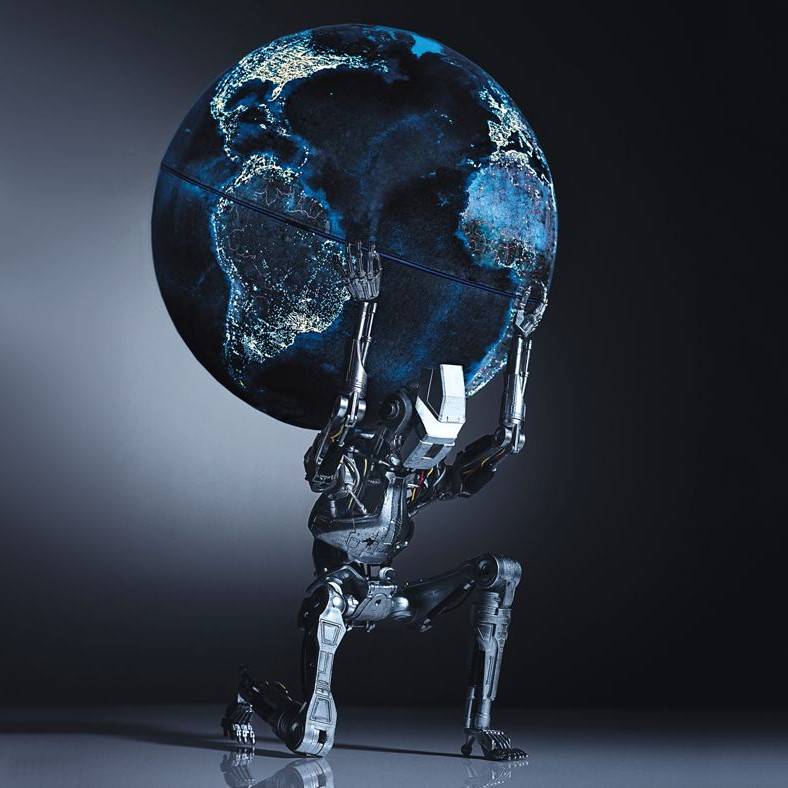 A report from researchers at Pearson, Nesta and the University of Oxford called The Future of Skills: Employment in 2030 claims that while the new era of robots, automation and artificial intelligence in the workplace will be disruptive, it will not spell the end of work and people need to develop new skills to meet its challenges. The study claims to take an entirely new approach to forecasting employment and skill demands in the US and UK. In contrast to many recent headlines, the study finds that many jobs today will still be in demand by 2030 and beyond. However, while jobs may remain, the skills needed for success are changing. The researchers combined diverse human expertise with active machine learning to produce a more nuanced view of future employment trends. Using this innovative approach, the study forecasts that only one in five workers are in occupations that face a high likelihood of decline.










December 13, 2017
The ups and downs of wearables for workplace health and wellbeing
by Lee Sadd • AI, Comment, Technology
Businesses in the 21st century have tried just about everything to improve productivity. For a long time, Google and its ilk were seen as model workplaces, with their open offices and abundance of ball pits and bean bags. Then the consensus shifted, and the cubicle or workstation was seen as the paradigm for employee concentration. Now the focus has shifted to technology, and the field of ‘wearables’. Devices like the Fitbit, Google Glass and Apple Watch have come and gone with significant consumer buzz, but relatively low uptake. What failed to impress consumers, however, may yet have a place in business. For better or ill, it seems the companies we work for are increasingly obsessed with collecting our data.
(more…)