


Search Results for: benefits

More than 600 people quit work to look after older and disabled relatives every day

More than 600 people quit work to look after older and disabled relatives every day

New research by Carers UK claims that 2.6 million have quit their job to care for a loved one who is older, disabled or seriously ill, with nearly half a million (468,000) leaving their job in the last two years alone – more than 600 people a day. This is a 12 per cent increase since Carers UK and YouGov polled the public in 2013. The findings also show that more people are caring than previously thought, with almost 5 million workers now juggling their paid job with caring – a dramatic rise compared with Census 2011 figures of 3 million.

(more…)

Amazon drops plans for HQ, judging others in the open plan, why people would rather electrocute themselves than sit and think and some other stuff

Why is it so hard to design a decent office space? demands this article in Quartz. It’s a fair enough question but probably the wrong one. It’s perfectly possible to design a decent (or adequate) office with a pen, paper and bag of presuppositions and many people have done exactly that. The real question is why it is so hard to design a good or excellent office.

(more…)

A sense of belonging is crucial factor for employee engagement

A sense of belonging is crucial factor for employee engagement

A sense of belonging is just as important an employee retention tool as good pay and benefits, a new academic paper has found.  In his paper Creating a committed workforce: Using social exchange and social identity to enhance psychological attachment within an ever-changing workplace, Dr Ali Fenwick of Nyenrode Business Universiteit, Breukelen, the Netherlands., argues that identifying with the team, leader, brand and organisation is paramount to workplace commitment as well as work performance. (more…)

Digital transformation requires more than just new technology

Digital transformation requires more than just new technology

Digital transformation has been a priority for businesses for many years, primarily to benefit from the opportunities presented by a mix of digital technologies and their impact across all aspects of society. Customer-facing functions such as sales, marketing and procurement, in their quest for new revenue sources and information-powered ecosystems of value, have led the way on digital transformation, while HR has historically taken a back seat. But in order for the entire organisation undergoing transformation to work together holistically, HR needs to take the lead and embed a digital DNA within the organisation.

(more…)

Lack of cohesion in many organisations on adoption of digital workplace

Lack of cohesion in many organisations on adoption of digital workplace

The majority of organisations (58 percent) do not have a have a clearly defined strategy in place when it comes to adopting and integrating digital workspace technology which suggests that implementing and making use of such technology is still being carried out in something of a haphazard manner. The findings of the research are summarised in SoftwareONE’s Building a Lean, Mean, Digital Machine report, which also claims that, despite the fact that almost all organisations (99 percent) employ some form of digital workspace technology, respondents have encountered a host of challenges when it comes to using them. These include higher security risks (cited by 47 percent) and a lack of employee knowledge in how best to use the solutions (45 percent).  (more…)

UK workers demand better remote working options, claims Airbnb report

UK workers demand better remote working options, claims Airbnb report

UK employers need to provide more flexible and remote working options in order to attract the best talent, according to new research released by Airbnb for Work. Airbnb’s Future of Work report, the first of its kind from the platform, has revealed that the modern trend of remote and flexible working shows no sign of slowing down, and companies embracing this change stand to make the best hires. Workers in the UK are demanding more flexibility than ever, with 77 percent of respondents – and 84 percent of Millennials – agreeing that companies need to provide more remote options to attract talent.

(more…)

Basic income experiment increased wellbeing but did not encourage people to find work

Basic income experiment increased wellbeing but did not encourage people to find work

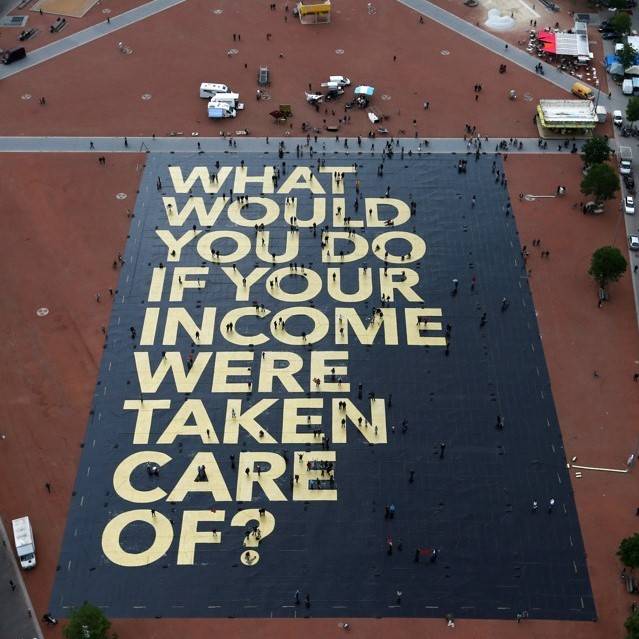
Giving jobless people in Finland a basic income for two years improved their self-perceived wellbeing but did not lead them to find work, researchers have concluded. In the trial, from January 2017 until December 2018, 2,000 unemployed Finns were paid a monthly flat amount of €560.  The aim was to see if a guaranteed payment would help people to find jobs and support them in taking on more insecure work. While employment levels did not improve, participants reported to the researchers that they felt happier and less stressed.

(more…)

A worthwhile workplace trends list, permanent beta, nudge nudge, think think and some other stuff

A worthwhile workplace trends list, permanent beta, nudge nudge, think think and some other stuff

If there’s just one thing that makes my heart sink more precipitously than the word ‘trends’, it’s when it’s preceded by the words Top and Ten. So it’s nice to have been surprised by this list of workplace trends that displays the wherewithal and insight to call on those people in the sector who might have something informed and interesting to say about where it all might be headed this year. Don’t be put off by the headline, even if you’re as jaded as I am.

(more…)

Staff wellbeing moves up the HR agenda and yes, includes the provision of free fruit

Staff wellbeing moves up the HR agenda and yes, includes the provision of free fruit

Employers have placed wellbeing high on their agenda in a bid to encourage employee engagement and reduce absence, claims new research from XpertHR. More than half of employers (54.4 percent) run informal employee wellbeing initiatives, while one-in-five (22 percent) has a formal programme in place. The majority of these formal employee wellbeing programmes (69.6 percent) have been in place for a year or more – demonstrating a high level of employer commitment but also that programmes have gained traction within organisations. (more…)

Finding the Goldilocks Point for collaborative workplace design

Finding the Goldilocks Point for collaborative workplace design

two people working togetherOne of the great paradoxes of modern life is the ever increasing likelihood of breakdowns in communication in a world in which we have more ways to talk to each other than ever before. This can play out in especially toxic ways in the wider world, but its effects in the workplace can also be problematic. Most importantly, what we often assume to be true about communication and collaboration may not be borne out by the facts and this in turn has implications for workplace design.

(more…)

Maybe the time has come to shoot the workplace messenger

Maybe the time has come to shoot the workplace messenger

I spent some time with Frank Duffy recently, releasing a stream of memories of working with him, first as an employee at DEGW during the 1980s, and then as a client while directing developer Stanhope’s research programme during the 1990s. Along with his long-term business partner, John Worthington, and thinkers including Franklin Becker, Gerald Davis, Michael Joroff and Jack Tanis, to name a few, Frank helped sketch out the grand scheme of what we now call ‘workplace’. Much of the work of their successors has involved filling in the matrix of detail within the grand scheme. But further reflection has caused me to ask whether, in filling in the finer details, we have recently somehow lost our way. Are we, the ‘workplace profession’, instead of standing on giants’ shoulders, now just pandering to fads and fancies? Or, even more radical, might it be that ‘workplace’ is now done, and that we’ve run out of meaningful things to say? (more…)

Employees want to achieve a healthy work-life balance this year

Employees want to achieve a healthy work-life balance this year

Employees want to achieve a healthy work-life balance this year

A new Acas study of the key issues for working lives in 2019 claims that the biggest issues for employers will be finding skilled workers (53 percent), productivity (36 percent) and technological change (36 percent). On a more personal level, the most important issues in employees’ working life will be balancing work and home life (53 percent), staying healthy and feeling well (51 percent) and job security (44 percent). The poll found that despite people wanting a more flexible working life, nearly half of workers (49 percent) believe that the use of gig workers will stay about the same in the year ahead.

(more…)