




Search Results for: climate

Are these this year’s ten most sustainable buildings in North America?

Are these this year’s ten most sustainable buildings in North America? 0

Bulliit Centre - sustainable buildingsThe American Institute of Architects (AIA) and its Committee on the Environment (COTE) have selected what they claim are the nation’s top ten examples of sustainable architecture and ecological design projects. The COTE Top Ten Awards program, now in its 19th year, claims to be the profession’s most rigorous recognition program for sustainable buildings. The program highlights projects that are the result of an “integrated approach to architecture, natural systems and technology … which make a positive contribution to their communities, improve comfort for building occupants and reduce environmental impacts through strategies such as reuse of existing structures, connection to transit systems, low-impact and regenerative site development, energy and water conservation, use of sustainable or renewable construction materials, and design that improves indoor air quality.”


(more…)

BREEAM consults on new scheme for refurbishment and fit-out projects

Newham CC new officesA draft of the part of the BREEAM sustainability assessment schemes which deals with refurbishment and fit-Out, has been published for consultation. Launched this week at MIPIM, the consultation will close on 10 April 2015. The draft document can be downloaded from the BREEAM website here. All interested parties, buildings owners and investors, designers, construction industry professionals, BREEAM assessors and other stakeholders are invited to send their comments to breeam@bre.co.uk with the subject: “Comments on draft BREEAM International RFO 2015”. The draft publication of of the scheme comes four months after the launch of the UK Refurbishment and Fit-Out 2014 scheme. BRE claims that this has been adapted for an international market to take account of a range of local and regional standards, conditions and climates.

(more…)

Bosses failing to tackle workplace bullying say staff

Employers failing to tackle workplace bullying, according to majority of staff The majority (91 percent) of staff polled on bullying at work say their employers do not deal adequately with the problem and over three quarters (78 percent) are reluctant to complain for fear of their job. According to charity Family Lives, the anxiety associated with workplace bullying greatly affects emotional health and wellbeing. Of the 1,500 workers it polled, 73 percent said the bullying was verbal, including threats, whereas 60 percent felt the bullying was social, including being excluded, ignored and isolated. Two thirds (66 percent) of respondents witnessed bullying at work with 43 percent stating they were bullied by their line manager, 38 percent bullied by a colleague and 20 percent bullied by SMT or CEO.

(more…)

Workers feel increasingly undervalued and over a third plan to move jobs this year

Workers feel increasingly undervalued and over a third plan to move jobs this yearThere’s been a dramatic increase in the number of workers planning to move jobs. According to the latest research by the Institute of Leadership & Management (ILM), 37 per cent of workers are planning to leave their current jobs in 2015 – compared to 19 per cent in 2014 and 13 per cent in 2013. Of those who left their jobs in 2014, 35 per cent cited greater opportunity for progression as their main motivation for seeking a new role – compared to only 12 per cent who sought a higher salary. In 2015, that has increased to 59 per cent, meaning increased opportunity is a number one priority; beating a better salary (56%), a more interesting role (50%) and better management (30%). Staff are also feeling increasingly undervalued by their managers. 25 per cent of those planning to leave said they felt unappreciated in their current role, almost 10 per cent more than last year (16%). (more…)

Green manifesto challenges next government to deliver low-carbon economy

Alliance issues green manifesto for the next governmentOn the eve of the Autumn Statement, an influential business-led coalition of businesses, NGOs, industry associations and cross-party politicians has called on the next Parliament to tackle a range of environmental challenges affecting the UK economy and the built environment. The Aldersgate Group Manifesto identifies six target areas it says the next government must meet to build a growing, sustainable and resilient UK economy. It must accelerate the move to a competitive low carbon economy; prioritise energy and resource efficiency; improve our understanding and the state of our natural capital; equip the UK’s workforce with the right skills to benefit from the opportunities offered by the transition to a sustainable economy; increase financial flows towards low carbon and other environmental projects; and ensure the UK continues to benefit from progressive European environmental standards whatever the UK’s future relationship with the EU. (more…)

London Mayor names Business Energy Challenge Gold award winners

ExCelLondon mayor Boris Johnson has presented RICS, JLL, EC Harris LLP, ExCeL London (above), Intu, and Linklaters LLP, with Gold awards at the Business Energy Challenge awards, which celebrate private sector businesses that have made the biggest cuts to their energy consumption and use cleaner, greener sources of energy. Fifty-nine participants had submitted data over a six week period and were assessed on the carbon intensity per square metre of their properties; with 27 of the most successful being given a Bronze, Silver or Gold award to recognise their efforts when compared against their baseline 2010/11 energy usage. Around 75 per cent of London’s carbon dioxide (CO2) emissions come from buildings, with workplaces accounting for 42 per cent of total emissions. With 80 per cent of London’s buildings likely still to be operational in 50 years’ time and with much of that estate being energy inefficient the Mayor has set out a building retrofit programme. The Business Energy Challenge aims to challenge the commercial sector to take action and improve its energy efficiency to help save on operational costs. (more…)

Five ways BYOD policies are changing the role of IT in the workplace

BYODIf you’ve ever considered adopting a Bring Your Own Device (BYOD) policy you probably know all about its potential benefits. It lets team members work on devices they’re comfortable with. It makes work more convenient. In some cases, it can lower your technology costs. None of these ideas are new, and indeed, much has already been said about how BYOD might impact the end user. But there’s another side of the BYOD story. The other, perhaps more dramatic way that a new policy can change the workplace is through your IT employees and infrastructure. Lots of times, companies tend to underestimate the big internal shifts that precede policy changes—but planning for these shifts is a major part of developing a cohesive strategy. If you’ve already made up your mind and are ready to adopt a BYOD policy, then you should also be ready to encounter some new and unexpected variables. What role will your IT be play under this policy? What kinds of cultural challenges should you begin to expect? How will you adjust? By preparing for new obstacles and expectations, you can create an effective, adaptive BYOD game plan. Here are some of the most important things you should prepare for as you move forward with your BYOD policy.

(more…)

EU institutions are not implementing their own green building policies

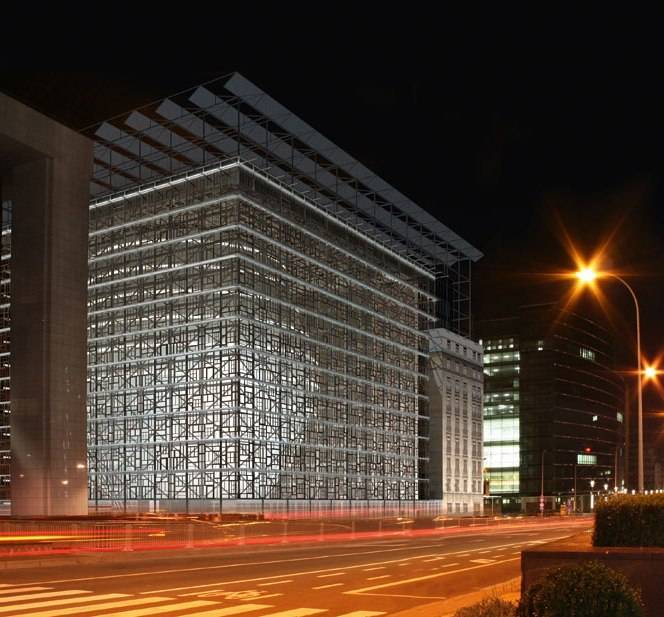
Green building at the EUAccording to a report on EU news site euractiv.com, the various institutions of the European Union have been ‘unambitious’ in terms of delivering energy efficiency as part of their own buildings strategies. That is the key finding of a new study from the European Court of Auditors. which claims that green building standards and initiatives developed and promoted by the EU are not consistently employed for new buildings or as part of major renovation projects carried out by bodies such as the European Commission, European Parliament, EU Council and other institutions. The special report reveals shortcomings in the approach of these bodies, calls on the EU Commission to propose a common policy for reducing the carbon footprint of EU institutions and bodies and proposes the setting of an overall reduction target for greenhouse gas emissions by the year 2030. The report claims that it is through the design processes of a new building, or for a major renovation, that the greatest impact can be made on its energy performance and this should be the focus of its proposed new approach.

(more…)

New BREEAM environmental standard launched for UK office refurbishment and fit-outs

Office refurbishmentThe Building Research Establishment (BRE) has launched the latest addition to its flagship sustainability accreditation scheme. Launched fully at MIPIM UK, the Building Research Establishment Environmental Assessment Method (BREEAM) Refurbishment and Fit-Out 2014 standard has been in development for around  two years, a period which has included consultations with some of the UK’s largest commercial property occupiers, end users as well as a full assessment of a pilot project at BRE’s base near Watford. It joins existing BREEAM standards as a way of assessing the sustainability of office refurbishment and fit-out projects in the UK and overseas. The standards were tested on a simulated refurbishment project at the BRE site and achieved, in the words of the organisation,  “significant savings as well as many other positive learning outcomes”. Firms which took part in the two year development and consultation period included Lloyds, Boots, Legal & General and The Green Investment Bank.

(more…)

EU’s targeted 2030 greenhouse gas cuts receive lukewarm welcome from industry

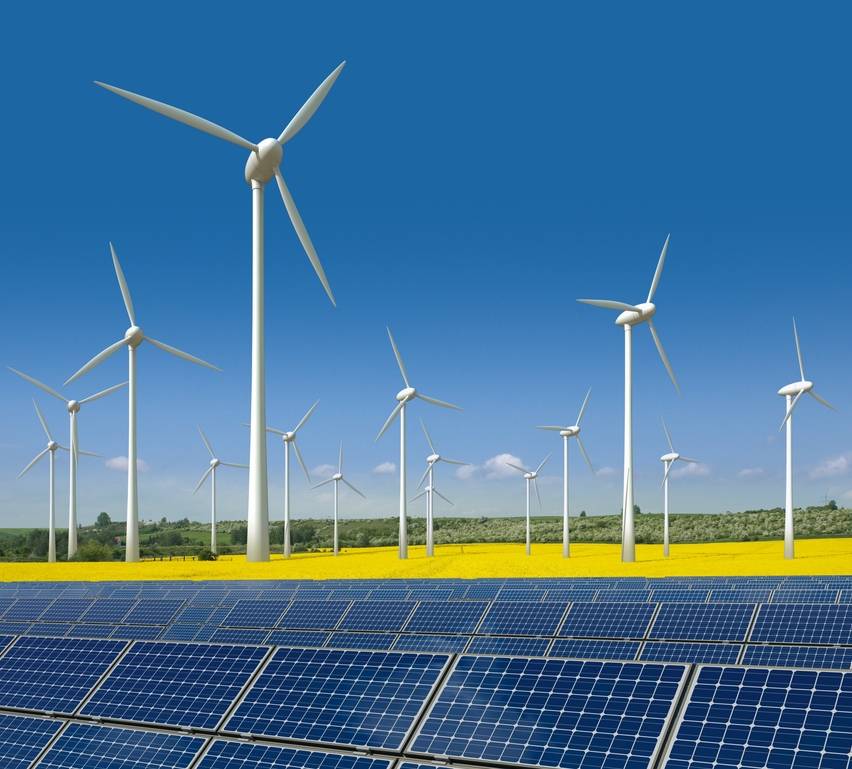
greenhouse gas renewable energyThe states of the European Union (EU) have reached an agreement to cut greenhouse gas emissions by 40 percent by 2030, compared with 1990 levels. The EU says it aims to meet the new target in the most cost-effective ways possible. The EU has also set itself the target of generating 27 percent of energy from renewable sources over the same period. The new target is set to remain independent of any more ambitious cuts set by individual member states suggesting that the EU sees the new targets as being a minimum ambition. The new targets will also take account of the EU’s internal energy markets and the degree of integration of members states. The EU, in its announcement, claims that the market for renewable energy is dependent on a well integrated internal energy market, co-ordinated at regional level. The new announcement has been broadly welcomed by industry sources albeit with some significant caveats.

(more…)

Five sectors, one challenge: The importance of high staff morale

Five sectors, one challenge: The impact of high staff moraleEver since the 2008 recession, the economy has been in flux, affecting both small businesses and corporate giants. Yet, despite the uncertain economic climate, many start-up business ventures have not been phased by the challenges it brings. We recently conducted a survey to find out what the biggest challenges small businesses expected to face over the coming year. The survey revealed some interesting results, and led to the creation of five whitepapers suggesting some possible solutions as to how they might consider investing both their time and money to overcome these challenges. Across the five industries taking part in our survey (Health and Fitness, Finance, Technology, Retail and Travel), one of the most prominent challenges faced by SMEs was regarding staffing. Ultimately, each staffing issue related back to keeping employee morale high and, therefore, boosting productivity. (more…)

Corporate social reponsibility remains a vital part of the business armoury

Corporate Social responsibilityThere is now an unstoppable energy for radical change in the way that companies of all sizes conduct their Corporate Social Responsibility duties. There are compelling economic and social reasons for companies to construct new ways of thinking and practice around CSR that go way beyond just doing something worthy or nice, from building effective partnerships to attracting top employees. Some companies prefer terms like ‘corporate responsibility’, ‘corporate conscience’, ‘corporate citizenship’, ‘social performance’, ‘sustainability’ or even ‘future-proofing’ over CSR. But the core CSR principles are that a business voluntarily commits to embracing responsibility for its actions and to impacting positively on the environment, on society and on consumers, employees and other stakeholders. (more…)