








July 21, 2016
A quarter of workers would turn down higher wages to get work perks 0
 A quarter (25 percent) of British workers would be willing to accept a lower salary in return for better ‘work perks’ a new survey claims. Employment bonuses, such as flexible working, a company car or free food have become increasingly popular over the last few years, which explains why 55 percent of UK workplaces already offer work perks, the survey suggests. Workers in Wales are most likely to accept a lower salary with almost a third saying they would accept a position for less money if it had better perks. The survey was commissioned by Printerland.co.uk to explore attitude towards benefits, asking 2,000 workers about the kind of perks they already receive and which bonuses they wish they had. The research claims that the most common perks offered are flexible working (51 percent), financial bonuses (50 percent), free food (32 percent), company phones and tablets (21 percent) and company cars (11 percent).

 Office politics is the one thing many young people are least prepared for when starting their first job, according to a new study by the Co-op. The study comes as many them are about to enter the workforce for the first time. With more young people opting for the world of work in the form of apprenticeships and on the job training rather than higher education, the members of ‘Generation Y’ often find they are unprepared for these softer skills needed to get on in the office according to the poll of 1,100 16-25 year olds. Over half of young people (54 percent) said that they were not prepared or informed about office politics. The study is part of the Co-op’s campaign to champion young people in the workplace by taking a closer look at what motivates 16-25 year olds. The research suggests that young people could find it harder to express opinion and ideas in the workplace, which in turn could lead them to feel isolated and unsupported.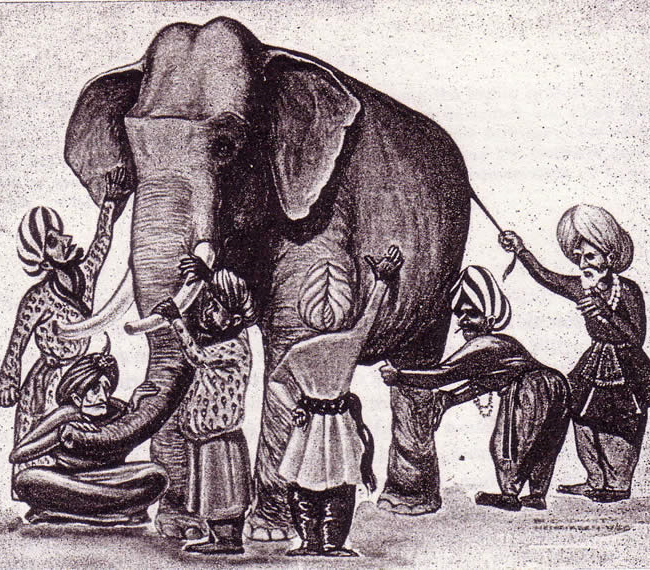
 There is an ancient Asian parable which has found its way into a number of cultures including Hindu and Buddhist lore. In one version, the Buddha tells of a king who has nine blind men summoned to his palace. An elephant is brought in and they are asked to describe it. Each man feels a different part of the elephant and describes it to the king. In turn they tell him it is a pot (the man who feels the head), a winnowing basket (ear), a ploughshare (tusk), a plough (trunk), a granary (body), a pillar (foot), a mortar (back), a pestle (tail) or a brush (tip of the tail). They disagree violently with each other to the amusement of the king, and the Buddha surmises that ‘in their ignorance they are by nature quarrelsome, wrangling, and disputatious, each maintaining reality is thus and thus.’ Around 2,500 years later, groups of people continue to describe big things solely based on the bits with which they come into contact and bicker with others who are close to other bits.


 The overwhelming majority of UK employees (81 percent) are working beyond their contracted hours, claims a report from recruitment firm
















July 22, 2016
The people centric urge to personalise space helps firms to engage employees 0
by Paul Goodchild • Case studies, Comment, Wellbeing, Workplace design
(more…)