






Search Results for: employer

‘Barrier Bosses’ preventing progress in gender equality despite wide support

‘Barrier Bosses’ preventing progress in gender equality despite wide support 0

Female equalityMore men than women believe that equality between the sexes would be better for the UK economy and themselves. Yet despite finding a clear desire for equality, the forthcoming ‘Sex Equality – State of the Nation’ report by the Fawcett Society reveals that there are still significant barriers to progress that need to be overcome. Overall men are more likely to support equality of opportunity for women than women, with 86 percent of men wanting this for women in their lives, compared to 81 percent of women wanting it for themselves. But the survey identified two major barriers to progress – firstly a small but powerful group of ‘barrier bosses’ responsible for recruitment decisions, and secondly the fact that most people believe that men at the top won’t voluntarily move over for women. This year the Government plans to implement Section 78 of the 2010 Equality Act which will require all employers of over 250 people to publish their gender pay gap.


(more…)

Third of employees did not feel motivated or engaged at work last year

Third of employees did not feel motivated or engaged at work last year 0

Demotivated staffJust over a third (34 percent) of UK employees could not name a single occasion that motivated them at work last year, new research claims. The ‘Employee motivation: Who came out on top in 2015?’ report suggests that despite a quarter (24 percent) of staff saying ‘yes’ they felt motivated at work in 2015, nearly half of the UK workforce collectively felt neutral or negative feelings towards their job over the course of the whole year. The survey was commissioned by Red Letter Days for Business, to explore one of the building blocks affecting the low engagement and productivity rates in the UK – employee motivation. It found that 25-34 year olds were the most motivated at work last year, as this age group are likely to be working their way up the career ladder. And unsurprisingly, when asked what would be most likely to motivate them at work, nearly half of respondents, whatever the age, suggested a good work/life balance.

(more…)

Workplace bullying, pay, and productivity key workplace trends in 2016

Workplace bullying, pay, and productivity key workplace trends in 2016 0

Future ProductivityAcas has published its Workplace Trends 2016 report, which identifies workplace bullying, pay, the new trade union bill and productivity as key trends that will have an impact on employment relations in 2016. In this report, thought-leaders discuss leadership, improving productivity, the art of communication, giving voice to a better way of working, encouraging positive behaviours in tackling bullying at work and the psychology of productivity. Writing in the report, Acas Chair Sir Brendan Barber says that productivity is a real concern for the UK economy. He warns if we were able to match the productivity of the US then this would equate to around £21,000 per annum for every household in the UK, making it an issue that will remain high on the agenda in 2016. The report also features commentary from Steve Elliott, Chief Executive of the Chemical Industries Association, Dr Makani Purva, Anti-Bullying Tsar at Hull NHS Trust and Frances O’Grady, General Secretary of the TUC.

(more…)

Lack of childcare common reason for staff absences in small businesses

Lack of childcare common reason for staff absences in small businesses 0

Office worker with sick childA new survey has found that a lack of childcare is a common reason for employee absence amongst SME employers, many of whom remain none the wiser as their absent member of staff prefers to ring in sick. The survey of 500 UK SME employees conducted by digital group risk insurer Ellipse, found that 22 percent have had to take a day off to look after their sick child, even when they are well themselves. It comes as the top reason for UK employees calling in sick with a further 6 per cent admitting to taking a day off to care for an elderly relative. With 24 per cent of employees believing that their employer doesn’t know about every sick day they’d taken, this suggests that employers are likely to be missing absence traits. This hypothesis is supported by a separate Ellipse survey of 250 SME managers, where 32 percent of employers admitted they don’t have a good enough process for recording absence.

(more…)

Seven essential workplace design trends to keep an eye on during 2016

Seven essential workplace design trends to keep an eye on during 2016 0

Workplace design trendsWhat has become increasingly apparent over recent years is that the office isn’t just a place to work, but also a driver of competitive advantage. We’ve always known this to a greater or lesser extent, but the dynamic and ever shifting nature of the modern world is presenting organisations with new and evolving challenges that they must address with all of the tools at their disposal. At the heart of this complexity is the physical workspace. Its design touches on every aspect of the changing workplace and the objectives organisations set for themselves and their employees. Although it has lots its primacy as the main place of work, you could also argue that the focus on the office’s key strengths makes it more important than ever within the context of overall working cultures. So, with that in mind, here are ten of the most important current trends in workplace design and management we foresee for 2016.

(more…)

Agile working is increasingly popular way to reduce London office costs

Agile working is increasingly popular way to reduce London office costs 0

London M25Rent, rates and service charges for office space in established Greater London office locations such as Croydon, Brentford and Uxbridge are typically over 50 percent lower than the cost of equivalent space in Central London locations such as Victoria, Marylebone, St Paul’s, Liverpool Street and Canary Wharf, Carter Jonas’ latest research claims. Increases in rents and business rates costs over the last five years, and the erosion of the stock of office buildings in some areas of Central London, as a consequence of redevelopment to higher value residential uses is reducing tenant choice and these factors are leading some occupiers to adopt new strategies to reduce their property footprint. Agile working and hot-desking are becoming popular ways to reduce the amount of space required to accommodate an organisation’s business operations the Tenant Advisory and Research Teams at Carter Jonas have found.

(more…)

When performance management really can produce positive results

When performance management really can produce positive results 0

Performance management examplesPerformance management processes have come under regular fire for being ineffective, time consuming, and quite frankly not fit for purpose. And it’s no surprise to discover exactly why employers are so justifiably disappointed in outdated performance management processes. Recent research from Towers Watson demonstrated that only 36 percent of companies consider their performance management process to be valuable, and some companies have even decided to scrap performance management altogether. While many of us don’t disagree that as a whole performance management processes aren’t producing the results that they should be, that doesn’t mean companies should be eliminating performance management from their organisation altogether. Instead, companies need to take steps to find a performance management process that gets positive results.

(more…)

Australia needs to do more to tackle the problems of mental health at work

Australia needs to do more to tackle the problems of mental health at work 0

Mental health and workOne in five Australians suffer from a mental health  disorder and employers need to do more to tackle the related issues. That is the central claim made in a new OECD report called Mental Health and Work: Australia. The study claims that mental health issues cost the Australian economy AUD 28.6 billion per year, equivalent to 2.2 percent of GDP. Adding indirect costs, such as productivity loss or sickness absence, nearly doubles that amount. The report is the ninth in a series of reports looking at how education, health, social and labour market policy challenges identified in a 2012 report called Sick on the Job? Myths and Realities about Mental Health and Work are being tackled in OECD countries. The report suggest that while Australia’s recent mental health reform is an important and helpful development, the country ‘needs to do more to help people with mild to moderate mental health issues at and into work’.

(more…)

Glassdoor announces lists of the best places to work for 2016

Glassdoor announces lists of the best places to work for 2016 0

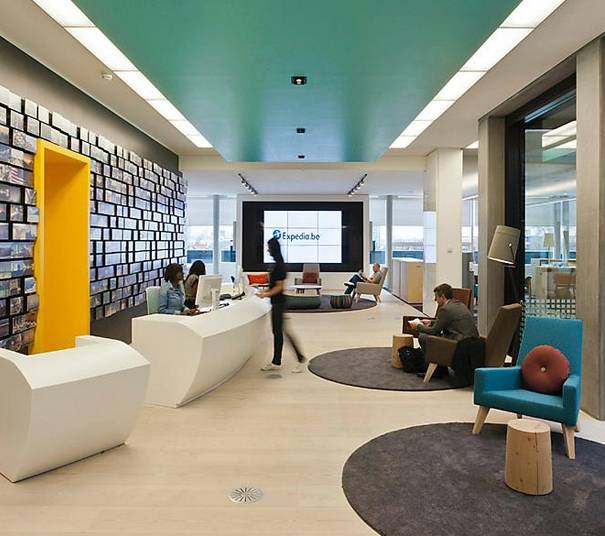
expedia_3077041kJob site Glassdoor has announced the winners of its annual Employees’ Choice Awards, honouring the best places to work across Europe and North America. The Awards are based on the input of employees who provide anonymous feedback by completing a company review about their job, work environment and employer. This year, Glassdoor has expanded the awards programme to include six categories, highlighting the Best Places to Work across the UK, France, Germany, US and Canada. This is the second time Glassdoor has identified the best places to work in the UK and the first time in both France and Germany. Winners are ranked based on their overall rating achieved during the past year based on a five point scale. According to Glassdoor, the top five UK Best Places to Work in 2016 are, in order: Expedia (average 4.4 rating), Hays Plc (4.4 rating), AKQA (4.2 rating), GE (4.2 rating), Schuh (4.1 rating).

(more…)

Generation Z imagines its future workplace design, pods and all

Generation Z imagines its future workplace design, pods and all 0

Research by Leesman Index (among others) shows how the design of learning environments influences a student’s choice of university. This thinking now also applies to offices, with the commercial office design sector creating the kind of facilities available on the modern university campus. A new workshop organised by furniture brand HÅG has discovered how Generation Z imagines its future workplace. For example, in the same way that a college library offers collaborative and silent spaces; the young people in the workshop didn’t share the current trend of shared workspaces but wanted a mix of collaborative areas combined with isolated working pods that they could customise for their own requirements and mood. However, Gen Z goes further than ever, in blurring the boundaries between home and work, with a great deal more emphasis on wellbeing and areas to relax compared to previous generations.

(more…)

Six human resources costs you might avoid by choosing the right office

Six human resources costs you might avoid by choosing the right office 0

1573_24-04-2015_8503According to a report from Colliers International, the majority of commercial office space in Australia and New Zealand is occupied by government departments and firms working in the business services, finance and insurance sectors. Other than government and the Not for Profit (NFP) sector, a prime motivation for every CEO, business owner and manager is the search for increased profitability. In most instances, a business has three pathways to increasing profitability. The first is through increasing turnover or sales (assuming the cost base remains equitable), the second is through reducing costs, and the third is by improving productivity. I have previously written quite a lot about the relationship between office space and productivity increases, but this article will explore one of the most insidious elements associated with any businesses cost base (including government) and that is staff turnover.

(more…)

Linear equations are no longer enough to determine the size of offices

In 2013, the US Census Bureau announced that the official human population of the Earth had exceeded 7 billion for the first time. This provoked people to raise concerns that were couched in Malthusian pessimism. Although people might have assumed we’d left behind this kind of flawed thinking, there is obviously something appealing about the idea that exponential population growth is unsustainable when resources increase only in arithmetical terms. We’ve got a problem but what we should have learned in the two centuries since Thomas Malthus first popularised the idea is that there are complex factors that can influence the resources we need to survive, not least in terms of greater efficiency in the way we produce them. A similar debate is also apparent in the way in which the commercial property market is able to offer the right sort of buildings for modern organisations.

(more…)