




Search Results for: human resources

Report identifies the challenges and opportunities of workplace wellbeing

workplace wellbeingMuch of what has been called workplace strategy in recent years has been more about cutting costs than supporting people, often to the detriment of the latter. That is the central claim of a new report authored by Kate Lister and Tom Harnish of Global Workplace Analytics and sponsored by office furniture maker Knoll. The paper, What’s Good for People? Moving from Wellness to Well-Being, explores how better workplaces, processes and practices can improve workplace wellbeing, employee engagement and organisational performance. The study starts from the premise that people are dealing with unprecedented stresses and pressures in the workplace which now need to be addressed in the context of a recovering economy, the limits of an approach that focuses on doing more with less and an increasingly scant pool of human resources and talents.


(more…)

Discrimination concerns inhibit LGBT people from being ‘out’ at work

Discrimination concerns inhibit LGBT people from being out at work

LGBT (lesbian, gay, bisexual and transgender) people are worried about harassment from colleagues or being passed over for promotion if they come out at work; and while two thirds of people are out at work in the Netherlands less than half are prepared to divulge their sexual orientation at work in the UK. These are the initial findings in a global study to prove the importance of implementing effective policies to support LGBT people at work. “LGBT Diversity: Show Me The Business Case” by business consulting firm Out Now measures the financial savings companies can make by encouraging people to be open at work about their sexual orientation or gender diversity. The report is drawn from an analysis of Out Now’s LGBT2020, a global research initiative involving more than 100,000 LGBT people worldwide.

(more…)

New report offers occasionally surprising vision of the future of work

Future of WorkA new report into the future of work from Cisco claims –unsurprisingly – that employers are shifting their workplace policies to accommodate new demands from employees for more flexible working styles, regardless of their demographic cluster. The 2014 Cisco Connected World Technology Report also also claims that the majority of both Generation X and Y professionals already believe that smartphones and wearable devices will be the workforce’s most important communication devices by 2020 – while the laptop will maintain its place as the workplace device of choice. These devices and their attendant software and apps will drive the uptake of flexible working although sixty percent of respondents to the survey still prefer to take notes using a pen and paper. Two of the most intriguing findings of the report are that while just over half of Gen Y professionals think they are more efficient than older workers (roughly in line with the perceptions of older workers themselves) this is way out of step with the impression HR professionals, and the majority of people still believe that the future of work still lies in the office, at least some of the time.

(more…)

We may not know what the future holds, but we can certainly be prepared for it

unknown-futureGiven the track record of people when it comes to making predictions about the future, it’s easy to grow cynical, especially when it involves a profession as subject to the vagaries of technological and cultural change as facilities management. But while we should be wary of more fanciful and long term thinking, any natural scepticism shouldn’t blind us to those predictions that we know will largely come true, especially those based on what we know is happening already. For example, recent research carried out by Cass Business School and Henley Business School and presented in the book Future Work: How Businesses Can Adapt and Thrive in the New World of Work found that two-thirds of managers believe there would be a revolution in working practices over the coming ten years. Given what we’ve seen over the past ten years, it’s impossible to argue any different. In fact the only quibble we should have with this is that it won’t take another ten years for this to happen because the process is already well underway.

(more…)

Flexible work could dissuade the one in three workers that pull a sickie

One in three British workers admit to having pulled a ‘sickie’ – according to new research by PwC – and it’s costing UK business £9bn a year. As part of the research PwC surveyed over 2,000 UK adults and found that the most popular reasons for why people pulled a ‘sickie’ are hangovers (32%), to watch a sporting event (8%), being bored with your job (26%), interviews (26%) and Mondays (11%). One in 10 people said they have lied to take time off work due to good weather. A flexible working approach by employers is the measure that would most likely put people off from pulling a ‘sickie’, followed by initiatives such as ‘duvet mornings’ (where employees are allowed to take a couple of last minute lie ins a year). One in ten employees said that having to report the reason for their absence over the phone to their manager would put them off lying.Illness is by far the most common excuse used, but the research has revealed that some employees go to very creative lengths to cover up why they are taking off unauthorised time from work, including I was attacked by ants, my dog has eaten my keys, I got a rash from eating too many strawberries, and a male employee who told his boss that he had started the menopause.

(more…)

IT and HR failing to work together to tackle computer data risks

IT and HR failing to work together to tackle computer data risks The inability of employees to follow computer access policies is the greatest threat to an organization’s data security, just slightly ahead of professional hackers. Yet, as a new report reveals, the majority of IT managers still believe it is ‘easy’ to protect their organisation’s security and defences against a data breach. The research, commissioned by Courion, found that 43 percent of respondents felt they could have better relations with Human Resources in managing staff access rights, with a majority (59 percent) not feeling confident they had enough help to make dealing with insider threats easier.  This follows a recent separate study into staff attitudes to IT security that found staff could be ambivalent about how they use their access rights – for example, 39 percent share work login details with colleagues and 1 in 5 of UK professionals said they would snoop on sensitive personal data if they had access to it.

(more…)

HR has the most ‘can’t do’ attitude in the workplace finds poll

HR least helpfulHuman resources people are obstructive and most likely to reject reasonable requests in the workplace, finds a new poll. Almost 18 per cent of individuals polled by conference call provider Powwownow voted the HR department as the most difficult to work with; almost double that of Finance/Accounting, the next most maligned department.Why some members of staff are so uncooperative was interpreted by respondents as due to illusions of grandeur (68%), attempts to retain power and hold others back (67%) and confusion/lack of training/lack of confidence (40%). Unhelpfulness does not go unpunished it seems as the majority of respondents (53%) thought that unproductive or obstructive employees are more prone to bullying in the workplace. Those who encounter such unhelpfulness admitted to being driven to consider screaming out of sheer frustration (40%) or even seek new employment (36%) rather than speaking with their superior (30%) about an obstructive colleague. (more…)

Architects should accept that other people do have a right to an opinion

All professions tend to wallow in a mire of their own existential angst, perpetually complaining that they are misunderstood, undervalued and misrepresented. But any members of the human resources, facilities management or other professions which come across as habitually concerned about their role, public image, direction or esteem in which they are held might want to contrast their situation with that of the UK’s architects. This is a profession that wrestles not only with the common professional gripes, but also with what it perceives as a fall from public grace coupled with falling fees and complete disdain for what muggles – non-architectural folk – think. And all in a country in which literally anybody is allowed to design buildings.

(more…)

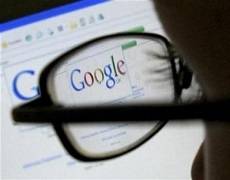
Google is a better source of information than HR team, say line managers

Google is a better source of information than HR team say line managers

The image of the cosy Personnel Manager, part mentor part counsellor, has little in common with the reality of the modern Human Resources professional, steering the organisation through the upheavals of a prolonged recession and engaged in strategic thinking, such as big data. In many ways the professionalisation of HR, which (unlike FM) has achieved Chartered Status, is an encouraging sign that organisations understand the importance of their most important assets – the people. However, the rise of the HR professional has also created barriers between them and line managers. A lack of openness and slow response to queries from HR is driving line managers to Google the answers rather than wait for their increasingly preoccupied HR colleagues to respond. (more…)

Economic recovery, the changing psychological contract and the future of the office

display_img_01There has always been a link of one sort or another between the labour market and office design. So, as the UK’s unemployment statistics continue to fall, they remain moderately high and there continue to be structural changes in the nature of work, typified by this year’s debate about the growing use of zero hours contracts. You have to wonder what impact structural changes,  levels of unemployment and redundancy (around 4 million in the UK since 2008) have had on the way we manage and design our workplaces. There is no doubt that the downturn combined with the structural changes in the way we work have had an effect on demand for commercial property, but what will it all mean in the longer term?

(more…)

Worldwide space standards moving closer to UK norm, claims new report

ShrinkingWorldwide office space standards are now moving closer to the norm seen in the UK according to a new survey from CoreNet Global. According to the CoreNet survey of real estate managers, the average amount of space per office worker globally has dropped to 150 sq. ft (14 sq.m.) , from 225 sq. ft. (21 sq.m.). This is still well outside the standards from the British Council for Offices Specification Guide which reported a fall to 11.8 sq. m. in 2009 and which will be revised downwards even further with the publication of the new guide which has been promised soon.  Even this figure might be seen as high and makes assumptions about the relevance of such space standards given the way some firms now work.

(more…)

Predicting the future of the office means looking at what is happening now

display_img_01Futurology is notoriously a mug’s game. Especially when it comes to making predictions about technology. Just ask Ken Olson, the founder of DEC who in 1977 pronounced that ‘there is no reason anyone would want a computer in their home’. Or Bill Gates himself who once claimed that Microsoft ‘will never make a 32 bit operating system’. Most recently Steve Ballmer, a billionaire executive said in 2007 ‘there’s no chance that the iPhone is going to get any significant market share.’ But mone of these retrosepctively viewed dodgy predictions should make us blind to those that we know will certainly come true, especially those based on what we know is happening in the present.

(more…)