Search Results for: media

Aping our robot overlords, Instagrammable buildings and some other stuff

Aping our robot overlords, Instagrammable buildings and some other stuff

What happens to people when their skills become obsolete? If you’re not asking yourself this question already, you probably should. A new study from researchers at MIT and Wharton is the basis for this piece in Quartz at Work which considers the implications for what looks like a small technological change and its consequences for a large number of people who had to reset what they offered employers. (more…)



Escaping the hell of hot desking

Escaping the hell of hot desking

The hell of hot deskingHot-desking is a scourge on modern work. That’s the only conclusion you will draw by reading ‘The hidden hell of hot-desking is much worse than you think’ (published in the FT on 28 July 2019) and dozens more like it that continue to appear in national media and top business titles. The piece contends that organisations are using the guise of agile working to excuse their cost-saving prerogative. In reality it is a penny-pinching ploy that “strips people of their own desk and casts them out to the noisy, chaotic wasteland of shared work spots,” or so we’re told. (more…)

The role of gamification in workplace creativity

The role of gamification in workplace creativity

<img src="https://counter.theconversation.com/content/122852/count.gif?distributor=republish-lightbox-advanced" alt="The Conversation" width="1" height="1" style="border: none !important; box-shadow: none !important; margin: 0 !important; max-height: 1px !important; max-width: 1px !important; min-height: 1px !important; min-width: 1px !important; opacity: 0 !important; outline: none !important; padding: 0 !important; text-shadow: none !important" />Coming up with a good creative idea is hard. We do not fully understand how this process works, but there are certain techniques that have proved successful in fostering creativity, such as mind-mapping, brainstorming or creating conditions for free experimentation. Many big companies (such as design agencies) embrace these practices in the way they work. (more…)

Wellbeing depends on workplace basics more than trivial features

Wellbeing depends on workplace basics more than trivial features

Workplace design and wellbeingA new report supports the idea that when it comes to the workplace and the effect it has on personal wellbeing and productivity, employees want the basics first. According to the Workplace Wellness Study published by Future Workplace, a New York-based research firm, and office technology provider View, the most highly prized features of an office are good air quality, access to natural light, and an ability to personalise immediate workspace. (more…)

Workplace jargon should be banned and replaced

Workplace jargon should be banned and replaced

A new survey claims to show the extent to which British workers hate workplace jargon and identifies the words and phrases that they would most like to bin and replace with normal English. The survey from ANNA claims that almost three quarters (73 percent) of workers want to see the term ‘annual leave’ dumped – and named once more as ‘holiday’. (more…)

Back to workplace basics, the joy and pain of work, squeezing people in and some other stuff

Back to workplace basics, the joy and pain of work, squeezing people in and some other stuff

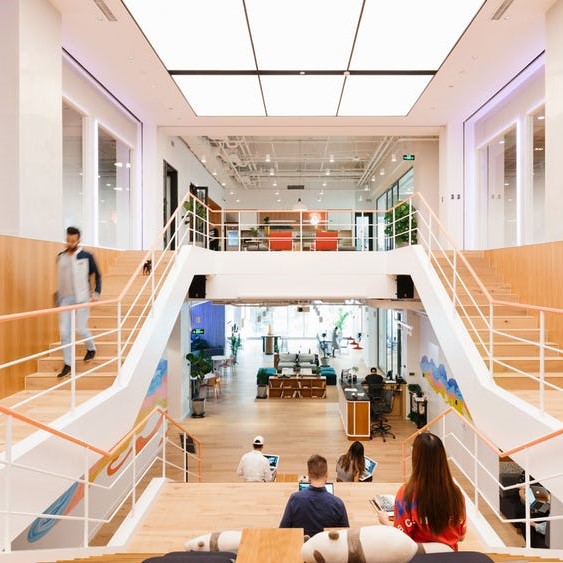
A coworking workplace in Chengdu by WeWorkLet’s get the inevitable WeWork story out of the way first. A supposed news item in Crain’s New York Business has claimed that WeWork is ‘squeezing’ people into half the space recommended in the BCO’s Specification Guide; “roughly the size of two standard doors laying side by side”. You can see the editorial cogs at work here, combining a story about WeWork with one about how people are crammed into the workplace like cattle these days.

(more…)

Spotting the best features of recruitment websites

Spotting the best features of recruitment websites

The job market can be competitive, even when the UK is experiencing all-time unemployment lows. In fact, the UK’s unemployment rate hasn’t been this good since the mid 1970s. This doesn’t mean that those in search of a job should ease off. There are now more ways than ever before to look for and apply for jobs. The days of searching for jobs on community notice boards are long gone and now we have an agglomeration of job search websites at our disposal. (more…)

A grey tsunami, three goldfish, the red pill of coworking and some other colourful stuff

A grey tsunami, three goldfish, the red pill of coworking and some other colourful stuff

A right leaning think tank’s suggestion that the UK should set a new retirement age of 75 and introduce a range of measures to extend people’s working lives to boost the economy and improve people’s wellbeing sparked an inevitable paroxysm of rage. Immediately followed by an equally inevitable and furious level of what passes for debate these days. A stramash the Scottish would call it. (more…)

London is the most productive region in the UK

London is the most productive region in the UK

London is the most productive region in the UK, followed by the South East and Scotland according to new research from the the University of Durham Business School. Economists Professor Richard Harris and Professor John Moffat conducted the research and also found that the least productive region was Wales, with London having productivity levels over double the amount of Wales. London receives between twice and three times as much per capita funding for transport than any other region. (more…)

Office design has a role to play in reflecting neurological differences

Office design has a role to play in reflecting neurological differences

office design and neurodiversityIn recent years, we have seen a growing civil rights movement focused on change in the workplace and in terms of office design, revolving around differences in brain function. Advocates for neurodiversity say that it’s just as critical to business success as gender or racial diversity in the labour force. (more…)

The endless hunt for the office of the future

The endless hunt for the office of the future 0

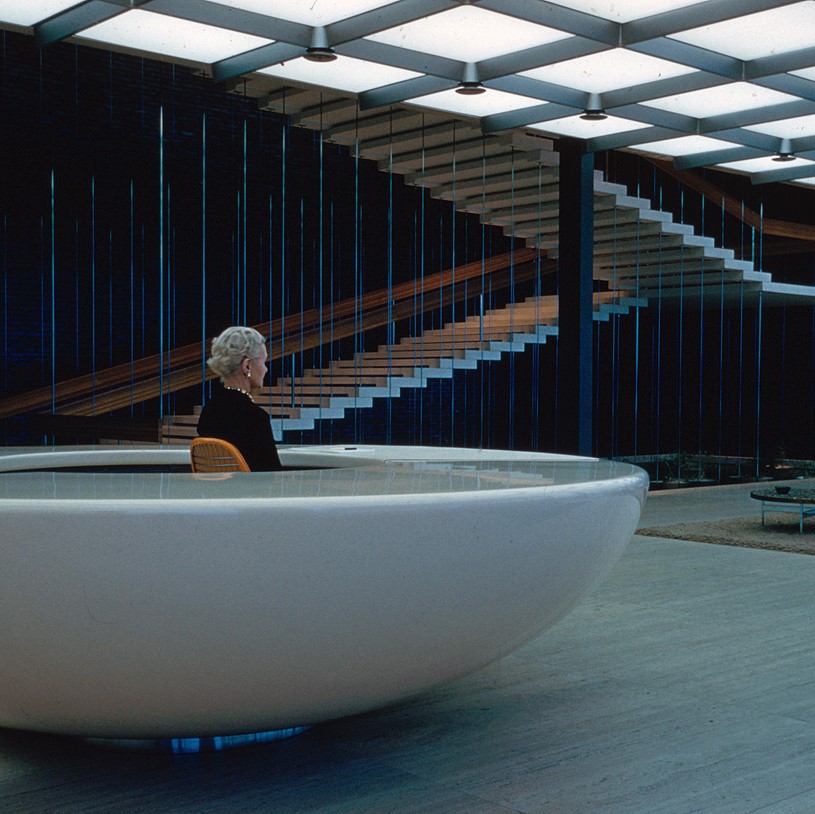
The office of the future has its precedents in the 1950sLewis Carroll’s second best known work The Hunting of the Snark is a long nonsense poem that describes the pursuit by a group of adventurers of an elusive creature called a Snark. This turns out to be a much more dangerous Boojum when it is finally seen, causing one of the crew members to vanish. The poem may or may not be an allegory for the pursuit of happiness but it could easily be about our pursuit of anything elusive, imaginary or ephemeral.

(more…)

Increase in non-EU workers eases skills challenge

Increase in non-EU workers eases skills challenge

The sharp increase in non-EU citizens coming to work in the UK has helped to ease recruitment difficulties for medium and high-skilled roles, according to new research from the CIPD and Adecco Group. Despite employment growing strongly over the past year, the number of applicants chasing each medium and high-skilled vacancy has fallen relatively modestly compared with the same period last year. However, the number of people applying for low-skilled roles has dropped by a fifth over the past year, suggesting that some employers may face significant recruitment challenges for skills in the coming months. These are the findings of the latest quarterly Labour Market Outlook from the CIPD and the Adecco Group, a survey of 2,104 employers which explores their pay and hiring intentions. (more…)